
Blog
Stoic philosophy applied. Memento Mori explored. Discipline built.

Stoic Comparisons
Epictetus vs Marcus Aurelius: The Real Difference
Epictetus vs Marcus Aurelius: a former slave and a Roman emperor taught the same core idea. Here's what unites them, what differs, and which to read first.

Daily Stoic Phrases
Frases Estoicas Para El Día a Día: 15 Daily Lines
Frases estoicas para el día a día from Marcus Aurelius, Epictetus, and Seneca — 15 real, cited lines organized by morning, hard moments, and night.

Stoic Practice
Ejercicios Dicotomía del Control: 5 Daily Practices
Ejercicios dicotomía del control: five concrete exercises from Epictetus's teaching to sort what you control from what you don't, with real citations.

Stoic Practice
Circle of Control vs. Dichotomy of Control
Dichotomy of control is Epictetus's ancient either/or test. Circle of control is a modern three-ring model built on it. Here's how they differ and work together.
Stoic Practice
10 Dichotomy of Control Examples for Real Life
Ten real dichotomy of control examples — job loss, criticism, illness, traffic — showing exactly what's yours to control and what to release, per Epictetus.
Stoic Practice
Dichotomy of Control Worksheet: How to Use One
A free dichotomy of control worksheet based on Epictetus's Enchiridion 1 — with steps, a template, and a worked example for applying Stoic philosophy today.

Memento Mori
Life in Weeks Calculator Meaning, Explained
A life in weeks calculator turns your estimated lifespan into a grid of roughly 4,000 dots. Here's what it means, where it came from, and how to actually use it.

App Guide
Best Memento Mori Apps in 2026: What Actually Works
The best memento mori apps pair a daily death-awareness reminder with a real practice, not just a push notification. Here's what separates the two.

Stoic Symbolism
Memento Mori Tattoo Meaning: What It Actually Means
A memento mori tattoo means far more than dark ink — it's a 2,000-year-old Stoic reminder to remember you will die. Here's the real meaning, origin, and symbols.

Stoic Concepts
Ataraxia Meaning: The Stoic Path to a Calm Mind
Ataraxia meaning: the Greek term for an undisturbed, tranquil mind. Its origin, how it differs from apatheia, and 5 ways Stoics practiced it — explained.

Core Concepts
Apatheia in Stoicism: What It Means
Apatheia in Stoicism means freedom from destructive passions, not the absence of feeling. Its Greek origin, real citations, and how to practice it today.

Core Concepts
What Is Logos in Stoicism? The Ancient Idea Explained
Logos is the Stoic term for the rational order running through the universe — and through you. Here's what logos in Stoicism actually means and how to use it.

Stoic Philosophy
Sympatheia in Stoicism: What It Means
Sympatheia in Stoicism is the ancient idea that all people and things are bound into one whole. Here's what it means and how the Stoics used it daily.

Stoic Character
10 Stoic Character Traits and What They Mean
Stoic character traits aren't traits you're born with — they're trained. Here are the 10 core ones, grounded in Marcus Aurelius, Epictetus, and Seneca.

Stoic Texts
Epictetus's Enchiridion: A Complete Summary
A complete summary of Epictetus's Enchiridion: what it says, who compiled it, and how to use its 53 chapters of Stoic practice today.
Stoic Practice
Stoicism for Depression: A Practical, Honest Guide
Using stoicism for depression won't replace therapy, but core practices — the dichotomy of control, daily reflection — echo cognitive therapy and can genuinely help.

Stoicism Explained
What Is Stoicism? The Ancient Philosophy, Explained
What is Stoicism? A 2,300-year-old philosophy of control, virtue, and calm under pressure — its origin, core ideas, and how to practice it today.

Stoic Reading List
Best Stoicism Books: The 7 to Actually Read
The best stoicism books, ranked: the three ancient primary texts, the sharpest modern guides, and exactly which one to start with based on your goal.

Stoicism Explained
Are Stoics Emotionless? What Stoicism Really Says
Are Stoics emotionless? No — Stoicism doesn't erase feeling, it retrains judgment. What apatheia actually means, what the ancient texts say, and how to practice it.
Stoic Practice
Stoic Self-Discipline: A Practical Guide
Stoic self-discipline isn't white-knuckle willpower — it's trained reason over impulse. What the Stoics meant by temperance, and how to build it today.

Stoic Practice
Stoicism and Money: How to Hold Wealth Well
What Stoicism really says about money: not that wealth is evil, but that it's a 'preferred indifferent.' The core principle, the origins, and how to apply it today.
Stoicism Explained
The Obstacle Is the Way: Meaning & Origin
The obstacle is the way meaning, explained: the thing blocking you becomes the path forward. The real Marcus Aurelius source, how it works, and how to use it today.
Stoic Practice
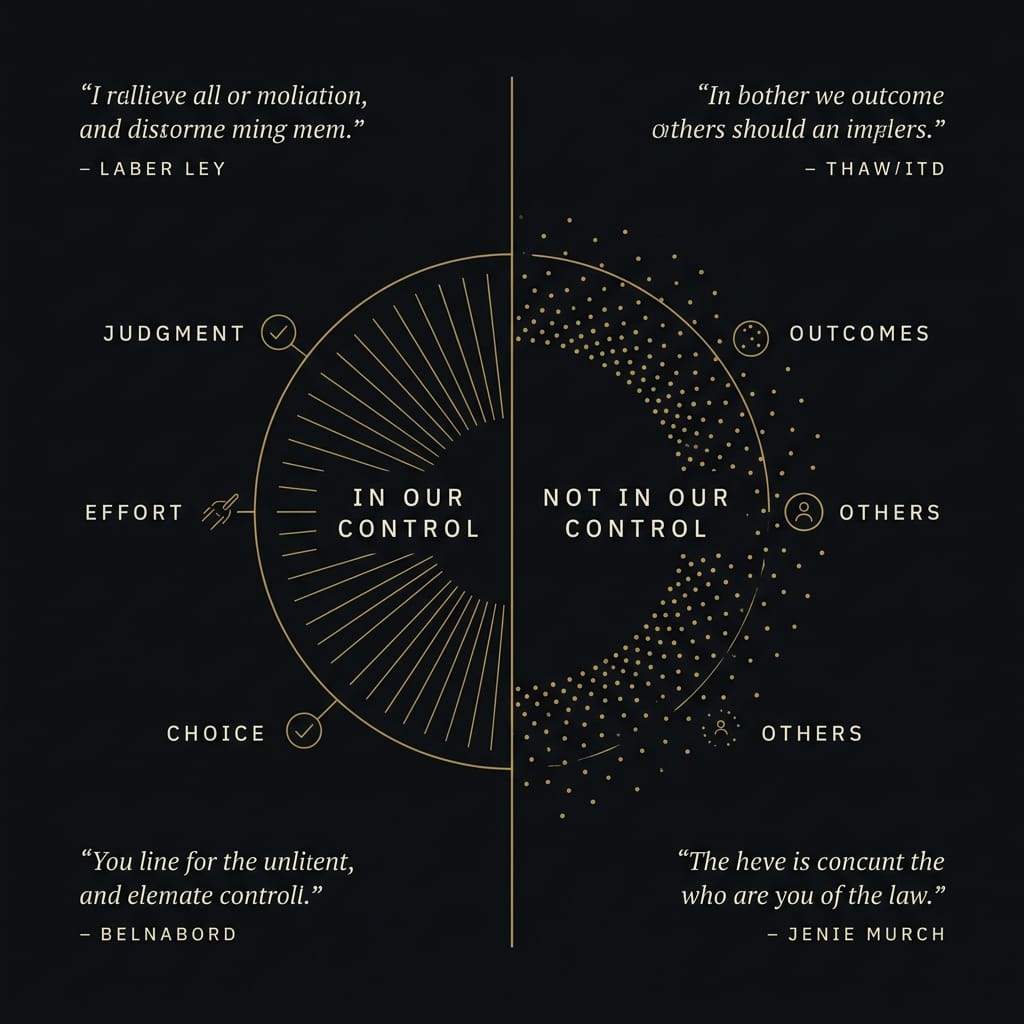
The Stoic Daily Routine: Morning to Night
A practical stoic daily routine, hour by hour: the morning preparation, the discipline of action through the day, and the evening review — built from Marcus Aurelius, Seneca, and Epictetus.

Stoic Practice
Voluntary Discomfort Stoicism: A Practical Guide
Voluntary discomfort in Stoicism means choosing small hardships — cold, hunger, plain living — to kill the fear of loss. What it is, where it comes from, how to start.

Stoic Practice
The View From Above Stoic Exercise, Explained
The view from above is the Stoic exercise of zooming out to a cosmic perspective until your problems shrink to their real size. Where it comes from and how to do it.
Stoicism Explained
Is Stoicism a Religion?
The straight answer is no — it is a philosophy. Here is where Stoicism overlaps with religion (the logos, providence, the Stoic God) and where it clearly does not — plus whether you can stay Christian, Muslim, Buddhist, or atheist and still practice it.

Comparison
Stoicism vs Buddhism: 5 Similarities and 3 Key Differences
Two traditions, born a continent apart, reached almost the same diagnosis of suffering. How Stoicism and Buddhism compare on the self, desire, death, and the path — and where they truly fork.

Stoic Practice
Stoicism at Work: 7 Principles for Career Stress and Office Politics
A bad boss, a missed promotion, burnout, office politics, imposter syndrome. Seven Stoic principles from Marcus Aurelius, Seneca, and Epictetus for the hardest situations at work.

Stoic Practice
Stoicism for Relationships: Love, Conflict, and Letting Go
Stoicism isn’t cold detachment — it’s the opposite. The dichotomy of control in love, Marcus on difficult people, four practices for loving without clinging, and how to let go.

Stoic Practice
Stoicism for Procrastination: The Ancient Cure for “I’ll Do It Tomorrow”
Procrastination isn’t laziness — it’s a metaphysical mistake. Marcus Aurelius and Seneca diagnosed it 2,000 years ago. Five concrete techniques, including the most-quoted “get out of bed” passage in Western philosophy.
Stoic Practice
Stoicism for Grief: What the Stoics Actually Said About Loss
Marcus Aurelius buried most of his children. Seneca wrote to a grieving mother. Four Stoic approaches to carrying loss without being destroyed by it — and when philosophy alone isn’t enough.
Stoic Practice
Stoicism for Anger: Seneca’s 5 Techniques (And Why They Still Work)
Seneca wrote three books on anger. Five concrete techniques from De Ira — each one mirrored by modern anger-management science. The Stoic playbook for a calmer life.
Stoic Quotes
20 Stoic Quotes About Death (And Why They’re Not Depressing)
Twenty quotes from Marcus Aurelius, Seneca, and Epictetus, grouped into five themes — each with context. Plus why the Stoics dwelt on death: not to be morbid, but to live more urgently.
Stoic Quotes
30 Epictetus Quotes on Freedom, Control, and Character
Thirty quotes from the Discourses and Enchiridion, grouped into six themes — each with context. The philosophy of freedom, written by a former slave.
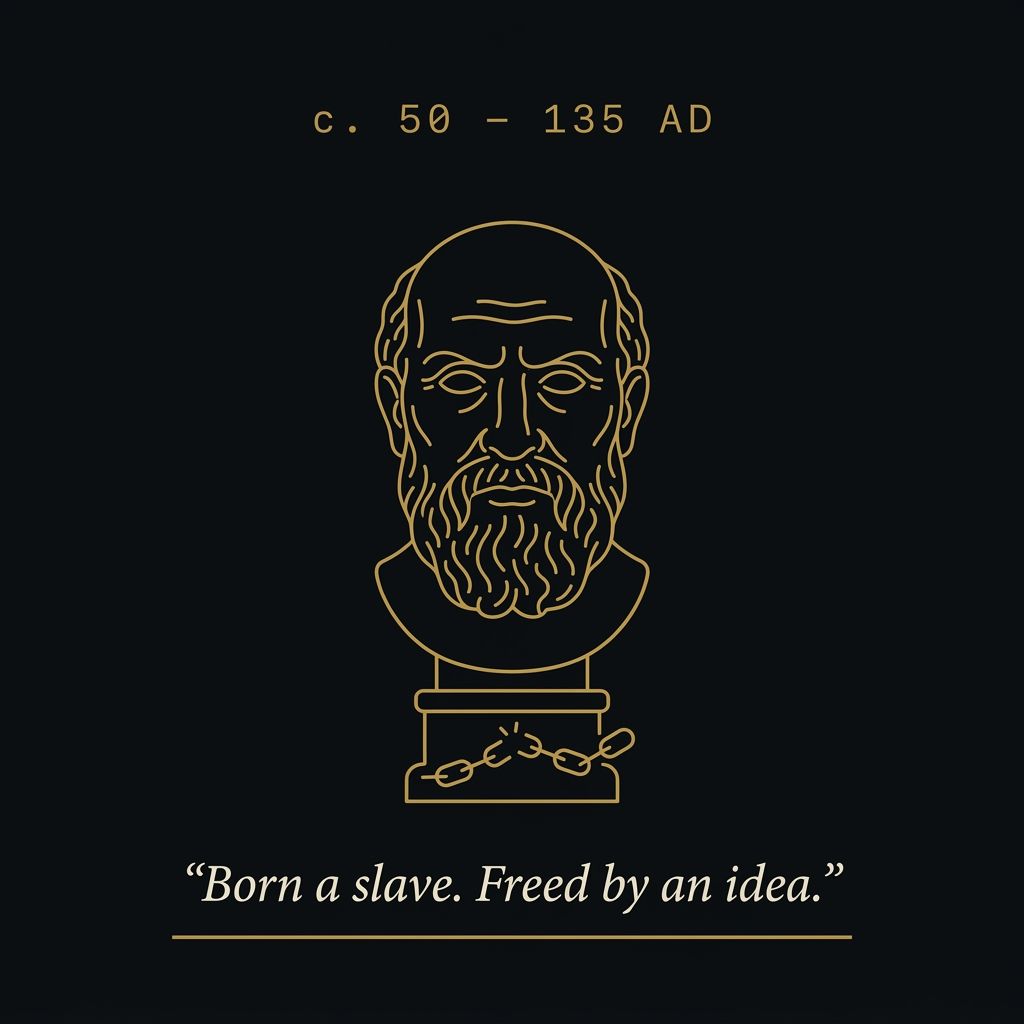
Stoic Lives
Who Was Epictetus? From Slave to Philosopher
The most influential idea in practical philosophy — the dichotomy of control — came from a man who was legally owned by someone else. His origin story, his school, and how a former slave ended up teaching an emperor.
Stoic Lives
Who Was Seneca? The Controversial Stoic
One of the richest men in Rome, tutor to Nero, author of the most quoted Stoic letters ever written. The three charges against him, his own defense, the death that reframed everything — and why he’s worth reading anyway.
Stoic Lives
Who Was Marcus Aurelius? The Philosopher King Explained
Not a dates-and-titles biography — his life told as a Stoic case study. How he applied Stoicism inside three real crises: the Antonine Plague, a general’s betrayal, and the death of most of his children.
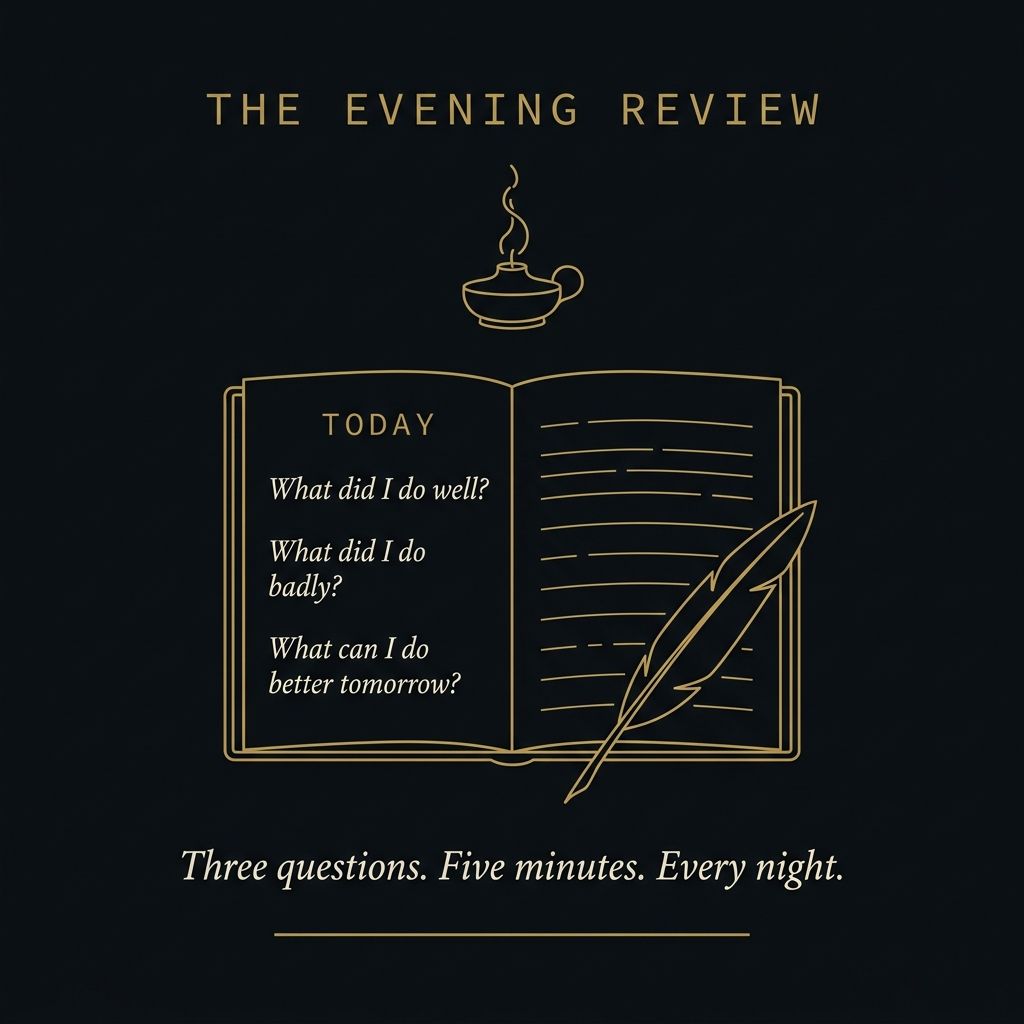
Stoic Practice
The Stoic Evening Reflection: Seneca’s 3-Question Method
Seneca’s nightly self-audit, exactly as he described it in De Ira 3.36 — three questions, five minutes, the 30-day tracker that makes it compound, and the forgiveness step most modern versions skip.
Stoic Practice
Negative Visualization: The Stoic Exercise That Builds Gratitude
The 2,000-year-old Stoic practice that uses imagined loss to produce real gratitude. The 5-minute daily exercise, the science behind it, why it isn’t worrying, and where Seneca, Marcus, and Epictetus described it.
Book Summary
On the Shortness of Life by Seneca: Summary, 5 Lessons, and Best Passages
Seneca’s 50-page essay on time, distilled. The central argument, the 5 specific ways you’re wasting your life (with the modern analogue of each), the best passages to mark, and a two-week reading plan.
Book Summary
Letters from a Stoic: Summary and 10 Best Letters to Start With
A practical summary of Seneca’s 124 letters to Lucilius. The ten to read first — each with a one-paragraph summary and key quote — a thematic index to the other 114, and a four-step reading plan.

Quotes
40 Seneca Quotes on Time, Wealth, Adversity, and Friendship
Forty of Seneca’s sharpest lines, grouped into four themes, each cited by Letter or essay. The Roman Stoic who wrote his philosophy as letters to a friend — and meant for them to be read.
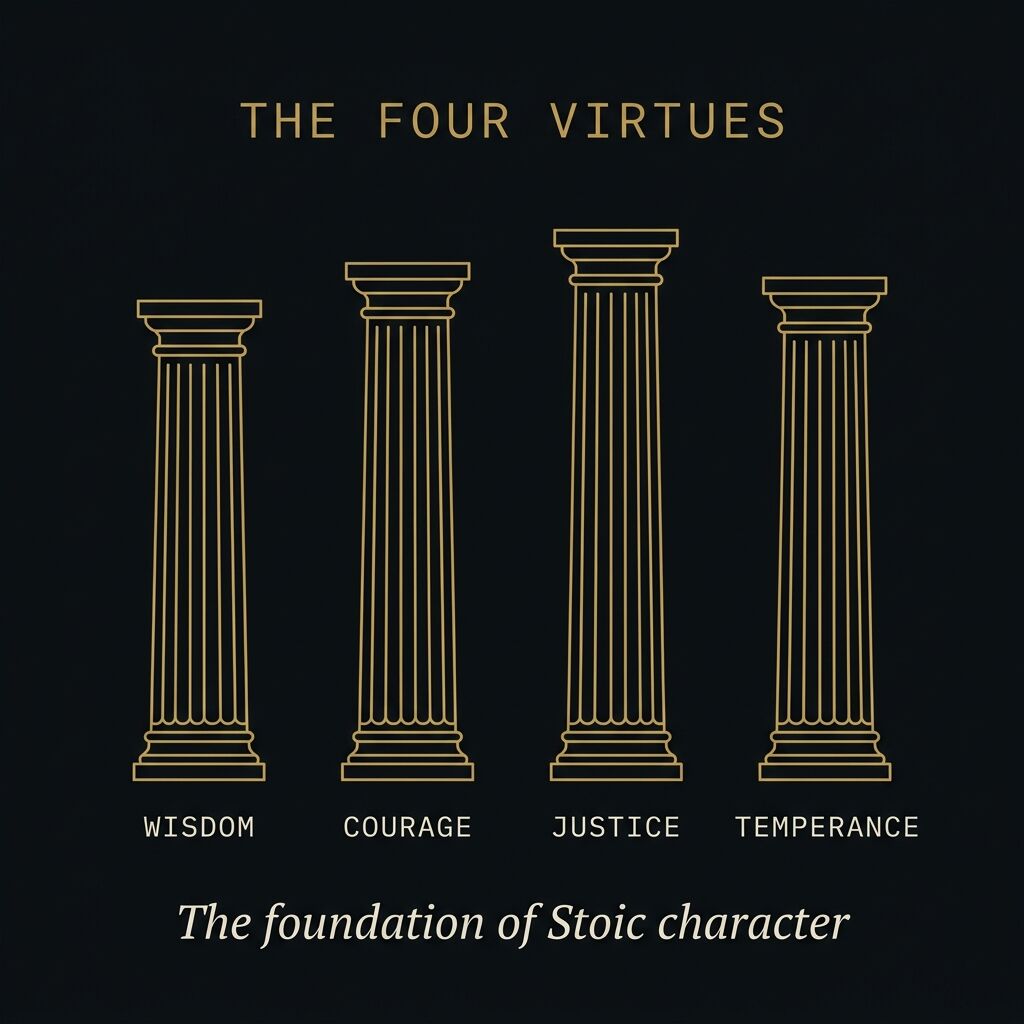
Stoic Essentials
The Four Stoic Virtues: Wisdom, Courage, Justice, Temperance
Each of the four Stoic virtues explained with three real-life examples and a daily practice you can start today. Includes a full reference table and the doctrine of the unity of virtues.
The Challenge
The 30-Day Stoic Challenge: A Complete Day-by-Day Plan
One task per day for a month, grouped into four themed weeks — foundations, practices, deepening, integration. Five to twenty minutes a day. Every task tied to a Stoic source.
Daily Practice
25 Stoic Journal Prompts for Self-Reflection
Ten morning prompts, ten evening prompts, five weekly prompts. Each paired with its Stoic source and the practice it trains. Use with any notebook, five minutes at a time.
Book Summary
Meditations by Marcus Aurelius: Summary, 7 Key Themes, and How to Read It
A practical summary of the most influential Stoic text ever written. Seven core themes with real passages, all four English translations compared, and a five-step plan for first-time readers.
Quotes
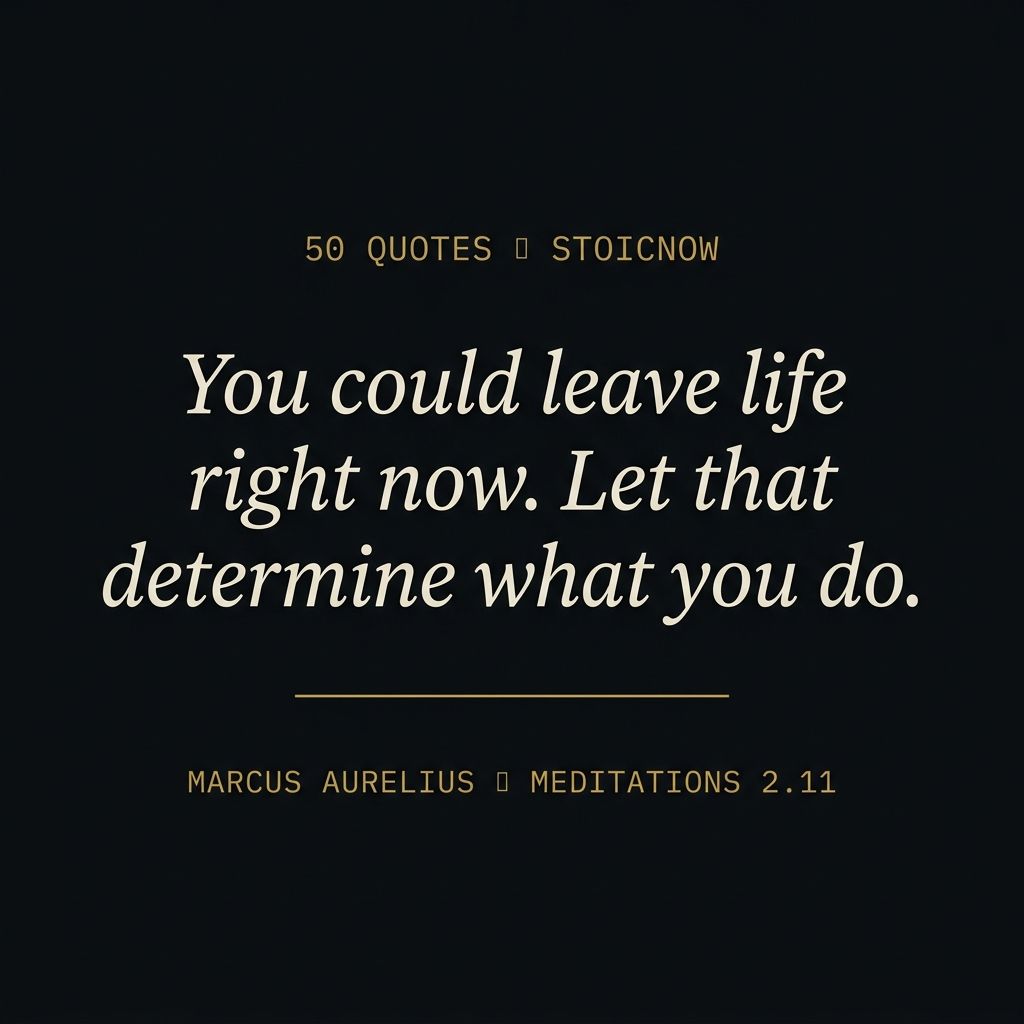
50 Marcus Aurelius Quotes That Will Change How You Think
Fifty passages from Meditations, cited by book and chapter, grouped into eight themes — death, control, time, anger, and becoming a better person — each with context you can use.
Philosophy
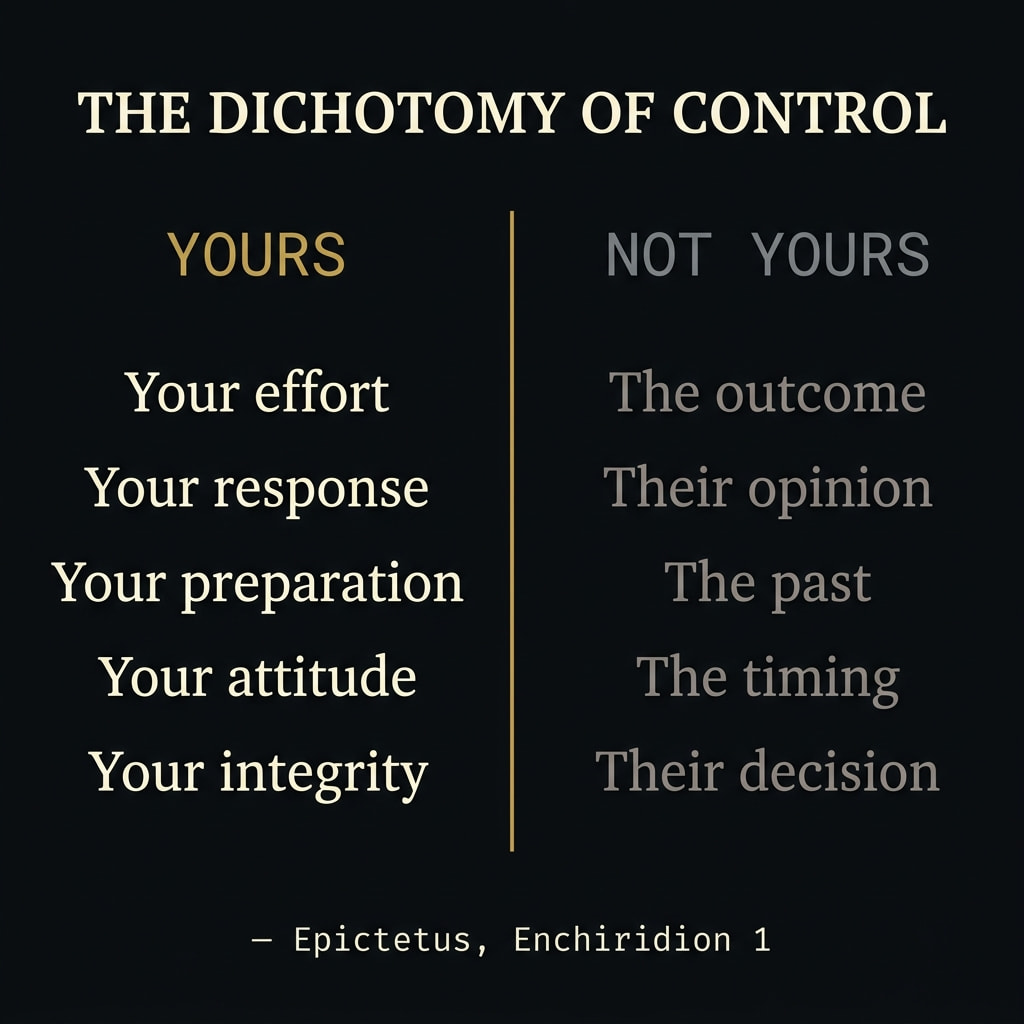
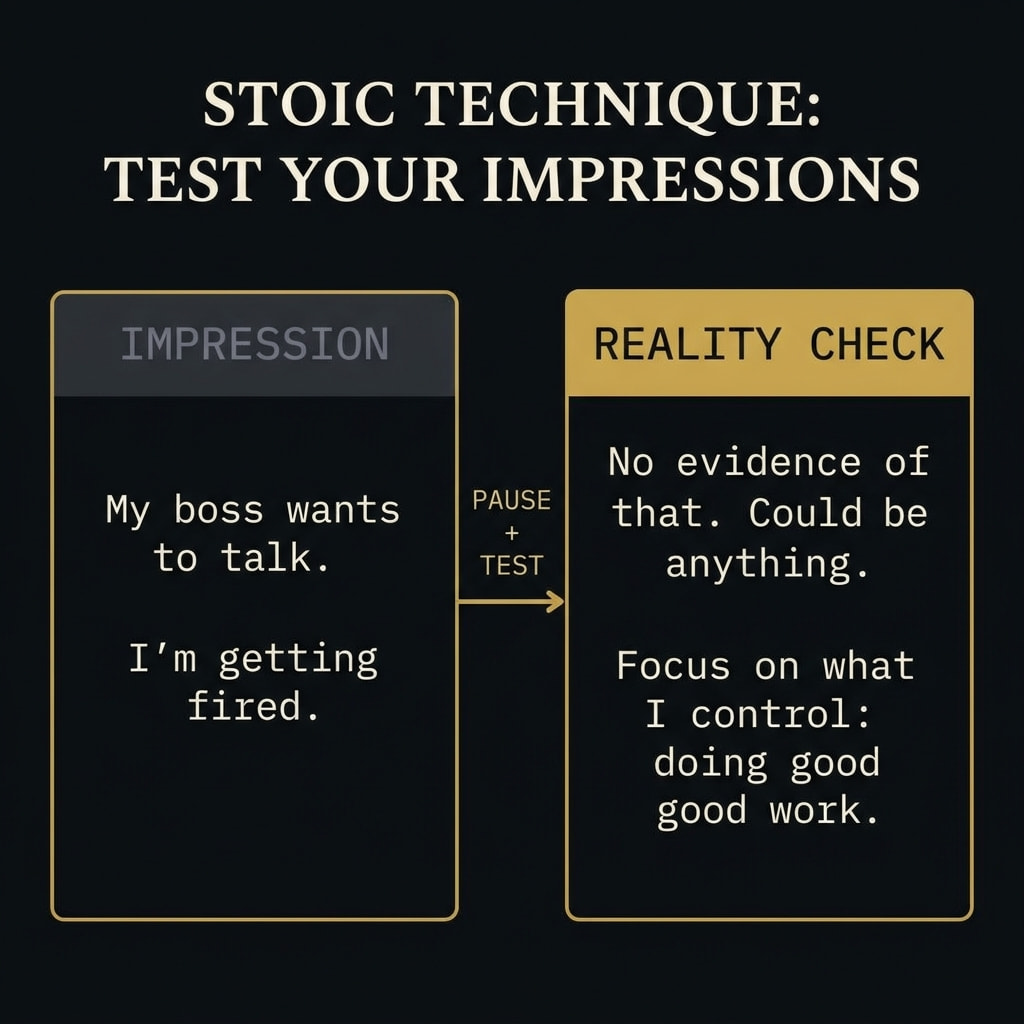
The Dichotomy of Control: Stoicism’s Most Useful Idea (With 10 Examples)
Epictetus’ dichotomy of control, broken down with 10 real-life situations — interviews, breakups, money, parenting. The single Stoic principle that inspired modern therapy.
Mental Health
Stoicism for Anxiety: 5 Techniques the Ancients Used (and Science Now Confirms)
How Stoic philosophy reduces anxiety — with 5 exercises from Marcus Aurelius, Seneca, and Epictetus. The same principles behind modern CBT.

Philosophy
Amor Fati: How to Love Your Fate (Even When It’s Terrible)
“Love of fate” — the Stoic and Nietzschean idea of using every setback as fuel. What it means, what it isn’t, and 5 daily exercises to practice it.

Comparison
Best Stoic Apps in 2026: 7 Apps Tested, Honest Comparison
We tested 7 Stoic apps for quotes, challenges, widgets, and AI mentors. Honest pros and cons for each — including our own app StoicNow.
Beginner’s Guide
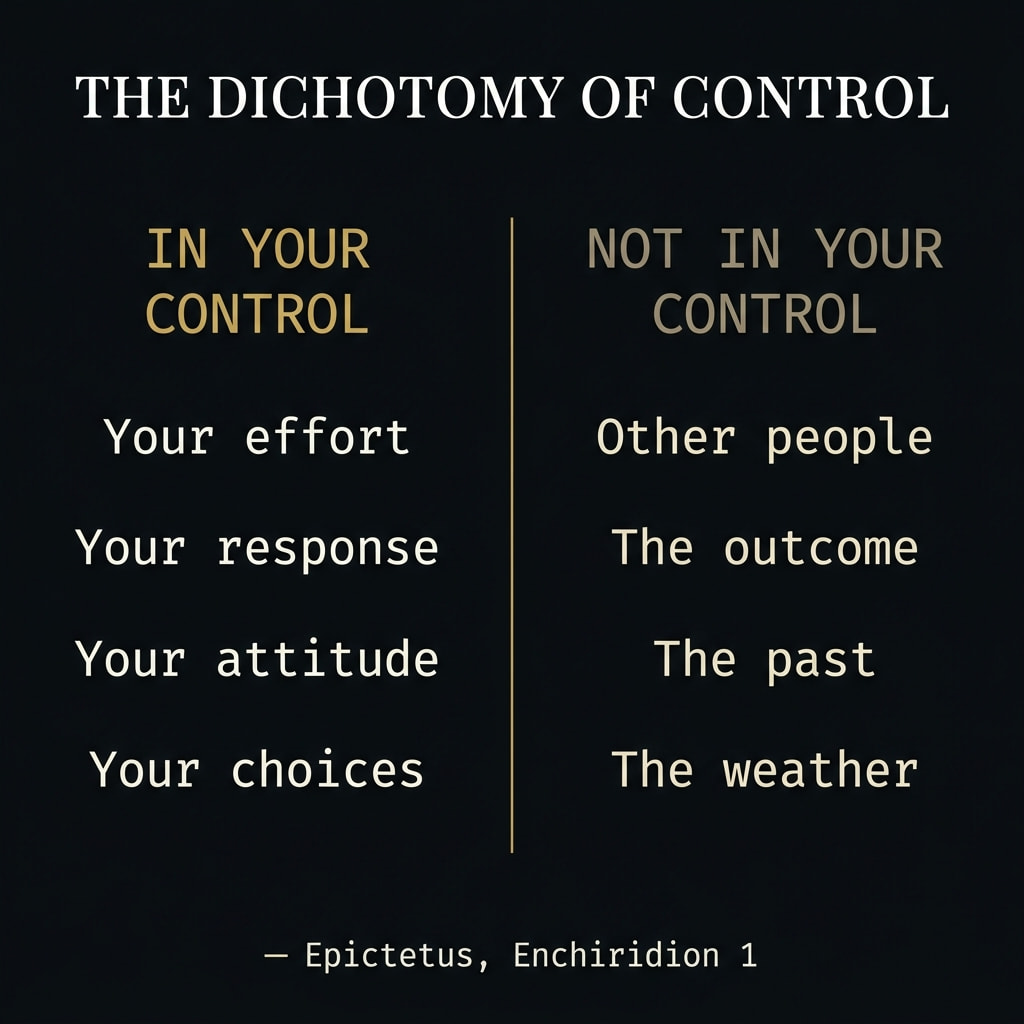
How to Practice Stoicism Every Day: 7 Exercises That Actually Work
Seven practical Stoic exercises you can start today — from the dichotomy of control to evening reflection. No philosophy degree needed. Pick two and begin.
Philosophy
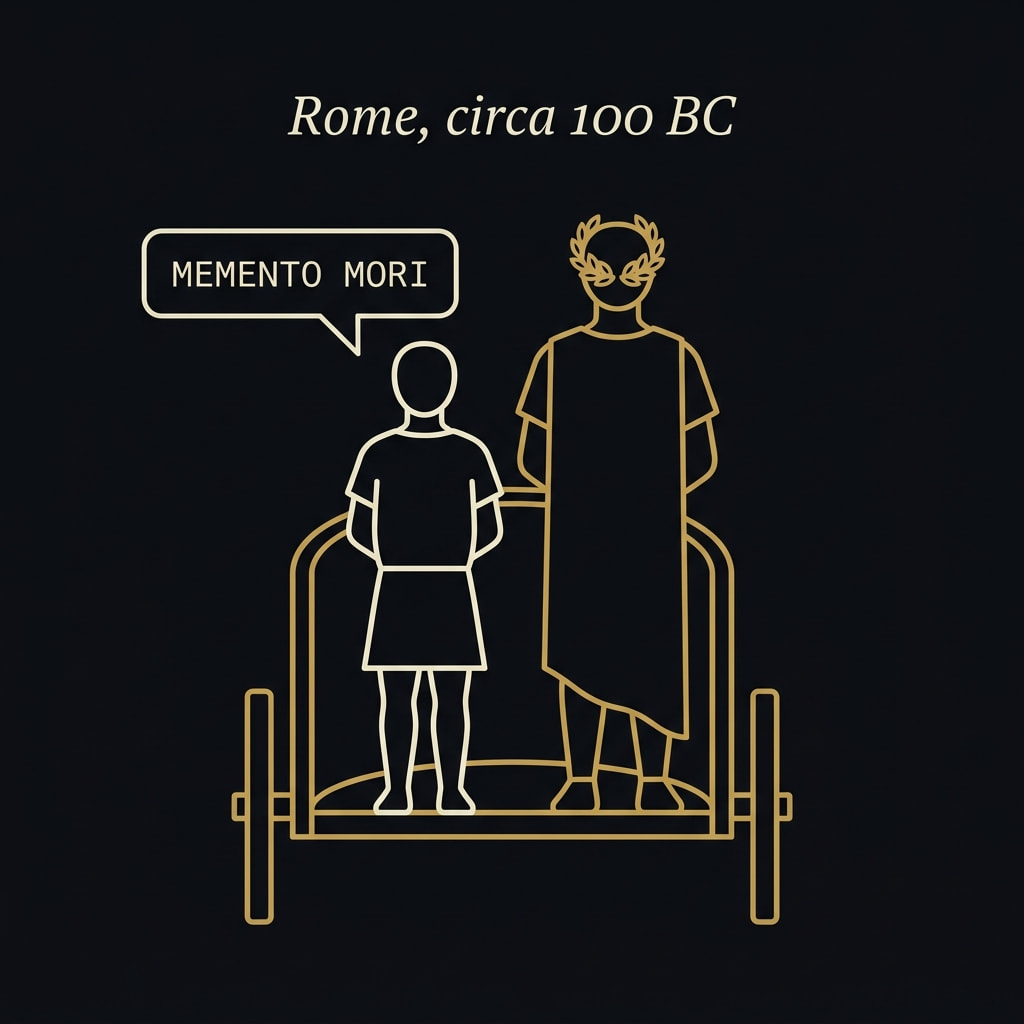
What Is Memento Mori? The 2,000-Year-Old Idea That Can Change How You Live
From Roman victory parades to Steve Jobs’ mirror. The history, meaning, and daily practice of remembering you will die — and why it makes you live better.

Stoic Quotes
30 Stoic Quotes for Hard Times (With Context That Matters)
Stoic quotes for anxiety, loss, failure, and anger — grouped by situation, with real context from Marcus Aurelius, Seneca, and Epictetus. Find your section, take one quote with you today.
Daily Practice
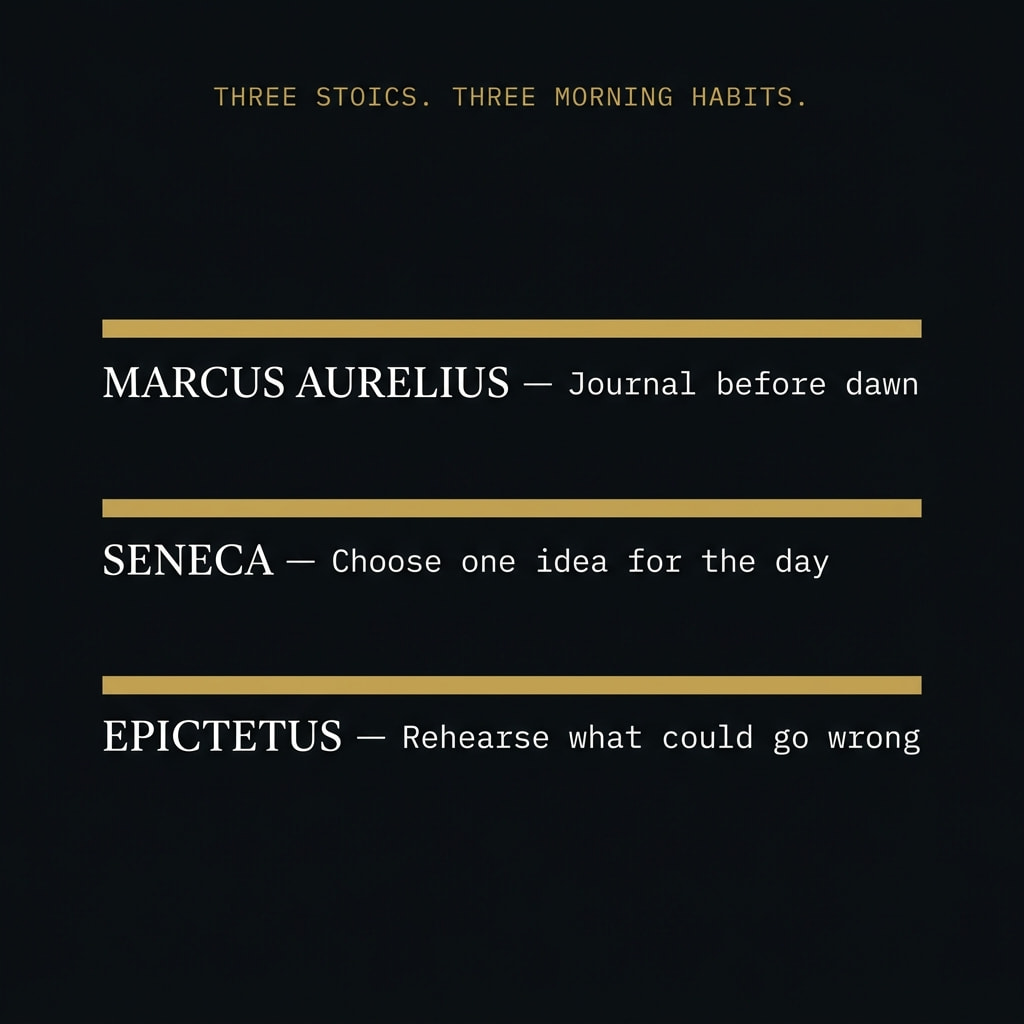
Stoic Morning Routine: 3 Steps, 5 Minutes, Zero Excuses
Marcus Aurelius started every morning the same way. His practice was simple, repeatable, and direct — and it’s been working for 2,000 years. Here’s the 5-minute version.

Memento Mori
Memento Mori Calendar: Your Entire Life in Weeks
You have roughly 4,000 weeks to live. A Memento Mori calendar turns that number into a grid you can see, count, and feel. Here’s how the Stoics used mortality to live better.