Quick answer
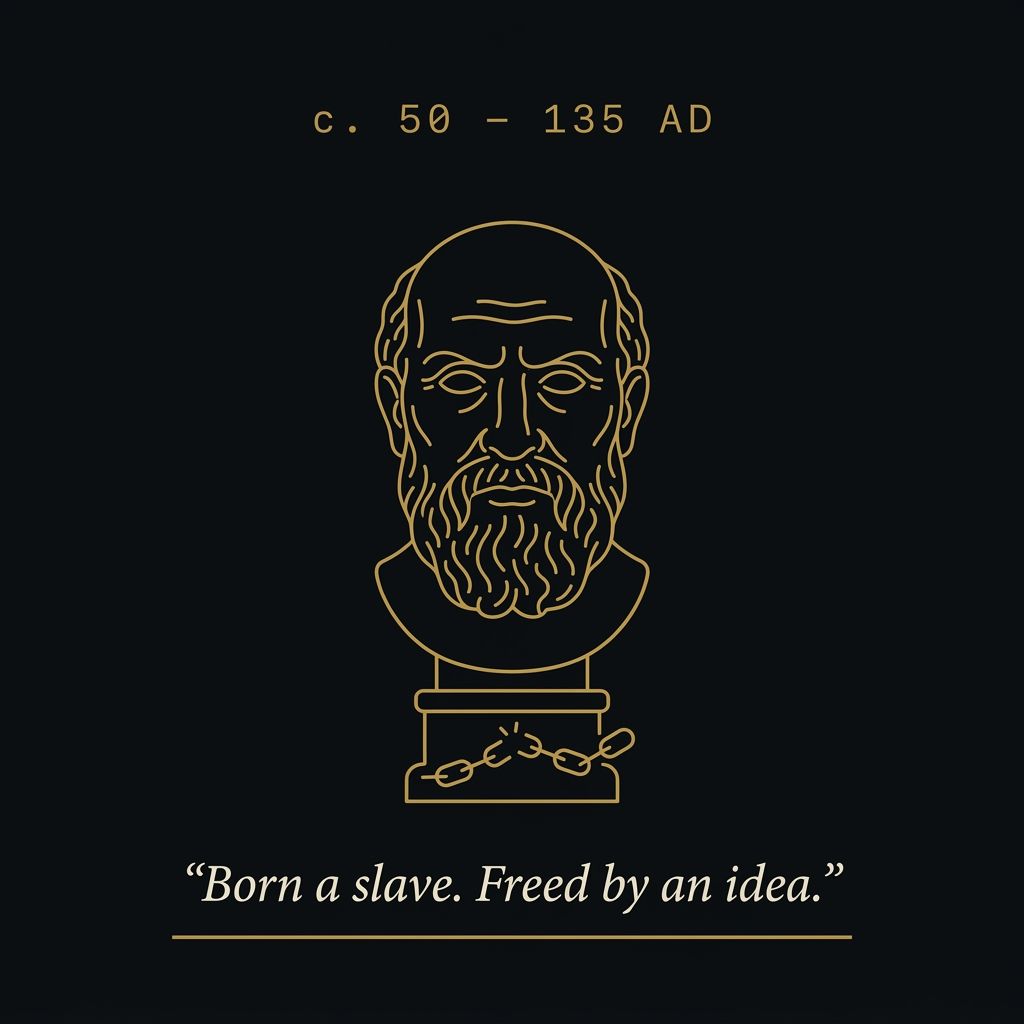
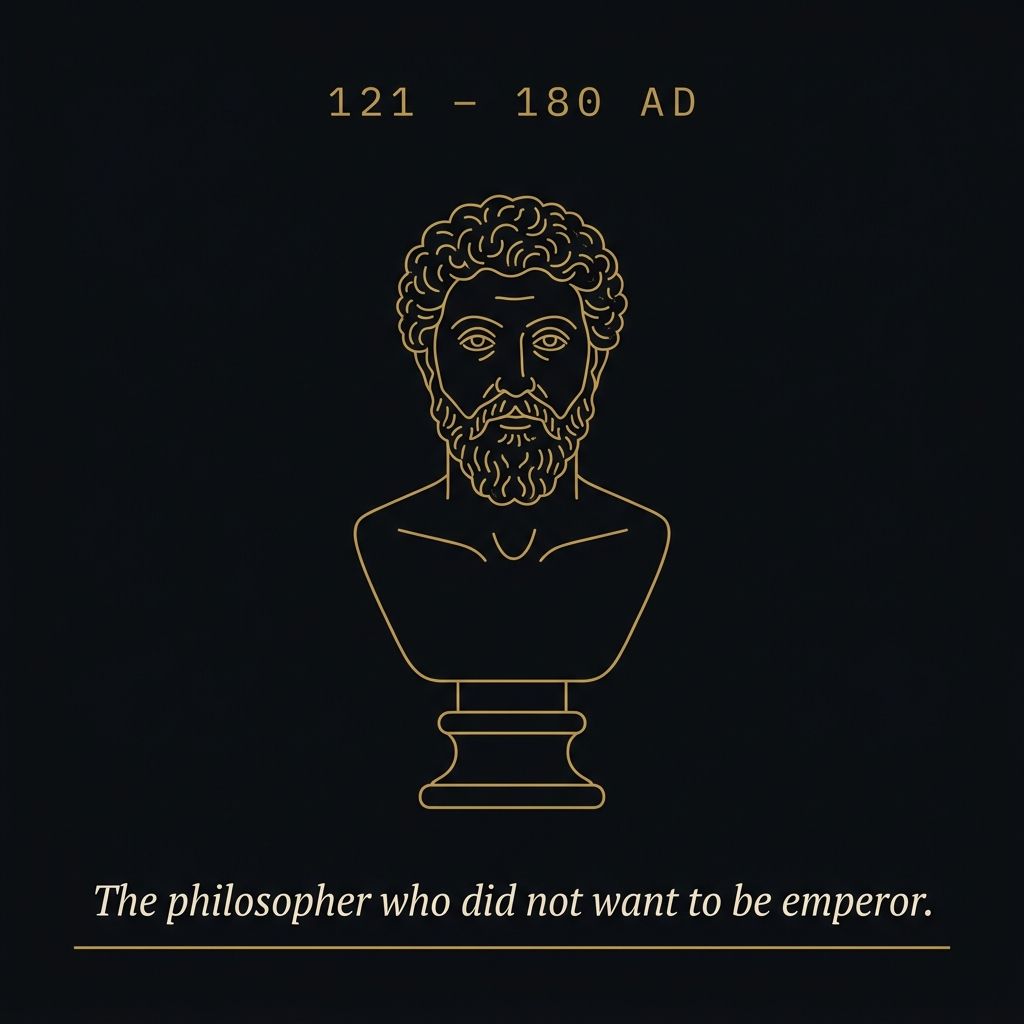
Epictetus (c. 50–135 AD) was a former slave who taught that freedom comes from controlling only your own judgments and choices; Marcus Aurelius (121–180 AD) was a Roman emperor who applied that exact same discipline to the daily strain of holding absolute power. Their core philosophy is nearly identical — what differs is circumstance, audience, and tone.
Epictetus was born a slave. Marcus Aurelius was born to rule the known world. Both men ended up teaching the identical idea — that peace comes only from what’s within your control — and that coincidence is one of the more useful accidents in the history of philosophy. Here is what actually separates the two Stoics, what unites them, and which one to read first.

Who Were They?
Epictetus was born around 50 AD in Hierapolis, in the Roman province of Phrygia (modern-day Turkey), and spent his early life enslaved in Rome, reportedly with a permanently damaged leg. Freed sometime after 68 AD, he studied under the Stoic teacher Musonius Rufus and eventually opened his own school in Nicopolis, on the Greek coast. He never wrote a book. Everything we have — the Discourses and the short handbook known as the Enchiridion — comes from lecture notes taken by his student Arrian. Epictetus taught by argument, out loud, to young Romans who had paid to sit in his school and could, in theory, walk out.
Marcus Aurelius was born in Rome in 121 AD, adopted into the imperial line, and became emperor in 161 AD, ruling until his death in 180 AD. He fought wars on the Danube frontier for much of his reign and, by most accounts, governed with unusual restraint for a man who answered to no one. What we call Meditations was never meant to be read by anyone but him — a private notebook, written in Greek during campaign, that survived by chance and wasn’t given that title until centuries later.
Put simply: one man had nothing and taught freedom from the bottom of Roman society. The other had everything and taught the same freedom from the top of it.
The Direct Connection Between Them
They never met. Epictetus died around 135 AD, when Marcus Aurelius was roughly fourteen years old and nowhere near the throne. But the connection is real and specific, not just a shared label of "Stoic." In Meditations 1.7, Marcus thanks his teacher Rusticus for two things: introducing him to Epictetus’s teaching, and lending him his own personal copy of the discourses to read. That single line explains most of what follows in the rest of the book.
Once you know that, Marcus stops looking like an independent thinker who happened to land on similar ideas. He looks like a serious, lifelong student of one specific teacher — a teacher he never met, absorbed instead through borrowed notes, and then spent four decades testing against the actual demands of running an empire.
Where They Agree: One Core Idea
Strip away the biography and the two men are teaching the same single doctrine, stated almost identically. Epictetus opens the Enchiridion with it directly: "Of things some are in our power, and others are not." Our judgments, desires, and choices are ours. Everything else — our body, our reputation, other people, outcomes — is not.
Marcus restates the same idea across dozens of entries in Meditations, most sharply in book 8.47: "If you are distressed by anything external, the pain is not due to the thing itself but to your estimate of it; and this you have the power to revoke at any moment." That is the dichotomy of control in a single sentence, written by a man with more external power than almost anyone alive at the time — and who still concluded that none of it was really his.

This is the reason the two are almost always taught together rather than as competitors. Neither founded a rival school. Both belong to the same Stoic line running back to Zeno and Chrysippus; Epictetus is closer to its source, Marcus is one of its last major voices before the tradition fades from the historical record for over a thousand years.
Where They Differ: Circumstance, Audience, Tone
If the doctrine is nearly the same, the differences worth knowing are practical — they change how each book reads and who it’s more useful for.
Difference 01
Social Position
Difference 02
Audience
Difference 03
Tone Under Pressure
Enchiridion vs Meditations: Which to Read First
Read the Enchiridion first. It is short, direct, and states the whole framework in a handful of chapters — you can finish it in an afternoon and already have the dichotomy of control fully in hand. Meditations assumes you already know that framework; Marcus rarely explains the doctrine from scratch, he just applies it, entry after entry, to grief, anger, ambition, and the exhaustion of duty.
Practical order: Enchiridion for the theory in a weekend, then Meditations for forty years of a specific, powerful man trying to actually live it. Reversing the order tends to leave Meditations feeling scattered rather than systematic — because it was never meant to be a system.
Common Misconceptions
"Marcus Aurelius was emotionless." Meditations is full of visible frustration, grief, and self-correction — he is arguing with his own irritation in real time, not reporting calm from above it. Stoicism was never a ban on feeling; see what Stoicism really says about emotion.
"Epictetus's teaching only works if you have nothing to lose." The opposite case is the more interesting one: the man with the least power in the Roman world and the man with the most both landed on identical conclusions about what actually belongs to a person.
"They founded competing schools of Stoicism." They did not. Both worked inside the same Stoic tradition founded by Zeno of Citium roughly three centuries earlier; Epictetus taught Marcus's teacher's source material directly, one generation removed.
How to Apply Both Today
The most practical split is time of day, not choosing a side. Use Epictetus in the morning: before a hard meeting, a diagnosis, or an argument, run the one-question filter from the dichotomy of control — is this actually up to me? A stoic morning routine built on that single question does most of the work before the day even gets difficult.
Use Marcus in the evening. His method wasn’t abstract theory — it was a nightly written accounting of where he had slipped and why, which is exactly the structure behind a stoic evening reflection. Ten minutes of honest, specific writing about the day does for you privately what Marcus was doing for an empire in a tent on the Danube frontier.

Practice both disciplines, morning and night, in StoicNow
Join the WaitlistFree Quiz
Which Stoic Are You?
A 3-minute personality quiz — Marcus, Seneca, Epictetus, or Cato.
FAQ
What is the difference between Epictetus and Marcus Aurelius?
Epictetus was a former slave who taught philosophy as public lectures in Nicopolis, distilled by his student Arrian into the Discourses and the short Enchiridion. Marcus Aurelius was a Roman emperor who wrote privately, for himself, applying the same ideas to the pressures of running an empire. The core philosophy is nearly identical; the difference is voice, audience, and circumstance.
Did Marcus Aurelius study under Epictetus?
Not directly — Epictetus died around 135 AD, before Marcus Aurelius reached adulthood. But Marcus studied him closely: in Meditations 1.7 he thanks his teacher Rusticus for lending him a personal copy of Epictetus's discourses, and Epictetus's ideas, especially the dichotomy of control, run through nearly every book of Meditations.
Whose Stoicism is easier to practice, Epictetus's or Marcus Aurelius's?
Epictetus is usually easier to start with. The Enchiridion states the core discipline in short, direct commands — some things are up to us, others are not — with little context needed. Meditations reads more like a private journal, so its lessons arrive scattered across specific, sometimes obscure, personal struggles.
Which book should I read first, the Enchiridion or Meditations?
Start with the Enchiridion. At under thirty pages it gives you the whole framework — the dichotomy of control — in a few sittings. Meditations rewards a second visit once that framework is familiar, since Marcus Aurelius assumes it rather than explains it; without Epictetus first, entire passages can feel cryptic.
Did Epictetus and Marcus Aurelius agree on everything?
On the core doctrine, yes — both held that only our judgments, desires, and choices are within our control, and that peace comes from focusing there. They differ mainly in emphasis: Epictetus is sharper on freedom and slavery, Marcus Aurelius more attentive to duty, mortality, and the strain of holding power responsibly.
Who is more relevant today, Epictetus or Marcus Aurelius?
Both, for different readers. Epictetus speaks to anyone who feels controlled by circumstances outside their power — a job, a diagnosis, another person's behavior. Marcus Aurelius speaks to anyone exhausted by responsibility and the temptation to resent it. Most people benefit from reading both rather than choosing one over the other.

Marcus Adler
Founder & Lead Writer, StoicNow
Marcus Adler is the founder of StoicNow. For over a decade he has applied Stoic philosophy to daily life — testing the practices of Marcus Aurelius, Seneca, and Epictetus against modern problems and translating them into simple, repeatable routines. More about the author →
Further reading