Quick answer
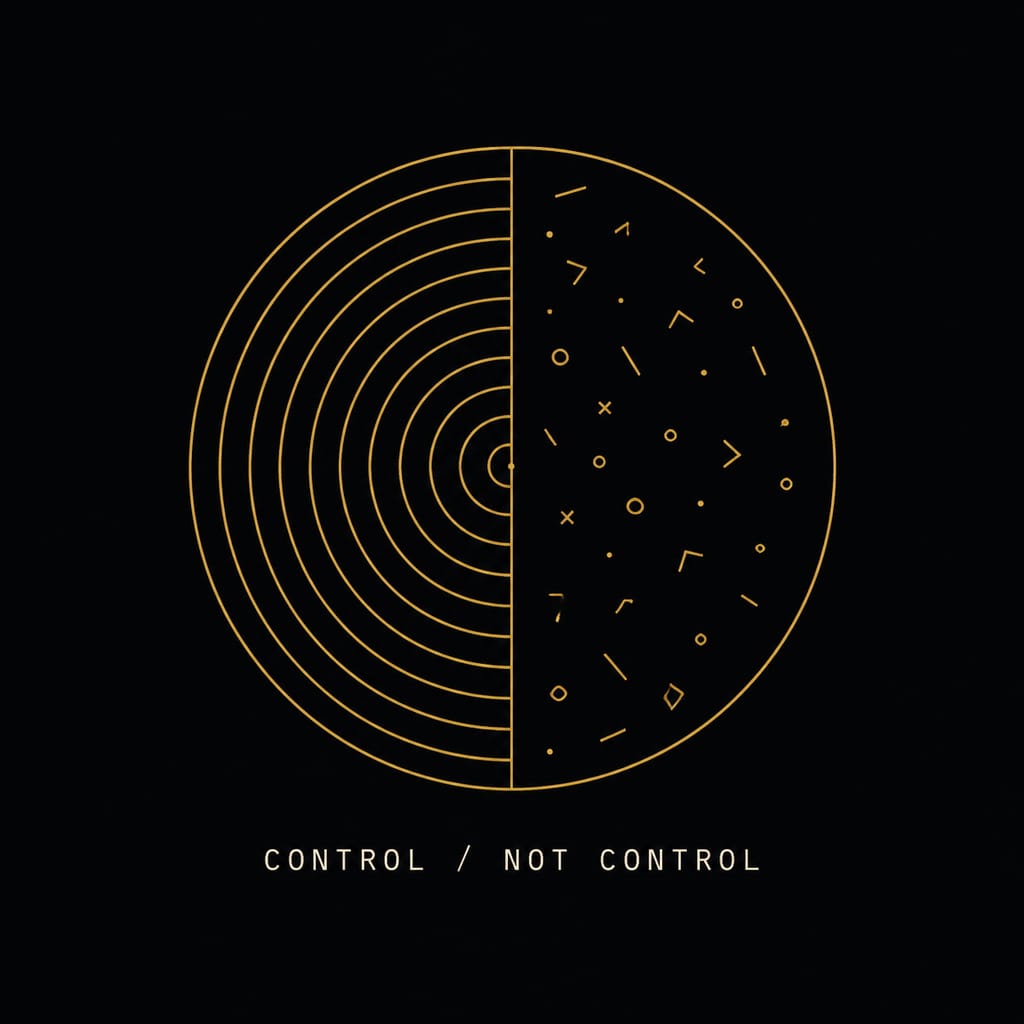
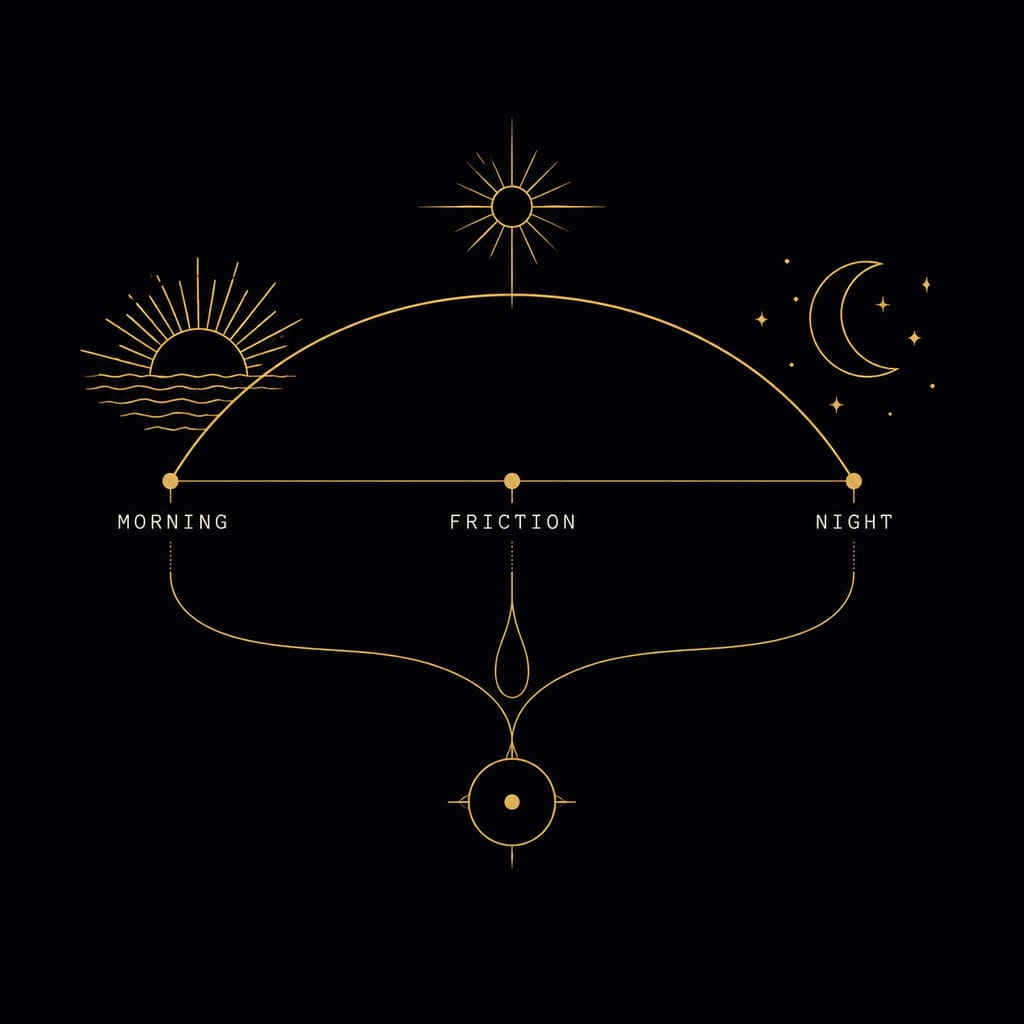
Ejercicios dicotomía del control are trained through short daily practices: sort a specific situation into what you control and what you don't, then act only on the first column. Four exercises below cover the morning, the moment of friction, and the nightly review.
Most people who search for ejercicios dicotomía del control already understand the idea. What they're missing is a way to actually rehearse it. Epictetus stated the principle in one paragraph; turning that paragraph into a habit takes repetition. Below are four exercises, the reasoning behind each one, and the mistakes that quietly cancel them out.

What Is the Dichotomy of Control?
The dichotomy of control is Epictetus's claim that everything you encounter falls into exactly one of two categories: things that are “up to us” and things that are not. Your judgments, your desires, your choices, and your effort are up to you. Your body, your reputation, other people's opinions, and almost every outcome are not. Stress, in this framework, comes almost entirely from treating the second category as if it belonged in the first.
The line is old and specific. It opens the Enchiridion, the short manual of Stoic practice that Epictetus's student Arrian compiled from his lectures:
“Of things some are in our power, and others are not. In our power are opinion, movement towards a thing, desire, aversion … and, in a word, whatever are our own acts. Not in our power are the body, property, reputation, offices, and, in a word, whatever are not our own acts.” — Epictetus, Enchiridion 1
Read closely, this is narrower than most modern paraphrases suggest. It is not “focus on what you can influence.” It is a hard binary: your own acts and judgments on one side, literally everything else — including your own body — on the other. That strictness is what makes it trainable. A soft version invites debate about degrees of influence; a binary just needs a column to write things down in.
Exercise 1: The Two-Column Sort
This is the base exercise, and the one worth doing on paper the first several times. Pick one situation that is actually bothering you right now — not a hypothetical.
- Write the situation at the top of the page in one sentence.
- Draw two columns: “Up to me” and “Not up to me.”
- List every element of the situation under one column or the other. Be strict — a hoped-for outcome goes in “not up to me,” even the outcome of your own hard work.
- Circle the “up to me” items. That circle is your entire job for the rest of the day.

The point of writing it down instead of just thinking it is that thinking blurs the line. On paper, “get the promotion” visibly cannot go in the “up to me” column — only “prepare well and ask directly” can. For a longer list of worked scenarios, see dichotomy of control examples, and for a printable version of this exact layout, the dichotomy of control worksheet has one ready to use.
Exercise 2: The Morning Filter
The two-column sort is reactive — it responds to something already bothering you. The morning filter is preventive. Before the day starts, name two or three things likely to provoke you (a difficult meeting, traffic, a slow reply from someone you're waiting on) and sort each one in advance.
Marcus Aurelius used a version of this at the start of nearly every entry in Book Two of the Meditations, rehearsing that he would meet meddling, ungrateful, and unjust people before the day gave him the chance to be surprised by it. The goal isn't pessimism. It's removing the element of shock, which is what turns a minor friction into a derailed morning. This pairs naturally with a stoic morning routine — the filter takes about ninety seconds once you've done it a few times.
Exercise 3: The Three-Question Pause
This one runs in real time, at the exact moment something goes wrong. It only needs three questions, silently, before you react:
- What just happened? Name the fact, stripped of interpretation. “My flight got cancelled,” not “this always happens to me.”
- Which part is up to me? Usually your next decision, your tone, and how you spend the next hour.
- What am I about to do about that part? Name one concrete action, then take it.
Epictetus made the same move at Enchiridion 5: “Men are disturbed not by the things which happen, but by the opinions about the things.” The pause interrupts the opinion before it hardens into a reaction. It's short enough to use in a hallway, a stalled car, or a comment section, and it's the closest thing to a live version of the two-column sort.

Exercise 4: The Control Journal
At the end of the day, write three lines: one moment where you correctly stayed inside “up to me,” one moment where you drifted into “not up to me” and got worked up over it, and one adjustment for tomorrow. Seneca ran a version of this same nightly audit and describes it in Letters 83 and in his essay On Anger — a short, honest accounting rather than a diary of the day's events.
This is the exercise that actually builds the skill over weeks rather than one day. The two-column sort and the three-question pause are the tools; the journal is what tells you whether you're getting better at using them. It also pairs directly with stoic evening reflection and the broader set of stoic journal prompts, if you want to fold it into an existing habit rather than adding a new one.
Common Misconceptions About the Dichotomy of Control
“It means not caring about outcomes.” It means not attaching your peace of mind to outcomes. You can still pursue a goal with full effort; the exercise only asks you to stop treating the result as something you personally guarantee.
“It's the same as the circle of control.” Close, but not identical. The modern “circle of control” adds a middle zone of “influence.” Epictetus's original is a strict binary. See circle of control vs. dichotomy of control for the full comparison.
“It only applies to big problems.” It works better on small ones. A cancelled meeting or a slow reply is the ideal size to practice on — high enough stakes to matter, low enough that a bad sort doesn't cost much if you get it wrong.
Making It a Habit
None of these four exercises requires more than a few minutes, and they build on each other: the morning filter sets expectations, the three-question pause handles the surprises the filter missed, the journal grades the day, and the two-column sort is the deep-dive version for anything that won't let go of you. Run all four for a week and the sorting starts happening automatically, without the paper.
If you want a structured way to build the habit rather than freelancing it, how to practice Stoicism every day lays out a wider set of exercises, and the 30-day Stoic challenge gives you a day-by-day plan that includes a dedicated week on control. For the anxiety-specific angle, Stoicism for anxiety goes deeper into why this particular sort works on rumination.
“Seek not that the things which happen should happen as you wish; but wish the things which happen to be as they are, and you will have a tranquil flow of life.” — Epictetus, Enchiridion 8
Practice the dichotomy of control daily in StoicNow
Join the WaitlistFree Quiz
Which Stoic Are You?
A 3-minute personality quiz — Marcus, Seneca, Epictetus, or Cato.
FAQ
What is the dichotomy of control?
The dichotomy of control is Epictetus's teaching that everything is either “up to us” (our judgments, desires, and actions) or “not up to us” (our body, reputation, outcomes, other people). Stoic practice, and every exercise on this page, trains you to put your effort only into the first category and let the second one go.
What are the best exercises for practicing the dichotomy of control?
Four exercises cover most situations: the two-column sort (list what you control vs. what you don't for one specific problem), the morning filter (name the day's likely frictions before they happen), the three-question pause (used in the moment a trigger hits), and the control journal (a nightly review of where you sorted well or badly).
How often should I practice the dichotomy of control?
Daily, in small doses, works better than occasional deep sessions. A two-minute morning filter plus a one-line journal entry at night is enough to build the habit. Reserve the full two-column sort and the three-question pause for moments that actually provoke you — that is where the skill gets tested.
What's the difference between the dichotomy of control and the circle of control?
The dichotomy of control is Epictetus's binary: a thing is either entirely up to you or not up to you at all, with no middle ground. The popular “circle of control” softens this into control, influence, and no control — three zones instead of two. Both aim at the same discipline; the circle is a modern simplification, not the original teaching.
Where did the dichotomy of control come from?
It opens the Enchiridion, Epictetus's short manual of Stoic practice, compiled by his student Arrian around the early second century AD. The first line states that some things are in our power and some are not, and that confusing the two is the source of most human distress — a claim Epictetus builds the rest of the book around.
Can the dichotomy of control help with anxiety?
It targets one specific driver of anxiety: spending energy on outcomes you cannot secure. Sorting a worry into “my effort” and “the result” does not remove the underlying stakes, but it redirects attention toward the part you can actually act on, which is often where anxious rumination gets stuck in the first place.

Marcus Adler
Founder & Lead Writer, StoicNow
Marcus Adler is the founder of StoicNow. For over a decade he has applied Stoic philosophy to daily life — testing the practices of Marcus Aurelius, Seneca, and Epictetus against modern problems and translating them into simple, repeatable routines. More about the author →
Further reading