Quick answer
The dichotomy of control is Epictetus's ancient either/or test: a thing is either entirely up to you or not up to you at all, with nothing in between. The circle of control is a modern three-ring adaptation, built on Stephen Covey's Circle of Influence, that adds a middle zone for things you can partly affect. Use the circle to plan; use the dichotomy to stay calm about the outcome.
Type “circle of control” into a search bar and you get a three-ring diagram borrowed from a coaching worksheet. Type “dichotomy of control” and you get a line from a former slave turned philosopher, written almost 1,900 years ago. They sound like they’re describing the same territory, and in a sense they are — but they are not interchangeable, and blurring them quietly weakens both.
Here is what each one actually claims, where each one comes from, and how to use them without mistaking a modern management tool for ancient Stoic doctrine.
The Basics: Same Question, Two Different Answers
Both frameworks ask the same practical question: given everything happening to you right now, what actually falls inside your power to change? They answer it differently.
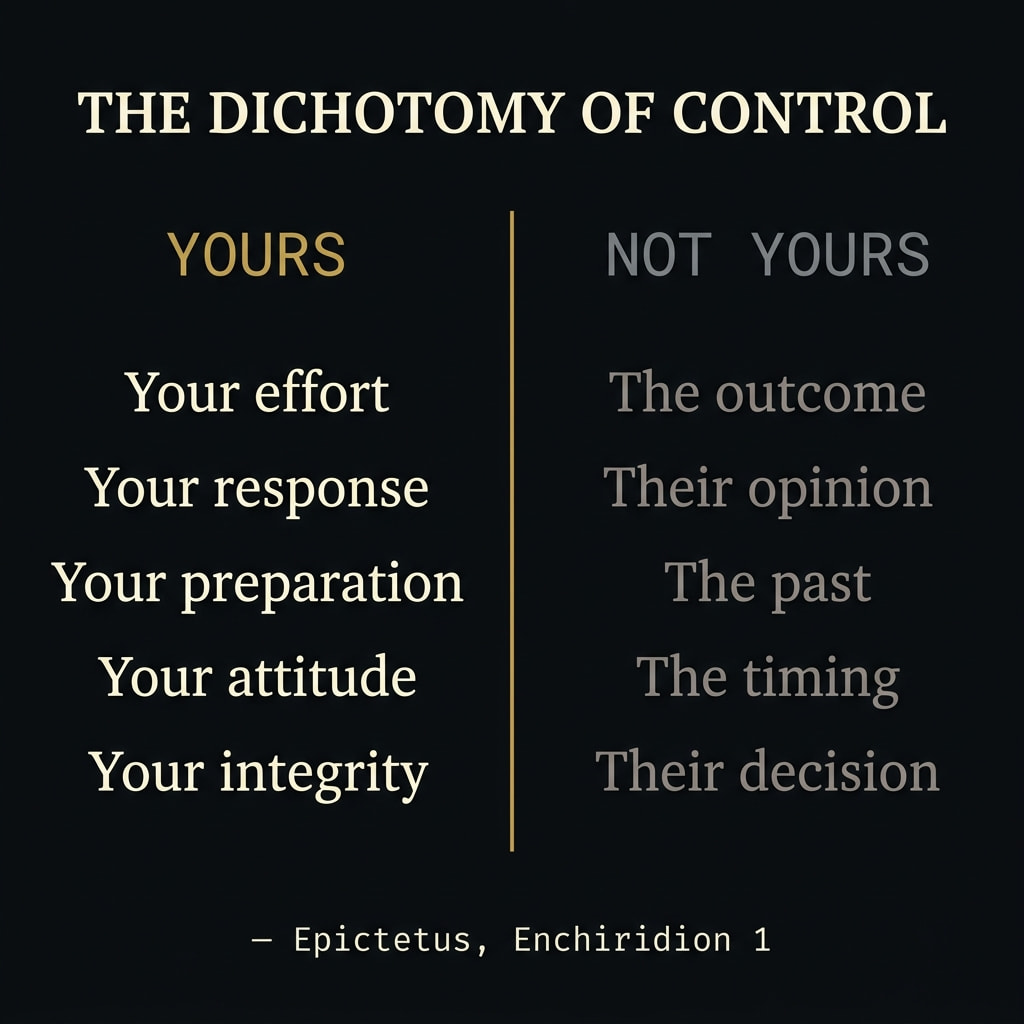
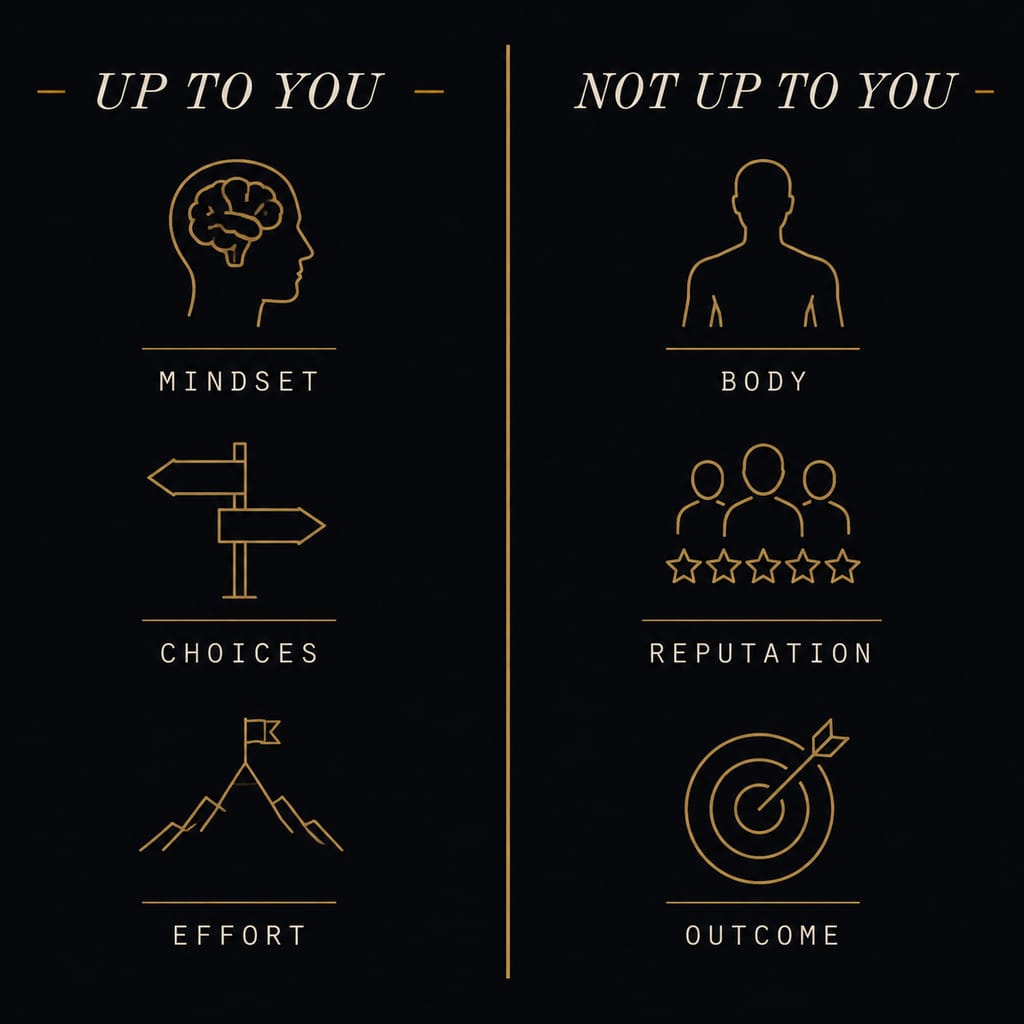
The dichotomy of control is Stoic. It comes from Epictetus, and it is a strict binary — a thing is either entirely up to you, or it is not up to you at all. There is no partial credit and no middle category. Your body, your reputation, other people’s opinions of you, the outcome of a job interview — all of it sits in the “not up to you” pile, however much it feels like yours. Your judgments, your choices, your effort, your intentions — that is the whole “up to you” pile, and Epictetus argued it is the only place real freedom exists.
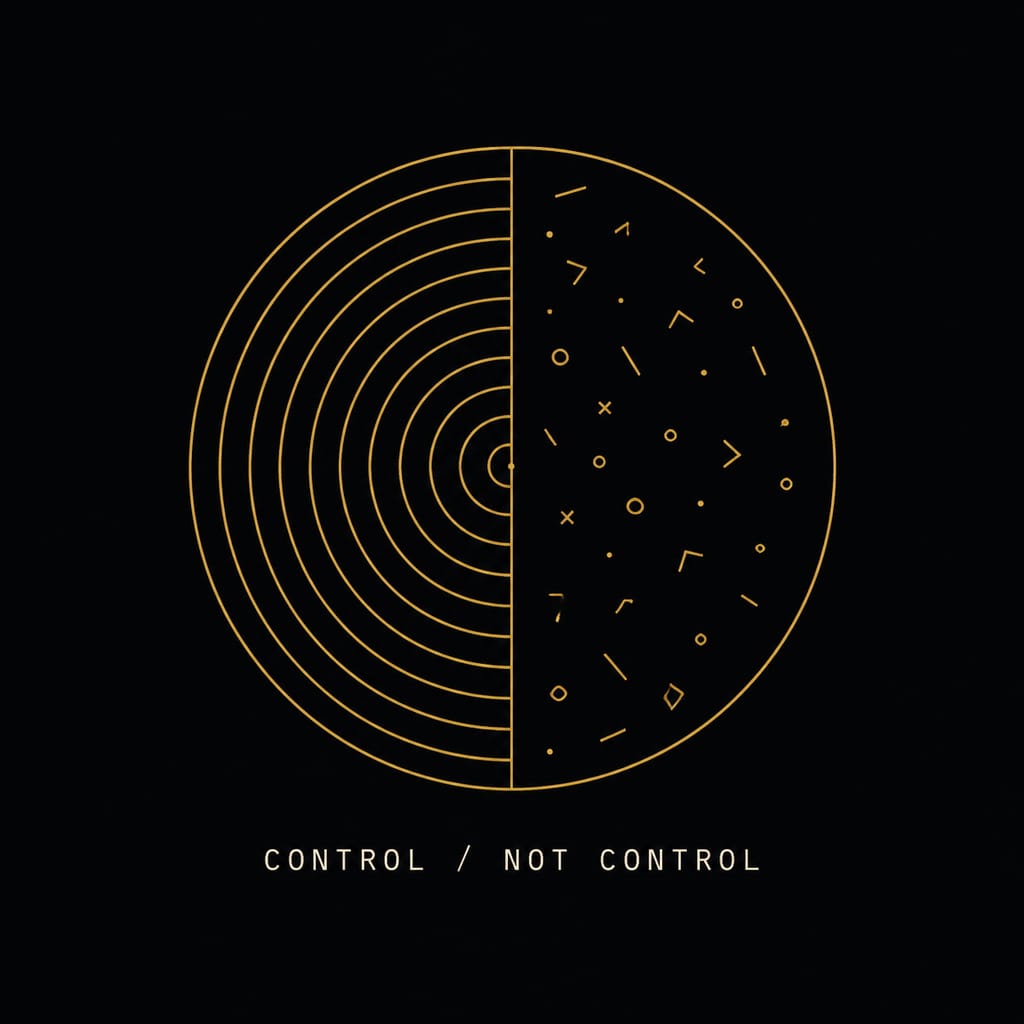
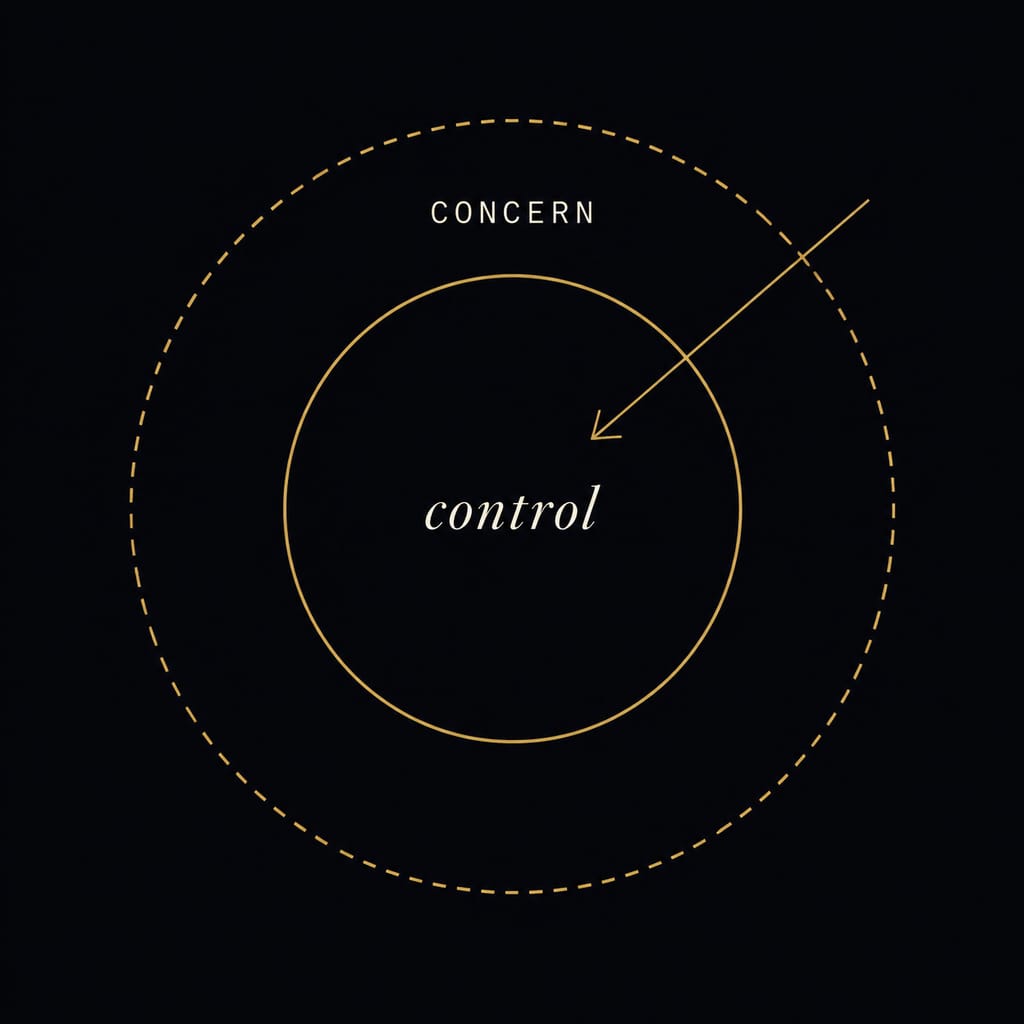
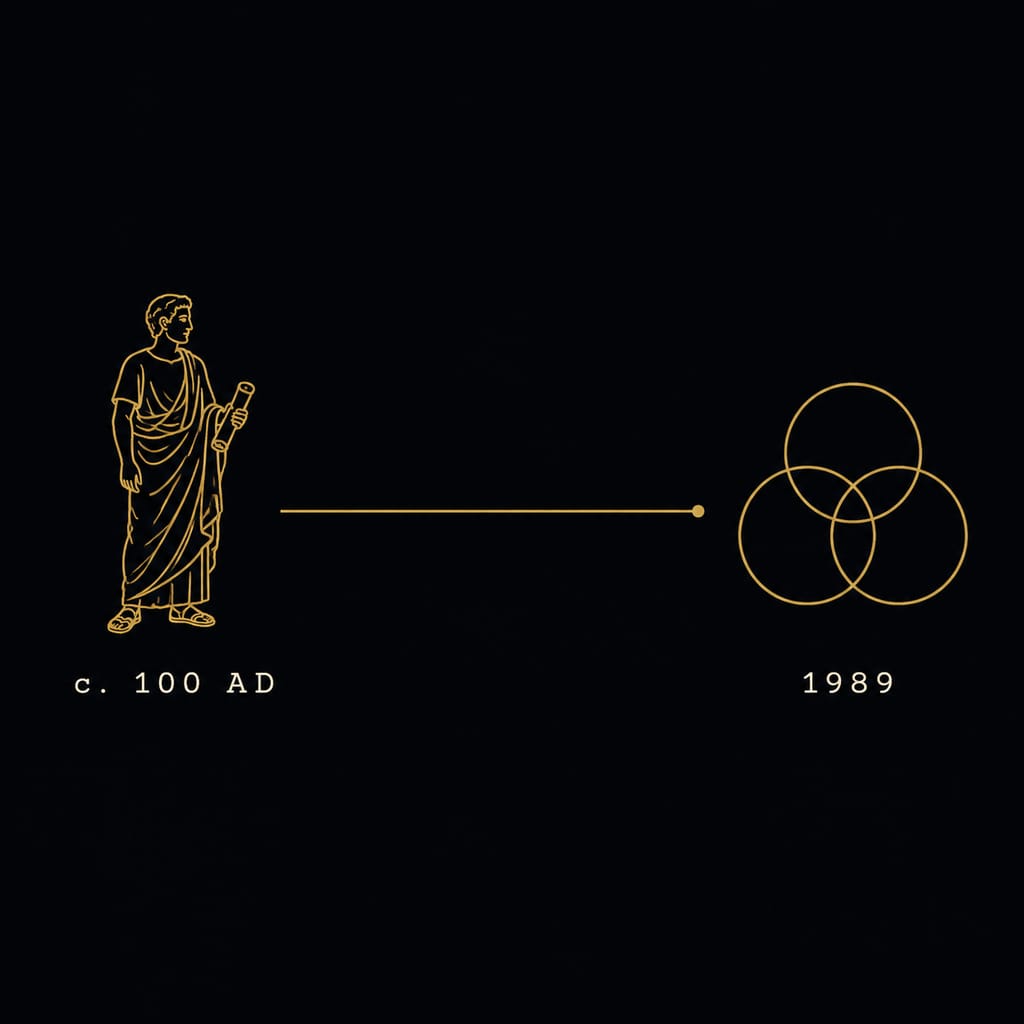
The circle of control is a later, looser tool. It usually appears as two or three concentric rings — things you control, things you can influence, things you can’t touch at all — and it is commonly traced back to Stephen Covey’s distinction between a “Circle of Concern” and a “Circle of Influence” in The 7 Habits of Highly Effective People (1989). The three-ring version most people picture today, with an explicit middle “influence” zone, is a later adaptation that shows up constantly in coaching sessions, therapy worksheets, and management training — useful and widely used, but not itself a Stoic text.
Where Each Idea Comes From
Epictetus opens the Enchiridion with the claim that anchors the entire Stoic school:
“Of things some are in our power, and others are not. In our power are opinion, movement towards a thing, desire, aversion… and, in a word, whatever are our own acts. Not in our power are the body, property, reputation, offices… and, in a word, whatever are not our own acts.” — Epictetus, Enchiridion 1
Nothing in that passage leaves room for a middle category. The circle of control was built more than 1,800 years later, for a different purpose — planning action in organizations, not defining what belongs to the self.
Circle of Control vs. Dichotomy of Control, Side by Side
The Dichotomy of Control, in One Line
Everything is either entirely up to you (your judgments, choices, effort) or entirely not up to you (your body, outcomes, other people) — and only the first category deserves your emotional investment.
The Circle of Control, in One Line
Sort a situation into what you fully control, what you can partly influence, and what you can’t touch at all — then spend your planning energy on the first two rings and stop worrying about the third.
Where They Actually Differ
- Origin: ancient Stoicism, 1st–2nd century AD, vs. modern management and coaching theory, 1989 onward.
- Structure: two categories with no middle ground vs. two or three rings, including an explicit “influence” zone.
- What “control” means: only your own judgments, choices, and effort vs. anything you can act on, even partially.
- Purpose: a test for what deserves your peace of mind vs. a planning tool for where to spend your energy.
- Rigor: philosophically strict and hard to argue with vs. practically flexible and easy to misuse.
How to Actually Use the Circle of Control
Take a genuinely messy situation — a layoff rumor, a strained relationship, a health scare — and write it at the top of a page. Draw three columns: Control, Influence, No Control. Sort every fact and worry you can name into one of the three. This is the same instinct behind a good dichotomy of control worksheet, just with an extra bucket for the messy middle.
The “Influence” column is where the circle model earns its keep. A work project’s final outcome isn’t fully yours, but your preparation, communication, and follow-through clearly move the odds. The Stoic dichotomy would file the whole project under “not up to you” and move on. The circle gives you a name for the effort that sits in between — useful when you’re deciding where to actually spend an afternoon.
Where the Circle Model Breaks the Stoic Idea
The middle ring is also the trap. Once you label something “influence,” it is tempting to treat your effort there as a partial claim on the outcome — and to let your mood rise and fall with how that outcome lands. That is exactly what Epictetus warned against:
“Men are disturbed not by the things which happen, but by the opinions about the things.” — Epictetus, Enchiridion 5
Common misconception: that the circle of control is what Marcus Aurelius or Epictetus taught. It isn’t. It borrows the spirit of Stoic thinking but is a 20th-century coaching model, not an ancient one — and treating “influence” as a category the Stoics recognized misdates the idea by close to two thousand years.
For a strict, dichotomy-only version of the sorting exercise — useful for seeing exactly where the extra ring changes the answer — walk through some real dichotomy of control examples and try classifying the same situations both ways.
Using Both Together in Daily Practice
The two tools work better as a sequence than as rivals. Use the circle of control to plan — it is a genuinely good worksheet for turning a vague worry into a short list of actions. Then apply the dichotomy of control to the “influence” column specifically: recognize that even there, your actual effort and judgment are the only pieces that are yours. The outcome, however much you shaped it, still belongs to the “not up to you” pile once you’ve acted.
This two-step habit — plan with the circle, judge with the dichotomy — is close to what most consistent Stoic practice actually looks like day to day. It pairs naturally with a short daily Stoic practice and shows up often in people using Stoic tools for anxiety, where the goal isn’t less effort but less attachment to how the effort turns out.
Practice the dichotomy of control every day in StoicNow
Join the WaitlistFree Quiz
Which Stoic Are You?
A 3-minute personality quiz — Marcus, Seneca, Epictetus, or Cato.
FAQ
What is the dichotomy of control?
The dichotomy of control is Epictetus’s Stoic principle, stated at the opening of the Enchiridion, that everything is either entirely up to you or not up to you at all. Your judgments, choices, desires, and effort are up to you. Your body, property, reputation, and outcomes belong to the second category — however much they feel like yours.
What is the circle of control?
The circle of control is a modern coaching and therapy tool, usually drawn as two or three rings, that sorts a situation into what you control, what you can influence, and what you can’t touch at all. It builds on Stephen Covey’s 1989 distinction between a Circle of Concern and a Circle of Influence.
Is the circle of control a Stoic idea?
Not directly. The circle of control borrows the spirit of Stoic thinking but is a 20th-century management and coaching model, not an ancient text. Epictetus’s dichotomy of control has no middle “influence” ring — everything is either fully yours or not yours at all, with no partial category in between.
What’s the difference between the circle of control and the circle of influence?
They’re often used interchangeably, but the circle of influence is Stephen Covey’s original two-ring version — Concern versus Influence. The circle of control is the later three-ring adaptation that splits Influence further into a true “control” zone and a separate “influence” zone, adding the middle category the Stoics deliberately refused to name.
Which one should I actually use — the circle or the dichotomy?
Use the circle of control to plan: it’s a good worksheet for sorting a messy situation into what to act on, what to negotiate, and what to drop. Use the dichotomy of control to protect your peace of mind: once you’ve acted, attach your sense of success only to your own effort and judgment, not to any outcome — including the ones you influenced.
Did Epictetus have a “things I can influence” category?
No. Epictetus’s dichotomy in the Enchiridion is explicitly two categories with nothing between them — a job interview outcome, for instance, is entirely “not up to you,” even though your preparation clearly influenced it. The Stoic point is that calling something “influenced” still tempts you to stake your peace of mind on it, which the strict binary is designed to prevent.

Marcus Adler
Founder & Lead Writer, StoicNow
Marcus Adler is the founder of StoicNow. For over a decade he has applied Stoic philosophy to daily life — testing the practices of Marcus Aurelius, Seneca, and Epictetus against modern problems and translating them into simple, repeatable routines. More about the author →
Further reading