Quick answer
The view from above is a Stoic exercise in which you picture yourself, your problems, and your whole life from a great height — as a small point inside an immense world — so that whatever feels overwhelming returns to its real size.
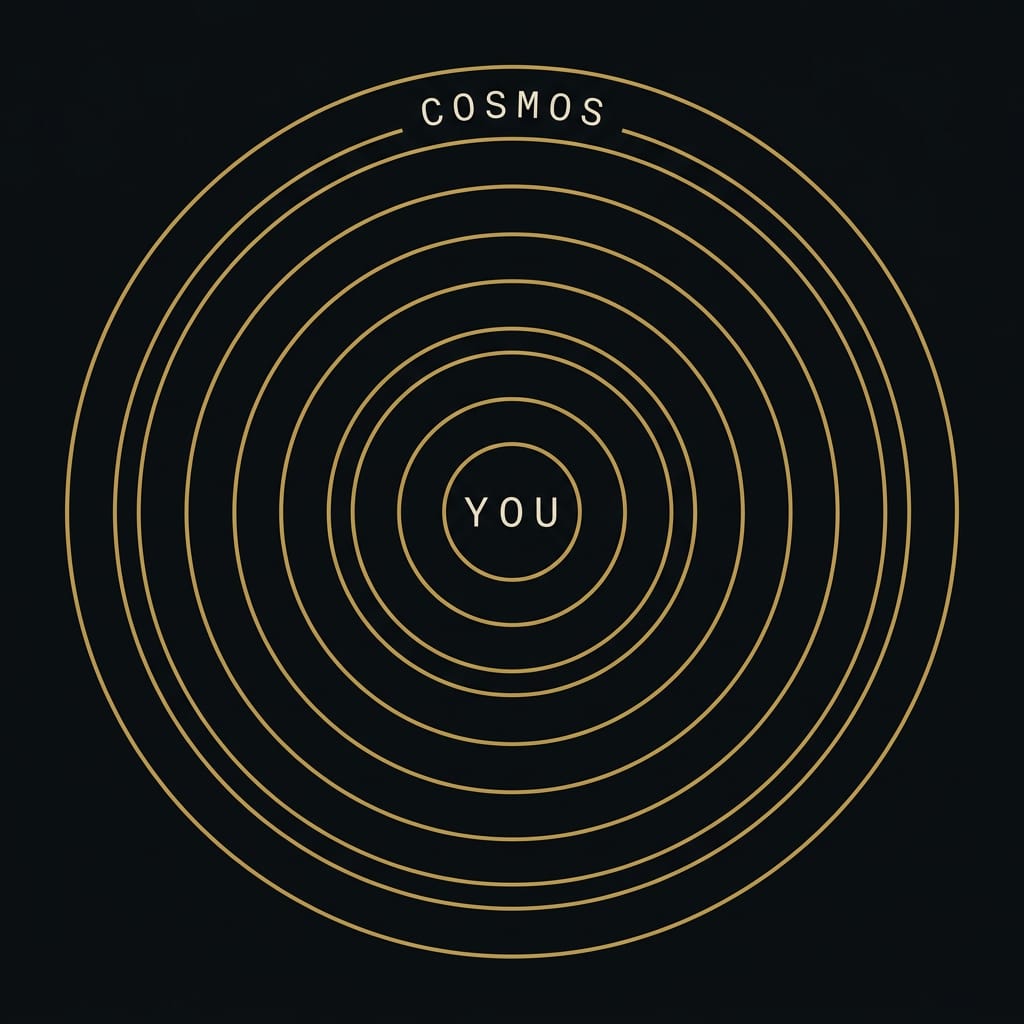
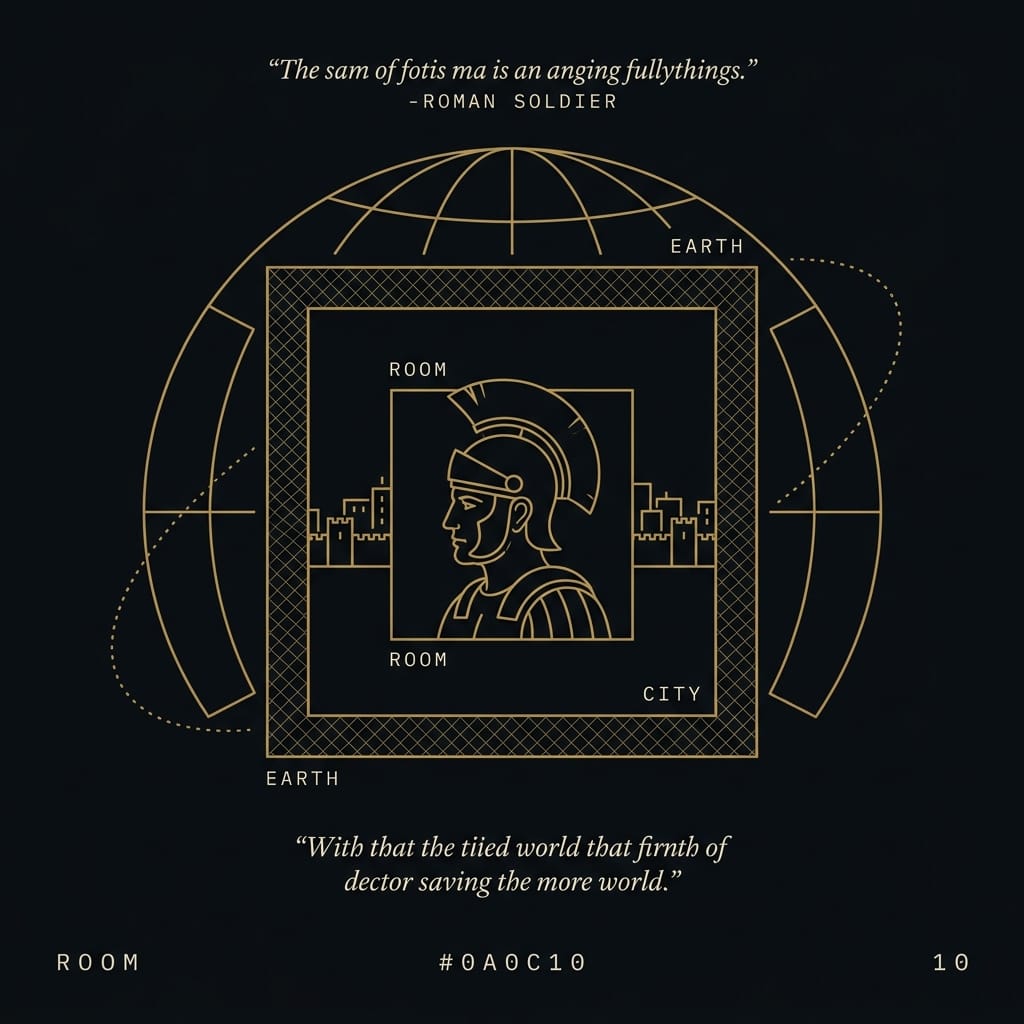
When a worry takes over, it does so by filling the entire screen of your mind. The view from above is the Stoic exercise that widens that screen on purpose. You zoom out — past the room, past the city, past the earth — until the thing crushing you is a speck against the size of the world, and you can finally see it for what it is.
Marcus Aurelius used this move constantly. It is one of the most practical tools in Stoicism, and one of the most misread — it is not about escaping your life or pretending nothing matters. This is where the view from above stoic exercise comes from, exactly how it works, and how to run it in three minutes today.
What the View From Above Actually Is
The view from above is a guided act of imagination. You deliberately rise above your situation — mentally — and observe yourself the way an astronaut observes a city: a small, moving point among millions of other small, moving points, each one absorbed in its own urgent business.
The effect is a sudden reset of proportion. The argument you can’t stop replaying, the deadline, the slight, the fear — all of it shrinks. Not because it stops being real, but because you stop seeing it at maximum magnification. The exercise restores the true ratio between your problem and the world it sits inside.
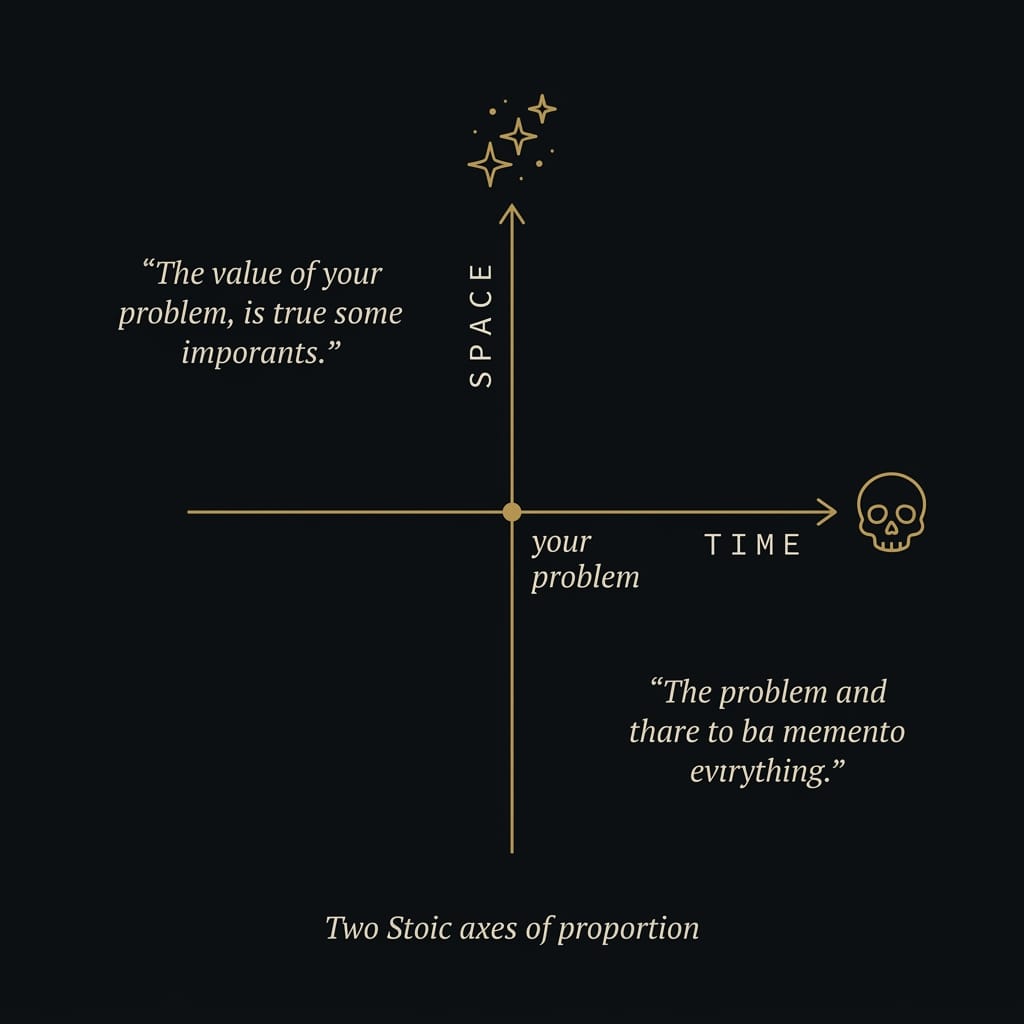
This makes it a close cousin of two other Stoic practices. Where negative visualization rehearses loss to build gratitude, the view from above widens space to build proportion. And where memento mori shrinks your problem against the length of time, the view from above shrinks it against the size of the cosmos. Same instinct, different axis.
In one line: the view from above is the Stoic exercise of mentally zooming out until your problem returns to its real size — a discipline of perspective, not escape.
Where It Comes From
The clearest ancient source is the Meditations of Marcus Aurelius. He returns to the same instruction again and again, talking himself up and out of his own head. In Book 9 he is blunt about it:
“Look down from above on the countless herds of men, and their countless solemnities, and the infinitely varied voyagings in storms and calms.” — Marcus Aurelius, Meditations 9.30
He credits the original move to Plato. In Book 7 he reminds himself that a person of real understanding surveys the whole of human life “as if from some lofty height” (Meditations 7.48). And in Book 12 he urges himself to contemplate the rush of events from above, watching how quickly everything changes and passes (Meditations 12.24). For an emperor managing a plague, a war, and the weight of an empire, this was not poetry. It was a working method for staying sane.
The name itself is modern. The French scholar Pierre Hadot, in his study of ancient philosophy as a lived practice, labeled this recurring pattern “the view from above” — a phrase that has since stuck to the Stoic exercise as if it were ancient. The practice is genuinely old; the tidy name is a 20th-century gift.
Why It Works
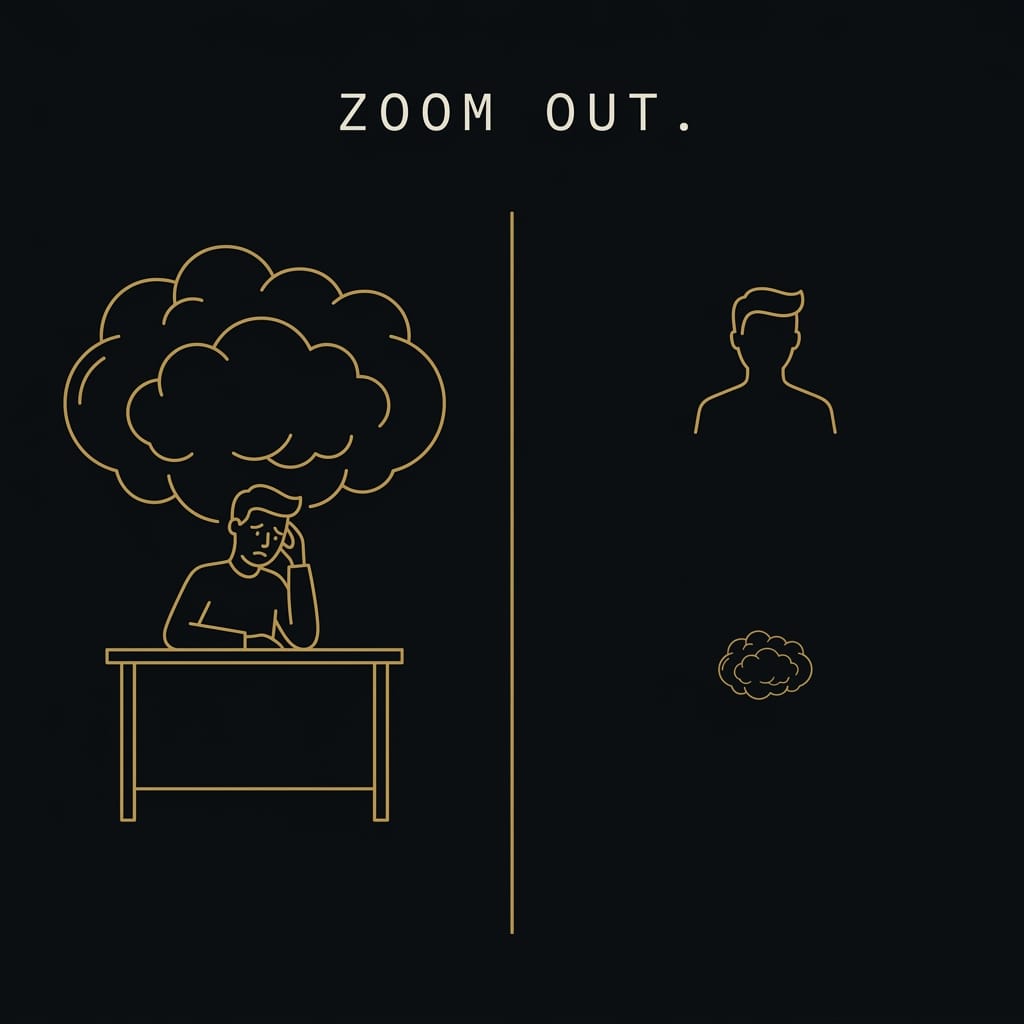
Stress works by narrowing. Under pressure, attention contracts around the threat until it occupies the whole field of view — a phenomenon anyone who has lain awake at 3 a.m. magnifying a small mistake knows well. A worry feels enormous partly because, in that moment, it is the only thing you can see.
The view from above attacks that narrowing directly. By forcing the frame wide open, it re-establishes scale. The Stoics had no laboratory, so their evidence was observation, not data — but the mechanism lines up with two ideas modern psychology takes seriously:
- Cognitive reappraisal — changing how you frame a situation changes its emotional charge. The view from above is reappraisal made spatial.
- Self-distancing — viewing your own problem from an outside, zoomed-out vantage (rather than from inside it) tends to lower its intensity and improve judgment.
Treat the ancient claims as practical wisdom and the modern parallels as suggestive rather than settled. Stoicism did influence the founders of cognitive behavioral therapy, and the family resemblance here is hard to miss — but the honest claim is “this reliably helps in practice,” not “a study proves it.”
The core move: the problem doesn’t shrink because reality changed. It shrinks because you stopped viewing it at maximum magnification. That re-scaling is the whole point.
How to Practice the View From Above
Three to five minutes is enough. You can do it sitting at your desk, on a train, or lying in bed. The aim is not a perfect mental picture — it is the widening itself.
Step 01
Anchor in the problem
Step 02
Rise in stages
Step 03
Hold the wide view
Step 04
Descend and act
That last step matters more than it looks. The view from above is meant to clear the emotional fog so you can apply the dichotomy of control — separate what’s yours to decide from what isn’t, then act on your part. Used well, it’s a setup for the rest of Stoic practice, not a substitute for it. If you want a structured way to build the habit, it fits naturally into a Stoic evening reflection.
Practice the view from above with daily guided prompts
Join the WaitlistThree Common Misconceptions
Because the exercise sounds simple, it’s easy to do a hollow version of it. Three mistakes account for most of them.
1. It’s not about feeling small and helpless
The goal isn’t to crush yourself with cosmic insignificance until you feel powerless. Done right, the effect is relief, not despair — the problem shrinks while your capacity to choose stays exactly where it was. If you finish feeling defeated, you stopped at the wrong step. The view is meant to free you to act, not to talk you out of acting.
2. It’s not detachment or denial
Zooming out does not mean deciding your problems are fake or that you should stop caring. A grief, an injustice, a hard diagnosis — these stay real from any altitude. The Stoics weren’t numb; they were precise about scale. The view from above is a tool for proportion, which is the opposite of pretending. For genuinely heavy circumstances, pair it with the more specific guidance in Stoicism for grief.
3. It’s not a one-time epiphany
Marcus Aurelius didn’t write the view-from-above passage once and move on — he wrote versions of it repeatedly, because the effect fades and the mind narrows again. This is a rehearsed skill, not a single revelation. Like a Stoic morning routine, its value comes from repetition.
Where It Fits in Stoic Practice
Stoicism is less a set of beliefs than a set of exercises — askesis, training. The view from above belongs to the family of practices aimed at the discipline of judgment: tools that correct how you see a situation before you react to it.
A rough map of where it sits:
- When to use it: when a problem has become so large in your mind that you can’t think straight — anger, anxiety, a spiraling worry, wounded pride.
- What it pairs with: the dichotomy of control (decide what’s yours), amor fati (accept what isn’t), and journaling to record what you saw from up there.
- What it is not: a coping trick for avoiding hard decisions. It clears the view so you can decide.
Marcus modeled the whole sequence himself: rise, see the scale of things, then return and do the next right thing as emperor. The point of the climb was always the descent.
“Survey the circling stars, as though yourself were in mid-course with them. Often picture the changing and re-changing dance of the elements. Visions of this kind purge away the dross of our earth-bound life.” — Marcus Aurelius, Meditations 7.47
If you want to build a steady habit of these exercises rather than reaching for them only in a crisis, a structured plan helps — the 30-day Stoic challenge works the view from above into a daily rhythm, and a good Stoic app can prompt it for you each morning.
Free Quiz
Which Stoic Are You?
A 3-minute personality quiz — Marcus, Seneca, Epictetus, or Cato.
FAQ
What is the view from above Stoic exercise?
The view from above is a Stoic visualization in which you mentally rise above your situation and picture yourself, your city, and your whole life from a great height — as a small point inside an immense world. By widening the frame, problems that felt enormous return to their real size. Marcus Aurelius practiced it repeatedly in the Meditations to recover proportion and calm.
Where does the view from above come from?
The clearest ancient source is Marcus Aurelius, who in Meditations 9.30 tells himself to “look down from above” on the crowds of mankind, and in 7.48 credits Plato with surveying earthly things “as if from some lofty height.” The scholar Pierre Hadot named the practice “the view from above” in his study of ancient philosophy as a way of life.
How do you practice the view from above?
Sit quietly and picture your present situation. Then zoom out in stages — see your room, your building, your city, your country, the whole earth, then the earth as one point among the stars. Hold that wide view, notice how the problem rescales, then return. Three to five minutes is enough. It works best when you finish by naming one thing actually within your control.
What is the view from above supposed to do?
It restores proportion. Stress narrows attention until a single worry fills the whole screen of the mind. The exercise deliberately widens the frame so the worry returns to its true scale, which lowers emotional intensity and makes a clearer judgment possible. It is a tool for perspective and humility, not for detachment or pretending things do not matter.
Is the view from above the same as memento mori?
They are related but distinct. Memento mori widens your perspective across time by reminding you that life is short, while the view from above widens it across space by shrinking you against the size of the world. Both shrink the ego and reset proportion, and the Stoics used them together. The view from above is the spatial version of the same move.
Is the view from above backed by psychology?
The exercise lines up with two well-studied ideas: cognitive reappraisal, in which reframing a situation changes its emotional charge, and self-distancing, in which viewing your problem from an outside or zoomed-out vantage reduces its intensity. The Stoics had no lab, so treat the ancient claims as practical observation; the modern parallels are suggestive, not proof.

Marcus Adler
Founder & Lead Writer, StoicNow
Marcus Adler is the founder of StoicNow. For over a decade he has applied Stoic philosophy to daily life — testing the practices of Marcus Aurelius, Seneca, and Epictetus against modern problems and translating them into simple, repeatable routines. More about the author →
Further reading