Quick answer
The you have power over your mind quote is widely attributed to Marcus Aurelius, but its familiar wording should be treated as a paraphrase rather than a verified line from a named translation. A close source is Meditations 8.47: examine your judgment of an event and choose how to respond.
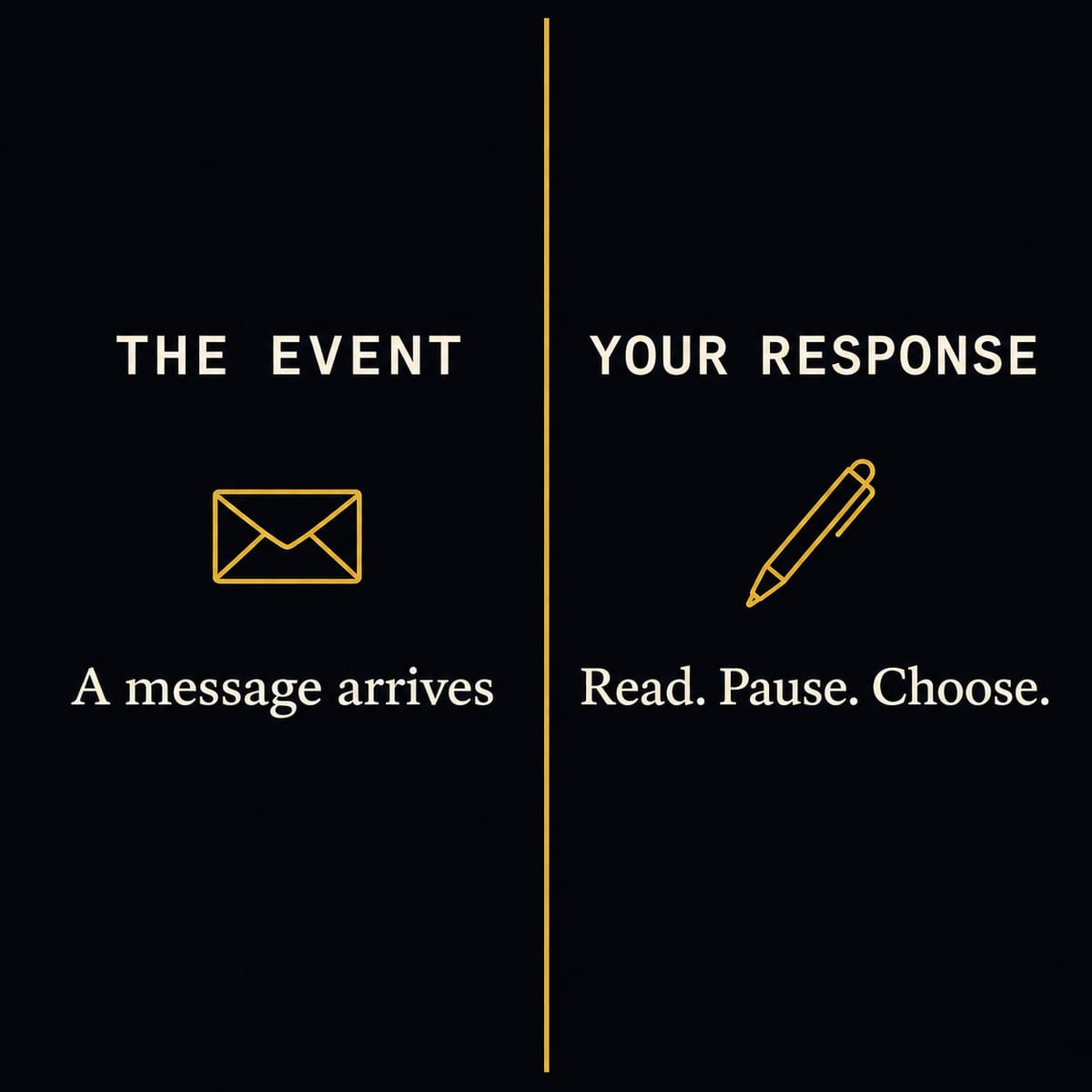
A message arrives. Before you finish reading, you've supplied the tone, guessed the motive and rehearsed your reply. The Stoic question begins in that small gap: what happened, and what have you added?

Where does the "you have power over your mind" quote come from?
The familiar sentence circulates under Marcus Aurelius's name, usually followed by a contrast with outside events and a promise of strength. A useful citation needs more than his name underneath a scenic photograph. It needs a passage, a translation and words that match.
In Meditations, Book 8, section 47, translated by George Long, Marcus distinguishes an external occurrence from the judgment that makes it distressing. Long's wording includes "thy own judgement about it." It doesn't contain the popular sentence in that form.
That makes 8.47 a useful passage for understanding the thought. It doesn't establish the source of the internet wording or identify who first wrote the paraphrase. If you need an exact quotation for an essay, presentation or tattoo, choose a published translation and check its actual text.
For ordinary reading, a paraphrase can still be useful when labeled honestly. The trouble starts when a smooth modern sentence acquires a precise chapter reference it doesn't deserve. Keep the idea and the attribution separate long enough to check both.
What does the idea ask you to practice?
It asks you to examine an interpretation before turning it into a decision. An event arrives with facts you may need to face. Your first account of those facts may also contain assumptions, predictions and claims about what other people meant.
Suppose a colleague replies, "Can we discuss this tomorrow?" The fact is a request for a conversation. "I've ruined the project" is an interpretation. You might have evidence for concern, or you might be filling an uncomfortable silence. Checking that distinction gives you a better basis for your next action.
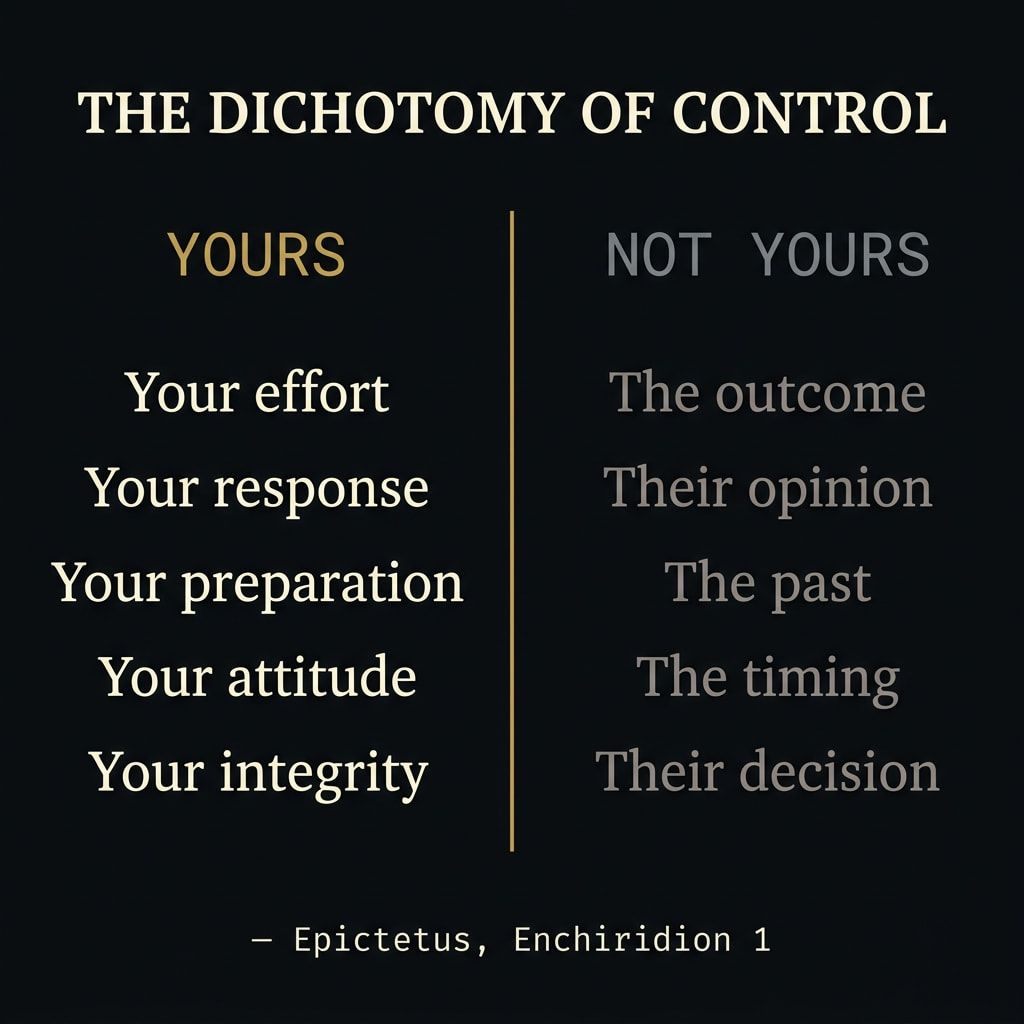
This practice belongs with the dichotomy of control. Your colleague's final opinion isn't yours to command. You can prepare the facts, ask a clear question and answer without making an accusation. Those actions can affect the conversation, although they can't guarantee its result.
Read this as an invitation to work with judgment over time. You won't always notice a reaction as it happens. Sometimes the first useful moment comes an hour later, when you can repair a sharp reply or reconsider a conclusion. That still counts as practice.
Can you influence outside events?
Of course. You can submit an application, help a neighbor, vote, set a boundary or correct a mistake. Each action enters the world and may change it. The limit is that an outcome can depend on more than your action.
A job applicant can prepare carefully and still lose to another candidate. A considerate apology can be refused. A good doctor can treat an illness without controlling how it develops. Recognizing those limits can improve planning because you stop treating effort as a contract the world has signed.
Epictetus's Enchiridion, sections 1 and 5, separates what belongs to our own agency from reputation, property and other things that aren't wholly ours to direct. That distinction gives the practice an ethical point: judge your contribution honestly, even when the scoreboard disappoints you.
Take a difficult conversation. You might decide beforehand to listen to the whole complaint, acknowledge the part that is true and ask for one specific change. Afterwards, assess whether you did those things. Also assess the practical result, because results contain information. You can learn from an outcome without treating it as a complete verdict on your character.
How can you use this idea in an ordinary difficult moment?
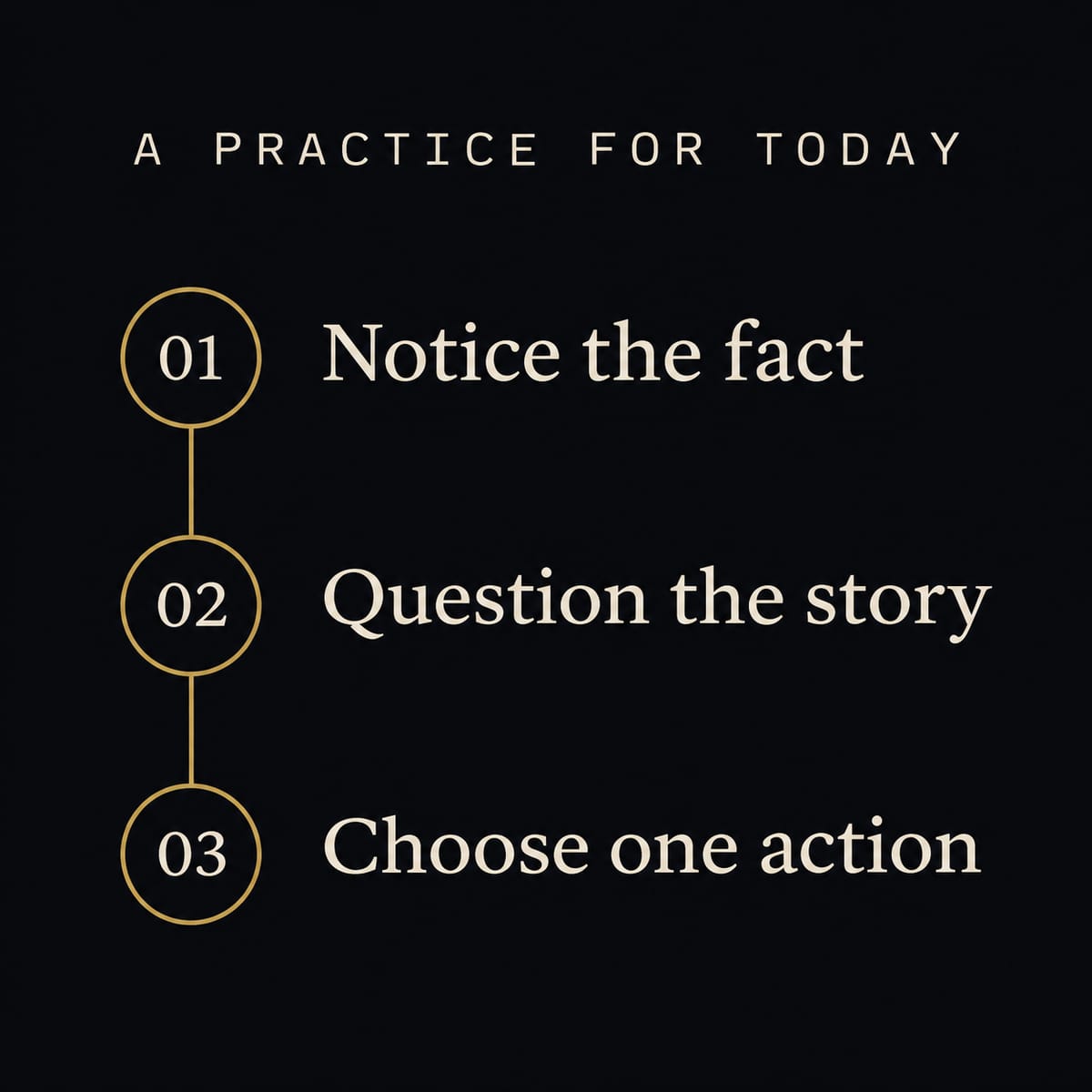
Try the following sequence with a manageable irritation. Choose something small enough that you can think clearly: a delayed train, a terse email or an inconvenient change of plan. You don't need to begin with the hardest event in your life.
1. Describe the observable fact
Write a sentence that a neutral witness could check. "The train is twenty minutes late." "The email contains two sentences." "The meeting moved to Friday." Leave motives and predictions out of this first line.
This doesn't require pretending you know less than you do. If someone insulted you, record the words. If a bill is overdue, record the date and amount. Precision is useful because it gives you something concrete to act on.
2. Identify the story you attached
Now write what you decided the fact means. Perhaps "nobody respects my time" or "this delay will ruin the whole day." Ask what evidence supports that conclusion and whether another explanation fits the same facts.
You don't have to replace a painful thought with a cheerful one. A more accurate account may still be unpleasant. "This will make me late, so I need to contact the person waiting" is less dramatic than a ruined day and gives you a next step.
3. Choose an action you can stand behind
Pick the smallest useful response available. Send the update. Ask what the sender meant. Take a little time before answering. If the problem requires a boundary or a formal complaint, make that the action.
Then stop checking whether you feel perfectly calm. You may remain annoyed while behaving reasonably. Keep your attention on whether the action is proportionate, honest and useful to the people involved.
What does the practice look like in real situations?
| Situation | Interpretation to examine | A possible next action |
|---|---|---|
| A friend hasn't replied | They must be angry with me | Wait, then ask directly if there is a reason for concern |
| A presentation goes badly | I'm incapable of this work | Ask for specific feedback and revise one part |
| A plan changes unexpectedly | The whole day is wasted | Choose what still matters and reschedule the rest |
| Someone crosses a boundary | I must accept it to be Stoic | State the boundary and seek help if needed |
These are possible responses, not scripts that fit every case. An unanswered message can be harmless; it can also belong to a pattern worth addressing. A boundary violation can require immediate action. Facts and context decide which response is responsible.
Keep a small record of one situation each day if that helps you see patterns. Our evening reflection guide offers a place to review an action without spending the whole night prosecuting yourself. Write what you noticed and what you'll try next time.
Does "power over your mind" mean suppressing emotion?
A useful version of the practice allows you to notice an emotion without obeying every instruction it seems to give. Anger may bring an urge to send a cruel message. You can acknowledge the anger while deciding to ask a direct question instead.
Trying to force a feeling away can become another argument with yourself. Start with a smaller task: identify what you believe has happened, check what you know and decide whether any action is needed now. You can return to the wider question when you're less overwhelmed.
Don't use a philosophy slogan as a diagnosis or as a reason to blame someone for anxiety, grief or trauma. Nor should another person use it to dismiss harm they caused. Medical conditions and serious distress need appropriate care; reading Marcus doesn't replace that care.
If anger is the recurring difficulty, the Stoicism and anger guide explores the topic in more detail. Work with a situation at a scale you can manage. There is no prize for choosing the most painful example.
How do you keep the quote from becoming a slogan?
Attach it to one observable habit. Before sending a difficult reply, separate the event from your interpretation. At the end of the day, review one decision. When you discover a mistaken assumption, correct it plainly.
The practice becomes less useful when it turns into a line you recite at other people. Someone dealing with a loss usually needs attention and practical help. Your first job may be to listen, bring food or make a phone call. Apply the discipline to your own judgment before using it as advice.
Check the words you share, too. If a quotation matters enough to repeat, it deserves a source. Our Meditations guide can help you find your way around the book, but a quotation should still be checked in the translation you name.
Try the distinction on one problem. The dichotomy of control tool helps you separate possible actions from outcomes you can't guarantee.
Frequently asked questions
Did Marcus Aurelius say "you have power over your mind"?
The familiar internet wording is widely attributed to Marcus Aurelius, but it should be treated as a paraphrase unless a matching published translation is identified. Meditations 8.47 is a close source for the idea. George Long's translation discusses our judgment of an external event, using different words.
What does the you have power over your mind quote mean?
It points toward examining your interpretation of an event and choosing a responsible response. You may be unable to guarantee an outcome, yet still have useful actions available. Treat the phrase as a prompt for practice, rather than a promise that every thought, feeling or circumstance can be commanded.
Is the quote from Meditations 8.47?
Book 8, section 47 contains a closely related discussion of external events and judgment. It is a sensible passage to read for context. The popular English sentence isn't the wording of George Long's version, so cite that passage as a related source rather than claiming that translation contains the exact internet quote.
Does Stoicism mean accepting bad treatment?
No. Examining your judgment can help you choose a clear boundary, seek support or act against wrongdoing. Accepting that an event occurred doesn't require allowing it to continue. The response should fit the facts, your responsibilities and your safety. A slogan isn't a reason to ignore harm.
How can I practice the idea today?
Choose a manageable irritation. Describe the observable fact, write the interpretation you added and check the evidence for it. Then choose one proportionate action. You can do this after the event if you missed the moment. Review the decision without demanding an immediate change in how you feel.
Keep a small daily practice
Explore StoicNow
Marcus Adler
Founder & Lead Writer, StoicNow
Marcus writes StoicNow's guides to ancient texts and practical reflection. About the author
Primary sources
- Marcus Aurelius, Meditations, Book 8 (George Long translation), especially 8.47.
- Epictetus, Enchiridion (Elizabeth Carter translation), especially sections 1 and 5.