Quick answer
The obstacle is the way meaning: the very thing blocking you is also the raw material for progress. With the right response, an obstacle becomes the path forward instead of a dead end. The phrase paraphrases Marcus Aurelius, Meditations 5.20.
A blocked road is not the end of a journey — it is the journey reshaping itself. That is the whole claim behind “the obstacle is the way”: the difficulty in front of you is not separate from your progress; it is where your progress now happens. Get the idea right and it stops being a poster slogan and becomes a usable method.
Most explanations of the phrase either inflate it into “everything happens for a reason” or flatten it into “stay positive.” Both miss the point, and both make it useless when you are actually stuck. Here is what it really means, where it comes from, how the mechanics work, and how to apply it to a problem you have today.
What “The Obstacle Is the Way” Means
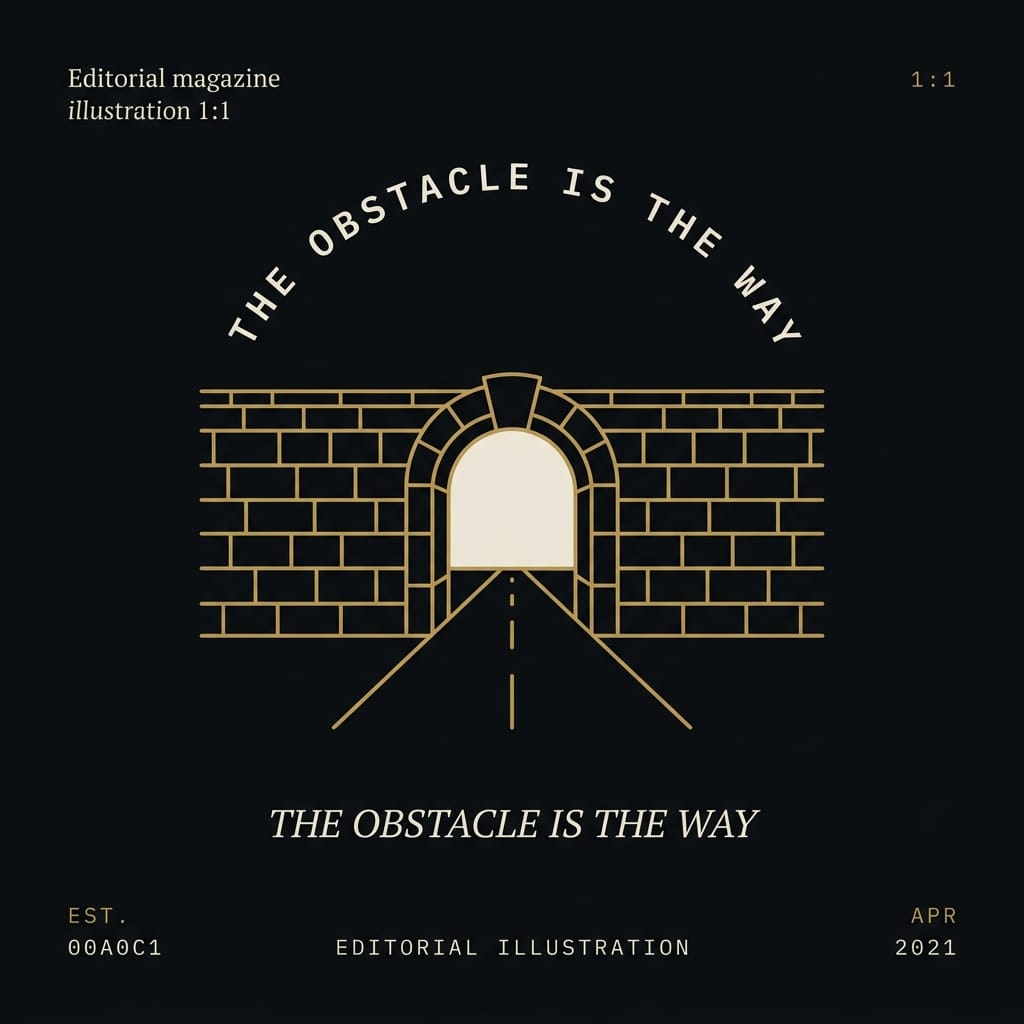
The obstacle is the way means that an obstacle is never only an obstacle. The same event that stops your plan also presents a new action — a way through, around, or forward that did not exist until the obstacle did. The blockage and the path are the same object seen from two angles.
Read carefully, the idea has two halves. First, the obstacle stays an obstacle: a layoff is still a layoff, an illness is still an illness, and pretending otherwise is denial, not philosophy. Second, the obstacle is always usable: it forces a decision, reveals a weakness, opens a different door, or builds a capacity you did not have. The Stoic move is to keep your attention on what the obstacle makes possible, not on the fantasy version of events where it never happened.
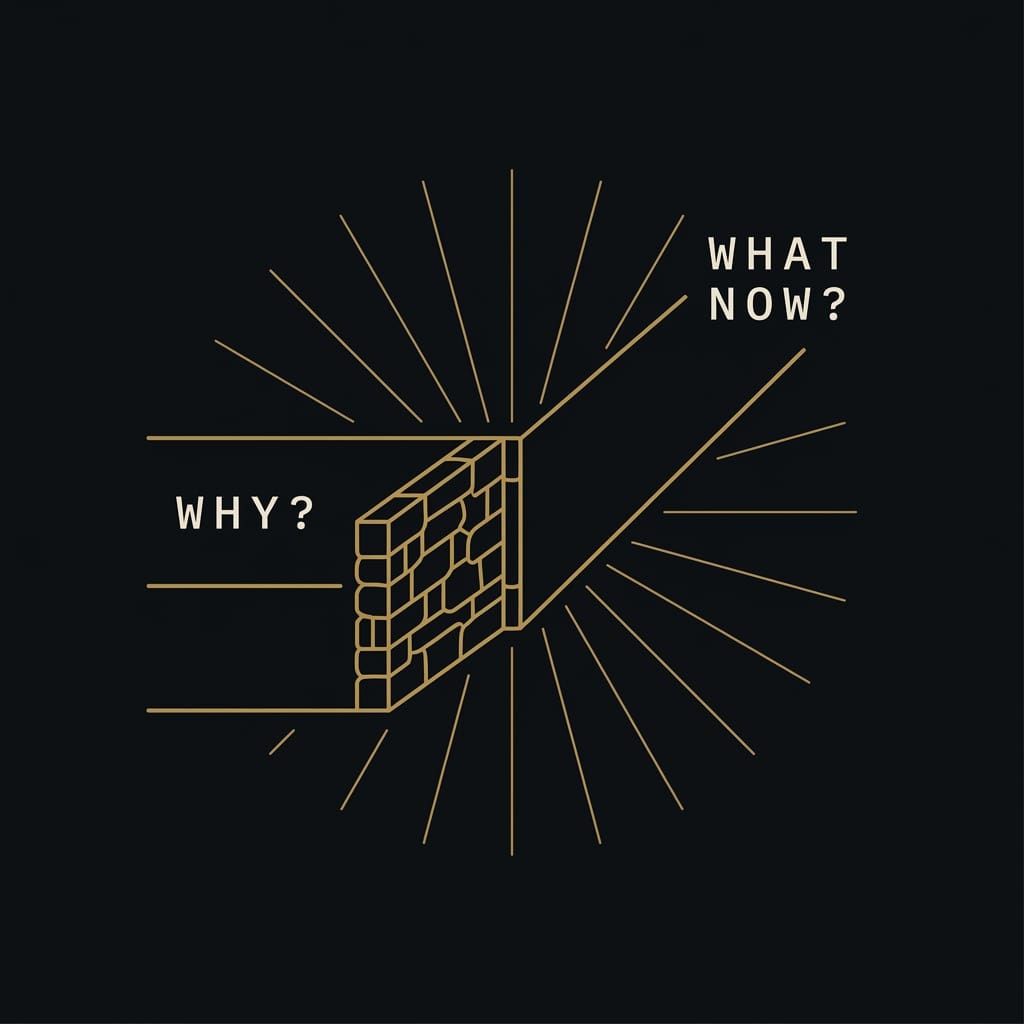
This is why the idea is practical rather than consoling. It does not ask you to feel good about hardship. It asks you to act on it. The question shifts from “why is this happening to me?” to “what does this now require of me?” — and that second question always has an answer.
In one line: An obstacle blocks one path and, in doing so, becomes the next one. Your response to it is the part you control — and the part where character is actually built.
Where the Phrase Comes From
The line is a compression of a passage by Marcus Aurelius, the Roman emperor who wrote a private journal of Stoic exercises now known as the Meditations. In Gregory Hays’s translation, Meditations 5.20 reads:
“The impediment to action advances action. What stands in the way becomes the way.” — Marcus Aurelius, Meditations 5.20
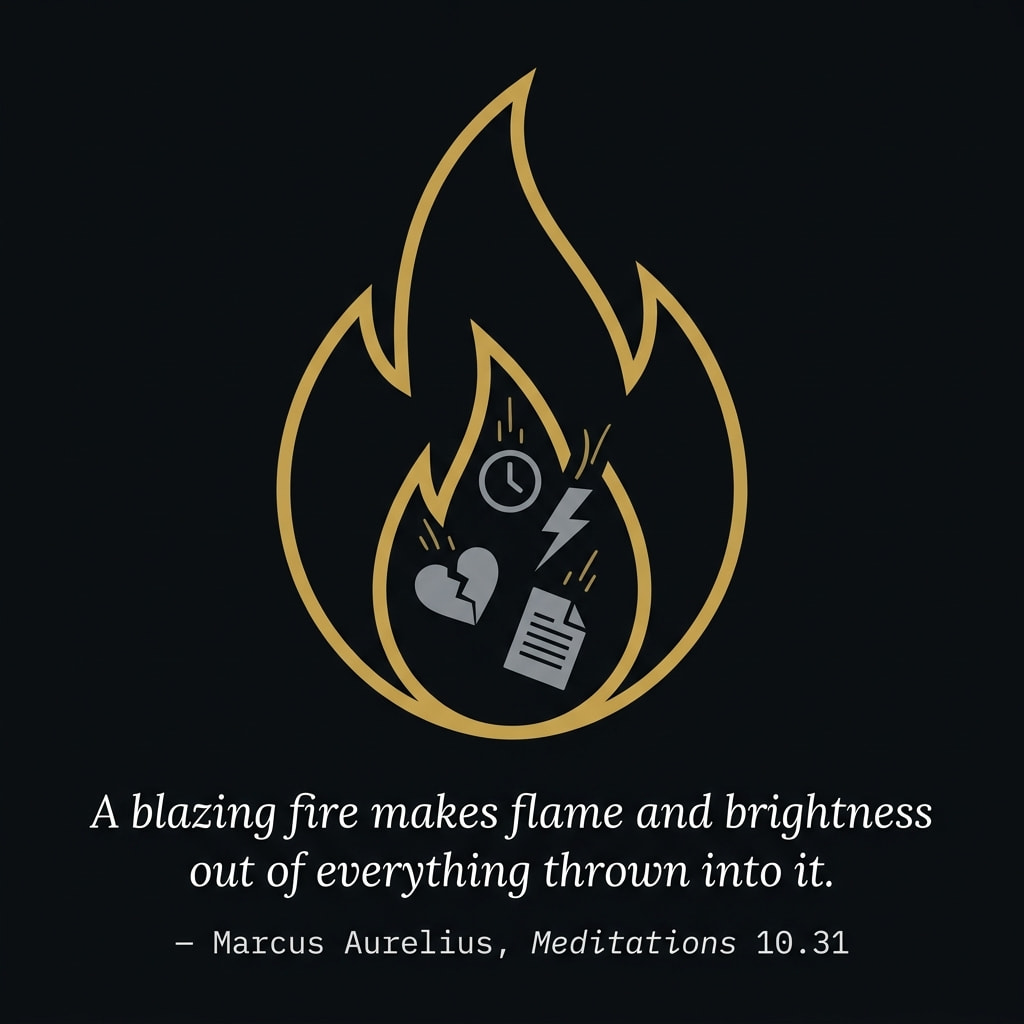
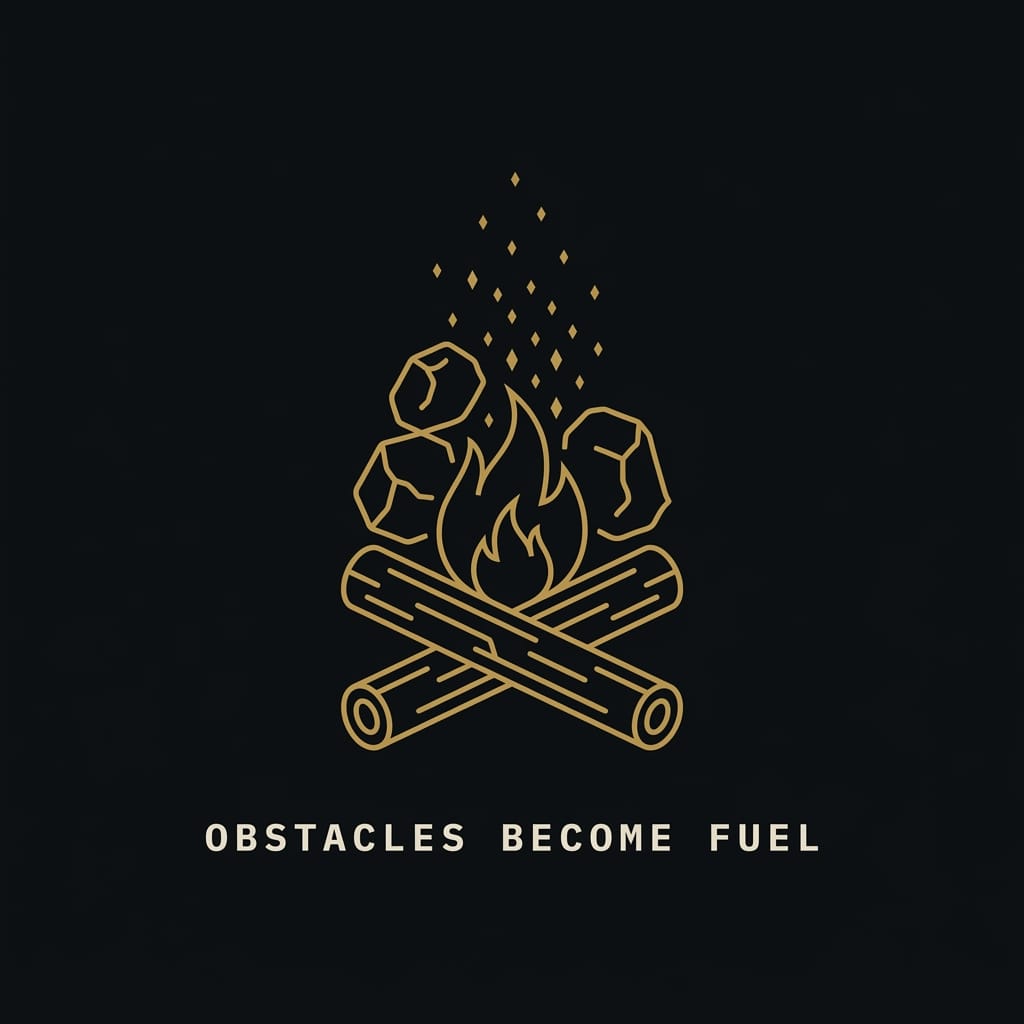
Marcus was not writing for an audience. He wrote these notes to himself around 170–180 AD, on campaign, as a working ruler under constant pressure — which is why the line reads like an instruction rather than a quotation. He returns to the same theme elsewhere. In Meditations 4.1 he compares a strong mind to a fire that takes whatever is thrown on it and turns the fuel into a brighter flame — obstacles become combustion.
The modern phrasing — the exact words “the obstacle is the way” — was popularized by Ryan Holiday’s 2014 book The Obstacle Is the Way, which lifts the line from 5.20 and builds a step-by-step method around it. The slogan is Holiday’s; the philosophy is Marcus’s; and the lineage runs back further still, to Epictetus, whose insistence that we control our responses but not our circumstances is the engine underneath the whole idea.

How the Idea Actually Works
The phrase only becomes useful when you break it into the three moves the Stoics actually practiced. They map cleanly onto the three Stoic disciplines — perception, action, and will — and you run them in order.
1. Perception: see the obstacle plainly
Most of the suffering in an obstacle is not the obstacle — it is the story wrapped around it. “This is a disaster,” “this always happens to me,” “I’m finished.” The first move is to strip the event back to the facts: a contract was canceled, a flight was missed, a result came back bad. Epictetus put the principle bluntly in the Enchiridion: men are disturbed not by things, but by their judgments about things. Change the judgment and the obstacle shrinks to its real size.
2. Action: find the move it permits
Once the panic is off the table, look for the one thing the obstacle allows you to do. Not the perfect solution — the available one. A closed door usually leaves a window, a delay, a smaller version of the goal, or a chance to fix the weakness that caused the block. Action need not be large to count; it needs to be real. This is the half of the idea people skip, and skipping it turns “the obstacle is the way” into passive optimism.
3. Will: accept what you cannot change
Some of the obstacle will not move no matter what you do. The grief stays, the diagnosis stands, the decision is final. Here the work is acceptance without resentment — the attitude the Stoics called amor fati, loving your fate. Will does not mean forcing an outcome; it means meeting the unchangeable part with steadiness so your energy goes to the part you can still affect.
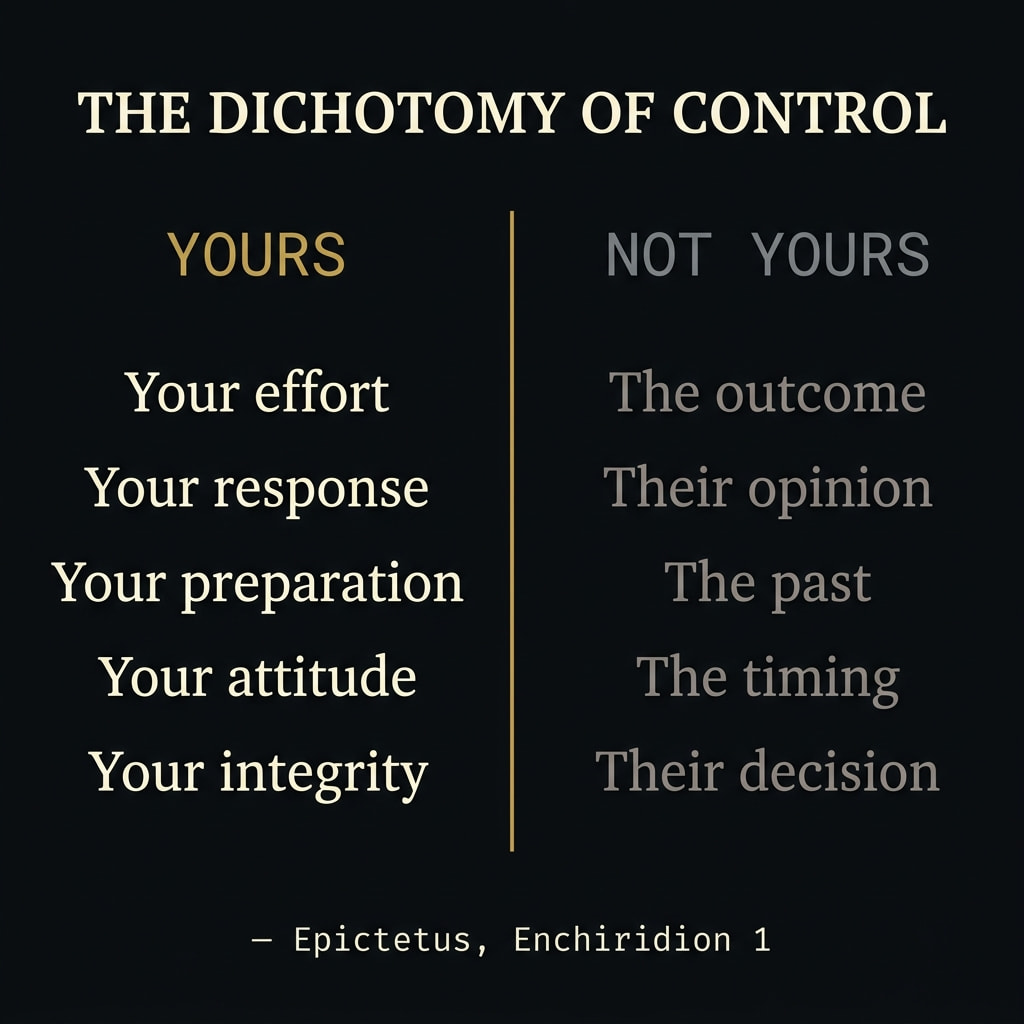
Notice what this rests on: the dichotomy of control. The obstacle becomes the way only because your response — your judgment and your next action — is the one thing fully in your hands. The circumstance is given; the use you make of it is yours.
How to Apply It Today
Pick a real obstacle you are facing right now — a stalled project, a conflict, a setback at work or at home — and run it through four questions. They are deliberately plain.
- What actually happened? Describe the obstacle in one sentence, no adjectives, no forecast. Just the event.
- What is the story I’ve added? Name the catastrophe, blame, or shame you’ve attached — then set it aside as a judgment, not a fact.
- What does this make possible? Force one concrete answer: a skill to build, a person to call, a flaw to fix, a smaller goal to hit, a wrong direction to abandon.
- What is the one move I can make in the next hour? Choose the smallest real action and do it before the day ends.
A worked example. You are passed over for a promotion. The event: someone else got the role. The story: “I’m being held back, it’s unfair, I should quit.” What it makes possible: an honest read of the gap, a direct conversation with your manager, a portfolio of the work that proves the case, or evidence that this place is the wrong fit. The next move: book the conversation. The obstacle — the rejection — just became the most informative thing that happened to your career this quarter.
If you want a structured way to build the habit, the questions above sit comfortably inside a Stoic evening reflection or a longer 30-day Stoic challenge. The skill is repetition: run obstacles through the same loop until the reframe becomes your first reaction instead of your fifth.
Common Misconceptions
It does not mean “everything happens for a reason.” The Stoics made no claim that obstacles are sent to teach you. They said obstacles are usable, which is different. The meaning is found in your response, not pre-loaded into the event.
It is not toxic positivity. “The obstacle is the way” never asks you to feel good about loss or pretend pain isn’t pain. Acceptance and grief coexist — Stoicism has plenty to say about grief without ever demanding a smile.
It is not “seek out hardship.” The idea is about obstacles you already have, not manufacturing new ones. That is a separate practice — voluntary discomfort — and conflating the two leads to needless self-punishment dressed up as philosophy.
A fourth error is treating the phrase as a guarantee. It is not. Some obstacles end careers, relationships, and lives, and no reframe undoes that. The Stoic claim is narrower and more durable: whatever the obstacle takes, it cannot take your response to it. That response is always available, and it is always yours.
Where It Sits in Stoic Practice
“The obstacle is the way” is not a freestanding trick. It is what the core Stoic ideas look like when a problem hits. The dichotomy of control tells you what is yours; amor fati tells you how to meet what isn’t; the four virtues — especially courage and wisdom — tell you how to act once you’ve accepted reality. The obstacle line is the moment all of that gets used.
That is also why it appears across the whole tradition. You can read the same instinct in the quotes of Marcus Aurelius, in Seneca’s essays on adversity, and in Epictetus’s relentless focus on what depends on us. It is one of the most quoted ideas in Stoicism precisely because it is where the philosophy stops being abstract and starts being a tool you reach for on a bad day. Used well, it changes the default question you ask under pressure — and that single change is most of the work.
“Choose not to be harmed — and you won’t feel harmed. Don’t feel harmed — and you haven’t been.” — Marcus Aurelius, Meditations 4.7
Practice one Stoic idea a day in StoicNow
Join the WaitlistFree Quiz
Which Stoic Are You?
A 3-minute personality quiz — Marcus, Seneca, Epictetus, or Cato.
FAQ
What does “the obstacle is the way” mean?
It means the very thing blocking you is also the raw material for progress. With the right response, an obstacle stops being a dead end and becomes the path forward — the difficulty itself contains the next move. The phrase paraphrases Marcus Aurelius in Meditations 5.20: “The impediment to action advances action. What stands in the way becomes the way.”
Who said “the obstacle is the way”?
The idea comes from the Roman emperor and Stoic philosopher Marcus Aurelius, in Meditations 5.20. The exact modern phrasing “the obstacle is the way” was popularized by Ryan Holiday’s 2014 book of that title, which condenses the passage into a single memorable line and builds a practical method around it.
Does “the obstacle is the way” mean every problem is good?
No. The Stoic claim is narrower: obstacles are not automatically good, but they are always usable. A problem is still a problem, and pain is still pain. What the idea rejects is the belief that being blocked leaves you with nothing to do. There is always a response available, and that response is where your control — and your character — actually live.
How do you apply “the obstacle is the way” in real life?
Start with perception: describe the obstacle plainly, stripped of panic and story. Then act: find the one small move the obstacle permits and take it. Then accept what is outside your control without resentment. The discipline is to keep asking “what does this make possible?” instead of “why is this happening to me?”
Is “the obstacle is the way” the same as “amor fati”?
They are related but not identical. Amor fati is the attitude — loving or willingly accepting whatever happens. “The obstacle is the way” is the method that follows from it: once you stop fighting reality, you can use it. Acceptance comes first; turning the obstacle into a path is what acceptance frees you to do.
Where is the original “obstacle is the way” quote from?
Marcus Aurelius, Meditations, Book 5, section 20. In Gregory Hays’s translation it reads: “The impediment to action advances action. What stands in the way becomes the way.” Marcus wrote it privately for himself around 170–180 AD, never intending it for publication, which is part of why it reads as practice rather than slogan.

Marcus Adler
Founder & Lead Writer, StoicNow
Marcus Adler is the founder of StoicNow. For over a decade he has applied Stoic philosophy to daily life — testing the practices of Marcus Aurelius, Seneca, and Epictetus against modern problems and translating them into simple, repeatable routines. More about the author →
Further reading