Quick answer
Voluntary discomfort stoicism is the practice of deliberately choosing mild hardship — cold, hunger, plain living — for a set time, to weaken the fear of loss and prove to yourself how little you actually need.
Voluntary discomfort is the most physical practice in Stoicism, and the one most people get wrong. It is not punishment, not endurance theater, and not a productivity hack. It is a controlled rehearsal for loss — you give up comfort on purpose, briefly, so that when life takes it from you involuntarily, the blow lands on someone who has already been there.
The Stoics had a blunt theory of comfort: the more of it you have and the less you examine it, the more fragile you become. A man who has never been cold dreads cold. A man who has never been hungry is owned by his next meal. Voluntary discomfort breaks that grip by visiting the feared condition on purpose, while you are safe, calm, and in control.
Here is what the practice actually is, where it comes from in the texts, how it works on the mind, and how to start this week without turning your life into an ordeal.

What Voluntary Discomfort Actually Means
Voluntary discomfort is the deliberate, time-limited choice to undergo a mild version of something you fear losing: warmth, food, money, status, ease. You skip the meal you could have eaten. You take the cold shower. You sleep on the floor, wear the rough coat, walk in the rain instead of ordering a car. The word that matters is voluntary. You are the one who chooses it, sets the dose, and ends it.
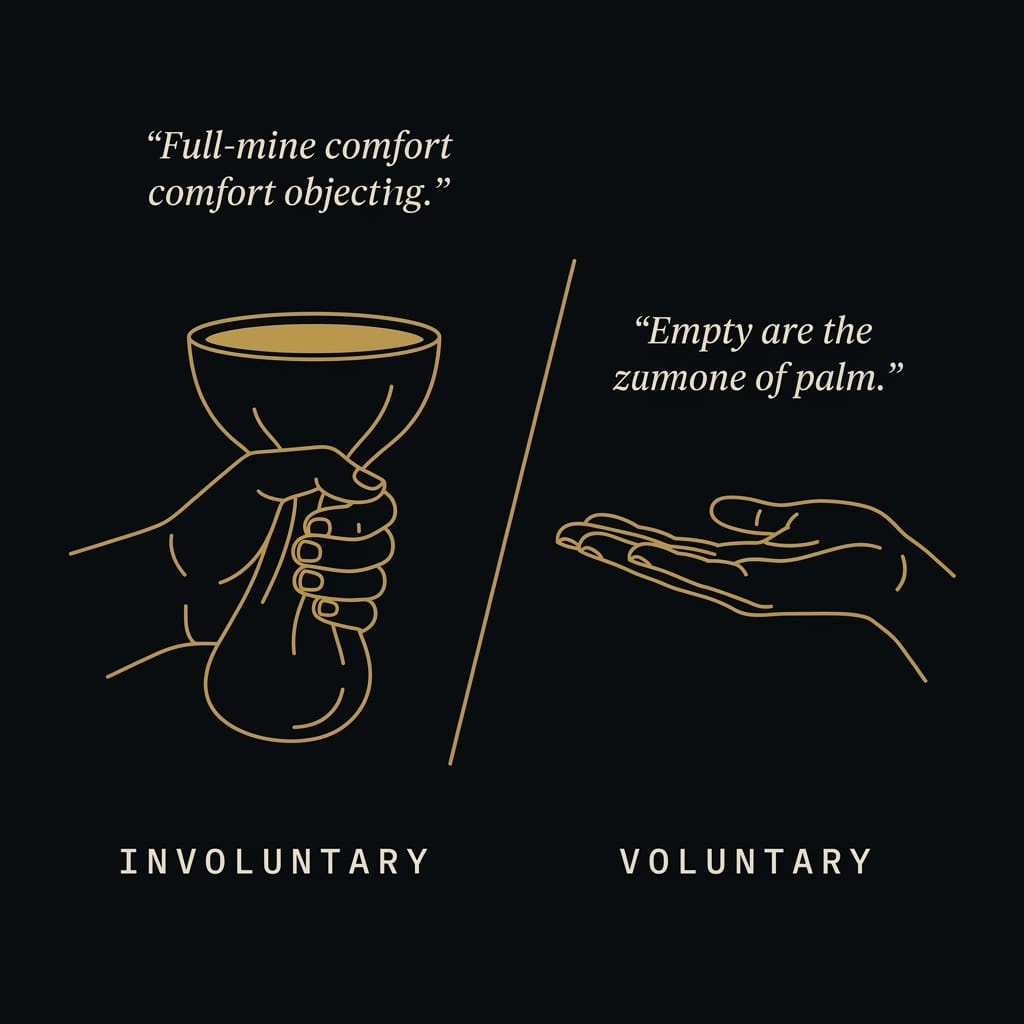
That distinction is everything. Involuntary discomfort — the kind life imposes — arrives with fear attached. Voluntary discomfort arrives with agency attached. You are practicing the same sensation under different management, which is exactly what makes it useful. The body learns that hunger is survivable; the mind learns that the dreaded condition is smaller than the dread of it.
The core claim. Most suffering about hardship is anticipatory — we suffer the fear of losing comfort far more than the loss itself. Voluntary discomfort attacks the fear directly by collecting evidence: I have been here, and I was fine.
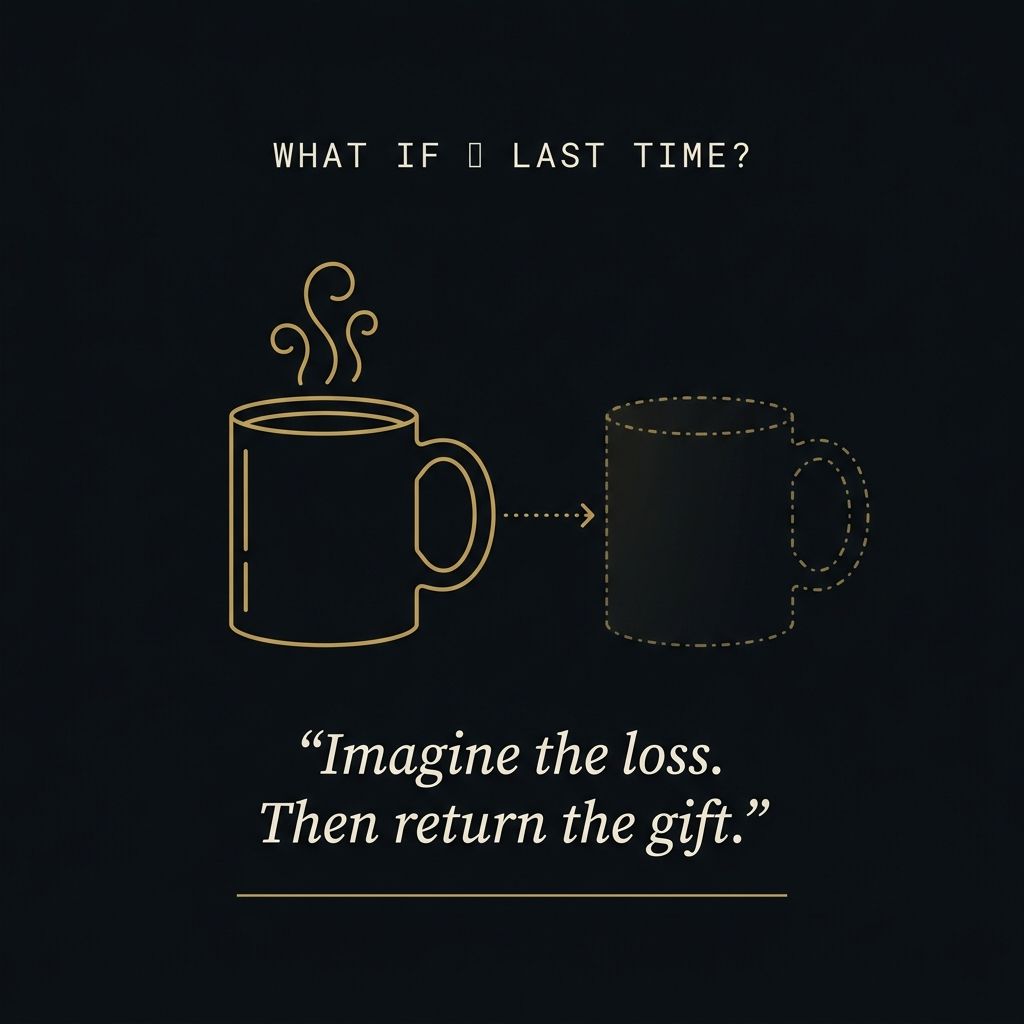
This is why the practice pairs so naturally with negative visualization, the Stoic exercise of imagining loss. Negative visualization rehearses the loss in the mind; voluntary discomfort runs the live drill. One trains the imagination, the other trains the nervous system. Used together, they are the Stoic answer to a fragile, comfort-padded life.
Where the Practice Comes From
This is not a modern reinterpretation. The Stoics wrote about voluntary discomfort directly, and the clearest source is Seneca’s eighteenth letter to Lucilius, written while the rest of Rome was preparing for the festival of the Saturnalia — a season of feasting and excess.
“Set aside a certain number of days, during which you shall be content with the scantiest and cheapest fare, with coarse and rough dress, saying to yourself the while: ‘Is this the condition that I feared?’” — Seneca, Letters 18
That single line is the whole method. Pick the days. Strip the comforts. Then ask the question — is this the condition that I feared? — and discover that the answer is almost always no. Seneca adds the reasoning that makes it Stoic rather than ascetic: he is not against wealth, only against being ruled by it. “It is precisely in times of immunity from care,” he writes, “that the soul should toughen itself beforehand for occasions of greater stress.” You practice poverty while rich so that real poverty, if it comes, finds you unafraid.
Seneca is not the only source. Musonius Rufus, the teacher of Epictetus, devoted an entire lecture to training (askesis), arguing that the soul is disciplined by accustoming the body to cold, heat, hunger, hard beds, and the avoidance of pleasures. Epictetus himself, who lived simply by necessity and then by choice, treated every hardship as a training partner: “Difficulties are things that show what men are.” The practice runs through the whole school, from the wealthy senator to the former slave.
How It Works on the Mind
Strip away the ancient framing and three mechanisms remain — each of which holds up in plain modern terms.
1. It resets your baseline
Comfort is adaptive: whatever you have, you stop noticing. The first warm meal after a hungry day tastes extraordinary; the thousandth ordinary meal tastes like nothing. Voluntary discomfort interrupts that creep. By going briefly without, you reset the baseline and the comfort returns vivid — the same gratitude mechanism Stoics were after, arrived at through the body instead of the imagination.
2. It shrinks the fear
Fear inflates whatever it can’t inspect. “Being broke,” “going hungry,” “losing my routine” loom enormous as long as they stay abstract. Spend a real day inside a small version of them and they deflate to actual size. This is why Seneca’s question is the operative part: the practice is not the discomfort, it is the discovery that the feared thing is endurable.
3. It builds proof you can draw on
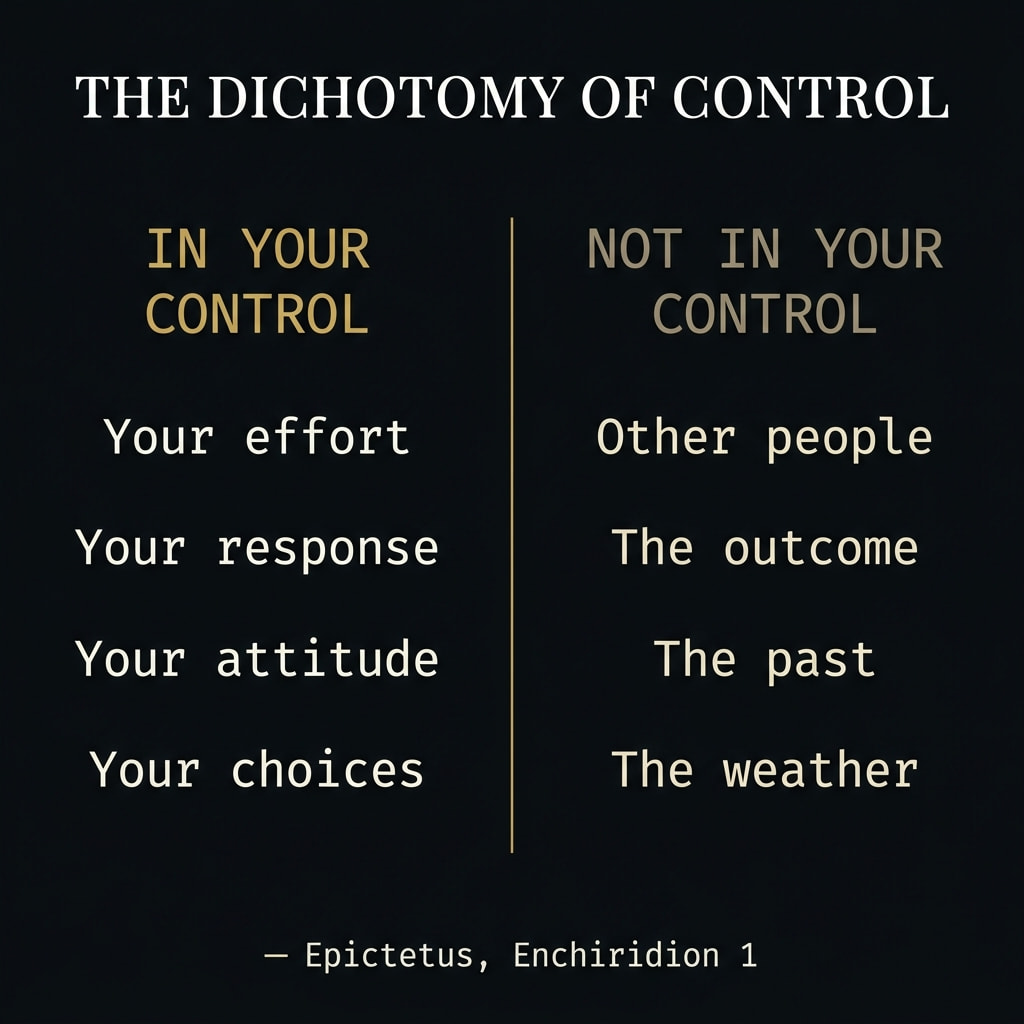
Each session leaves a memory of having coped, and those memories accumulate into a kind of evidence file. When real hardship comes, you are not facing it blank — you are facing it with a record of having handled its rehearsals. That is resilience in the literal sense: not toughness for its own sake, but a tested confidence that you can take the hit. It sits squarely inside the dichotomy of control: you cannot choose whether loss comes, only whether it finds you prepared.
How to Practice Voluntary Discomfort Today
The mistake beginners make is going too big — a three-day fast, a week of cold, an ordeal designed to impress no one. That is endurance theater, and it usually ends in a quiet sense of failure. The Stoic version is small, deliberate, and repeatable. Start here.
- Cold exposure. End your shower with thirty seconds of cold. Walk out underdressed for the weather. The body protests, the mind watches it protest, and you learn the protest is just noise.
- Hunger, on purpose. Skip one meal you would normally eat. Not for the metabolism — for the discovery that the hunger you dread is a passing sensation, not an emergency.
- Plain fare. Take Seneca literally: a few days of the cheapest, simplest food and no luxuries. Coffee black. No add-ons. Notice how fast “need” turns out to be “prefer.”
- Hard ease. Sleep without the extra pillow. Sit on the floor. Leave the heat off an hour longer than is pleasant. Mild, optional, ended whenever you decide.
- Friction over convenience. Walk instead of riding. Take the stairs. Carry the bags. Choose the slightly harder path when nothing forces you to.
- Digital and social. A day without the comfort you reach for reflexively — the phone, the scroll, the second drink. The withdrawal is information about how owned you were.
Whatever you choose, three rules keep it Stoic rather than masochistic. First, name what you fear losing before you start — the practice is pointed, not random. Second, ask Seneca’s question afterward: was that the condition I feared? Third, keep it mild and within your control — you are rehearsing, not punishing. If you want a structured ramp, fold one small discomfort into a 30-day Stoic challenge or anchor it to your morning routine so it becomes a habit rather than a heroic event.
A note on health. The Stoic point is psychological, not medical. Skip cold exposure if you have a heart condition; do not fast if you have an eating disorder history or are pregnant; consult a doctor before anything strenuous. Voluntary discomfort is a tool for a sound body. Harming yourself is not the exercise.
Common Misconceptions
Voluntary discomfort gets distorted in two opposite directions — turned into a macho endurance cult on one side, dismissed as pointless suffering on the other. Both miss the target.
Misconception 01
“It’s about toughness for its own sake.”
Misconception 02
“Stoics thought comfort was bad.”
Misconception 03
“It’s the same as just being disciplined.”
Where It Fits in Stoic Practice
Voluntary discomfort is one instrument in a larger kit, and it works best when you understand its place. It is the practical, bodily complement to the mental exercises — the difference between studying for the exam and taking a mock version of it.

It supplies the raw material for amor fati, the love of fate: it is far easier to accept what happens when you have already practiced doing without. It enforces the dichotomy of control in the most concrete way, repeatedly handing you the experience of what you can and cannot govern. And it grounds the whole thing in the body, which is why it belongs in any serious attempt to practice Stoicism day to day rather than just read about it.
Marcus Aurelius, an emperor with every comfort available, kept returning to the same discipline in private. He reminded himself before dawn that the work and the cold were what he was made for, not the warm bed he wanted to stay in.
“At dawn, when you have trouble getting out of bed, tell yourself: I have to go to work — as a human being. What do I have to complain of, if I’m going to do what I was born for?” — Marcus Aurelius, Meditations 5.1
That is voluntary discomfort in its smallest, daily form — choosing the harder thing while the easier one is still right there. You do not need to sleep on stone or starve for a week. You need to give up a little comfort, on purpose, often enough that the giving up stops frightening you. Do that, and you have quietly removed one of the levers the world uses to push you around.
Build the daily discipline with StoicNow
Join the WaitlistFree Quiz
Which Stoic Are You?
A 3-minute personality quiz — Marcus, Seneca, Epictetus, or Cato.
FAQ
What is voluntary discomfort in Stoicism?
Voluntary discomfort is the Stoic practice of deliberately exposing yourself to mild, controlled hardship — cold, hunger, plain food, rough clothing, or simple living — for a set period. The goal is not punishment. It is to test in advance how little you actually need, weaken the fear of losing comfort, and prove to yourself that the worst-case version of a setback is survivable.
Did the Stoics really practice voluntary discomfort?
Yes. Seneca, in Letter 18 to Lucilius, describes setting aside days to live on the cheapest food and coarsest clothing while asking, “Is this the condition that I feared?” Musonius Rufus devoted a whole lecture to training the body and mind through hardship, and Epictetus repeatedly framed difficulty as the exercise that makes character. It was a standard part of Stoic practice, not a fringe idea.
How do I start practicing voluntary discomfort?
Start small and specific. Take a short cold shower, skip a meal you would normally eat, walk instead of driving, or spend a few days on plain food and no luxuries. Do it on purpose, name what you fear losing, and notice afterward that you were fine. The point is the reflection, not the suffering — keep it mild, deliberate, and within your control.
Is voluntary discomfort the same as negative visualization?
No, but they are partners. Negative visualization is mental — you imagine losing what you have to renew your gratitude for it. Voluntary discomfort is physical — you actually undergo a small version of the loss. Imagining hunger is rehearsal; skipping the meal is the live drill. Stoics used both: one trains the mind, the other proves the body can take it.
Is voluntary discomfort just masochism?
No. Masochism seeks pain for its own sake; voluntary discomfort uses mild hardship as a tool toward freedom from fear. The Stoics never taught that suffering is good. They taught that comfort, unexamined, makes you fragile, and that a controlled dose of difficulty inoculates you against the larger losses life will eventually deliver anyway.
How often should I practice voluntary discomfort?
There is no fixed rule, but a useful rhythm is small daily friction plus an occasional longer stretch. A cold shower or one skipped indulgence each day keeps the muscle warm; a few days each month of deliberately plain living tests it under load. Consistency matters more than intensity — the aim is a steady habit, not a single heroic ordeal.

Marcus Adler
Founder & Lead Writer, StoicNow
Marcus Adler is the founder of StoicNow. For over a decade he has applied Stoic philosophy to daily life — testing the practices of Marcus Aurelius, Seneca, and Epictetus against modern problems and translating them into simple, repeatable routines. More about the author →
Further reading