Quick answer
Premeditatio malorum — Latin for “the premeditation of evils” — is the Stoic practice of deliberately imagining a specific future hardship in advance, not to worry, but to rehearse a level-headed response and strip the shock out of misfortune before it arrives.
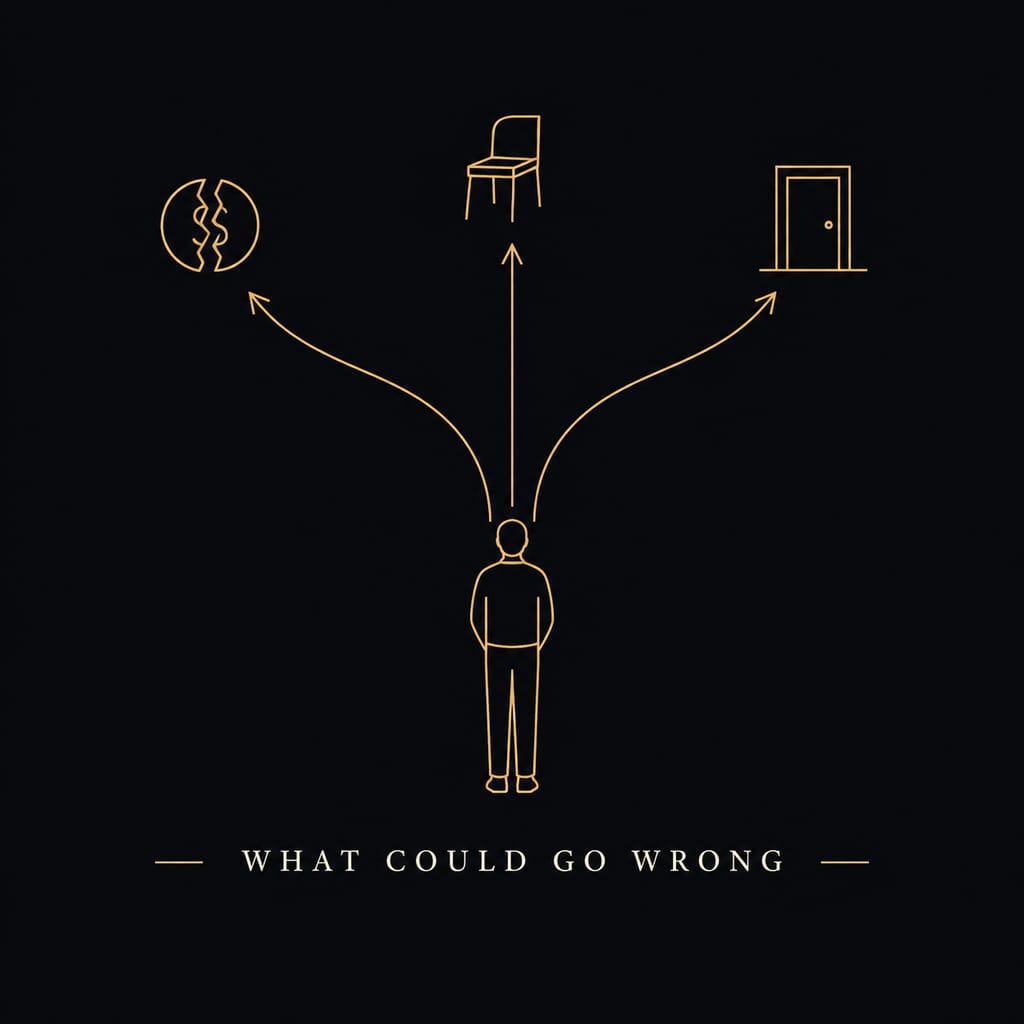
The job you might lose. The flight that might get cancelled. The friend who might say no. Most people push these thoughts away the moment they surface, then get flattened when one of them actually happens. Premeditatio malorum does the opposite on purpose: it walks toward the bad outcome in your head, on your own schedule, so the real version has less power over you.
This is not a mood. It is a method, with a two-thousand-year paper trail running through Cicero, Seneca, and Epictetus. Here is what the term actually means, where it comes from, how it works, and how to run it yourself without turning it into anxiety with a Latin name.
What Premeditatio Malorum Actually Means
Praemeditatio malorum breaks into two Latin pieces: praemeditatio, a rehearsal or thinking-through in advance, and malorum, “of bad things.” Put together, it names a specific mental exercise: before a stressful event, a risk, or an ordinary day, you deliberately picture what could go wrong — concretely, in detail, without flinching — and then ask what you would actually do about it.
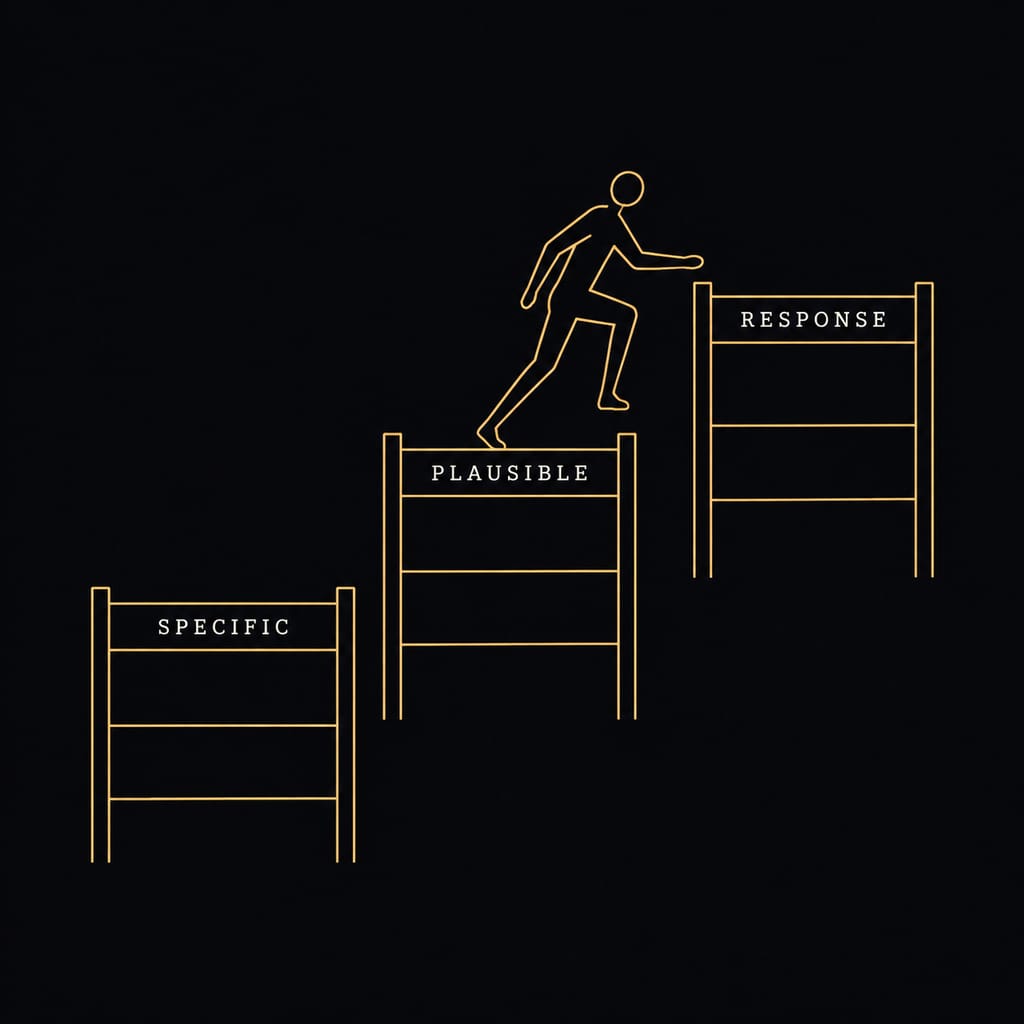
The exercise has three parts, and skipping any one of them turns it into ordinary worry instead of Stoic practice:
- Specificity. Not “something bad might happen” but “the client might cancel the contract Thursday.”
- A plausible outcome, not a catastrophe. You ask what you would actually lose — money, time, comfort, status — not the worst conceivable version of the event.
- A planned response. The exercise ends with what you would do next, not with the bad feeling.
Drop the third step and premeditatio malorum is indistinguishable from anxious rumination. That is the most common misreading of the practice, and it is worth flagging early: the Stoics were not asking you to marinate in dread. They were asking you to finish the thought.
Where the Practice of Premeditatio Malorum Comes From
The clearest early account predates the Latin phrase itself. In the Tusculan Disputations, Cicero credits the Cyrenaic school with the original insight — that grief hits hardest when it is unexpected — and describes the Stoics adopting and sharpening the practice of thinking through future misfortunes in advance, so that their arrival, if it comes, lands as something already considered rather than something new (Cicero, Tusculan Disputations 3.29).
Seneca gives the clearest Stoic statement of it in his letters to Lucilius. Writing not long after the city of Lyon burned to the ground in a single night, he uses the disaster to argue against being caught flat-footed by fortune:
“Nothing ought to be unexpected by us. Our minds should be sent forward in advance to meet all problems, and we should consider, not what is wont to happen, but what can happen.” — Seneca, Letters 91.4
Seneca returns to the idea across several letters: the person who has already pictured a loss is not living under a fresh blow when it lands, but under a foreseen one — and a foreseen blow is a far lighter thing to carry.
Epictetus states the practice in its starkest form, aimed at the two outcomes people fear most:
“Let death and exile, and all other things which appear terrible, be daily before your eyes; but most of all, death: and you will never think of anything mean, nor will you desire anything extravagantly.” — Epictetus, Enchiridion 21
That line sits inside the broader Enchiridion, Epictetus's short manual of Stoic practice, and it makes the same argument as Seneca from a different angle: daily contact with hard outcomes, on purpose, changes how you act in the meantime. It does not make you gloomy. It makes you harder to rattle.
Marcus Aurelius applies the same discipline to the most extreme case — his own death — reminding himself daily that he could depart at any moment: “Since it is possible that you may depart from life this very moment, regulate every act and thought accordingly.” (Marcus Aurelius, Meditations 2.11) This is premeditatio malorum reduced to its final form: not a technique reserved for exams and flights, but a daily discipline the Stoic emperor ran for the length of his reign.
How Premeditatio Malorum Works
The mechanism is not mysterious once you separate it from imagination for its own sake. Three things happen when you rehearse a specific bad outcome instead of avoiding the thought of it.
It removes the element of surprise. A large share of the pain in bad news is the jolt of never having considered it possible. Seneca's point in Letter 91 is precisely this — the people who suffered most in the Lyon fire were the ones who had never imagined their city could burn. Premeditation converts “this can't happen to me” into “I already thought about this,” which is a fundamentally calmer starting position.
It separates the event from your reaction to it. This is the same move behind the Stoic dichotomy of control: you cannot control whether the client cancels, the flight is delayed, or the test comes back bad. You can control what you do next. Rehearsing the bad outcome in advance forces you to practice that second part while you are calm, instead of improvising it while you are in shock.
There is also a simple habituation effect at work. A scenario you have already pictured in detail is, emotionally, no longer entirely new when it actually happens. Much of what makes a setback feel overwhelming is its novelty; premeditation removes the novelty ahead of time, so the event itself has less raw material to work with.
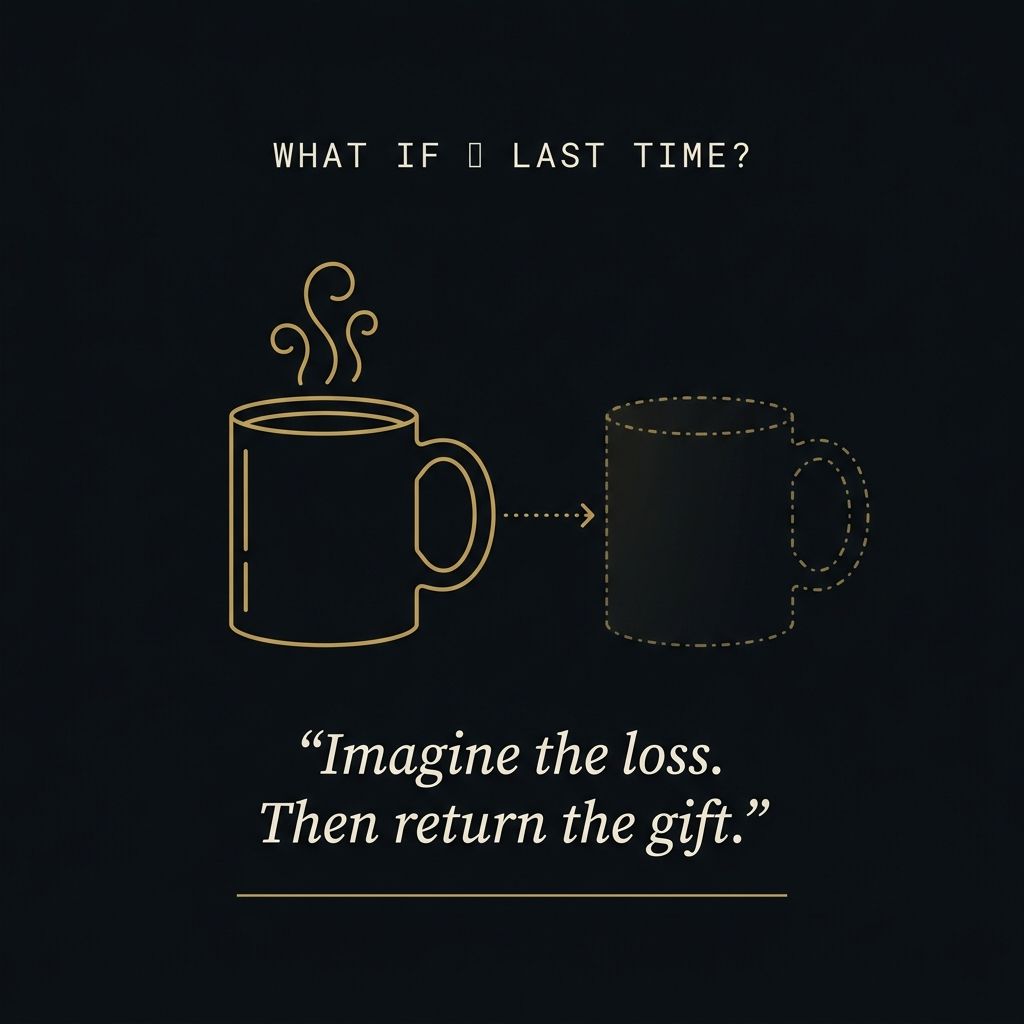
It produces gratitude as a side effect, not the goal. Spend five minutes seriously picturing your job gone, and the ordinary Tuesday where you still have it starts to look different. This overlaps with negative visualization, and the two are often used interchangeably online. They are close cousins, not the same exercise — the distinction is worth a moment, below.
Modern psychology arrived at a version of the same logic independently. Stress inoculation approaches used in cognitive-behavioral practice have people mentally rehearse a stressful scenario and their coping response before facing it for real — the same structure the Stoics were running two thousand years earlier, minus the Latin.
How to Practice Premeditatio Malorum Today
The exercise works best short, specific, and finished — not open-ended dread. Four steps, five to ten minutes:
Two examples make the shape clear. Before a hard performance review, the plausible bad outcome is “my manager flags my Q3 numbers.” What you'd lose: a bruised week, maybe a smaller bonus. Your move: ask for specifics and a 90-day plan. Before a delayed connecting flight, the bad outcome is “I miss the connection and reach home four hours late.” What you'd lose: an evening, not the trip. Your move: have the airline app open and a rebooking plan ready before you board. Neither example takes more than a minute once you've run the four steps a few times.
Do this in writing, not just in your head — it forces the specificity that separates the practice from generic worrying. It pairs naturally with a morning routine before a demanding day, or with journal prompts in the evening for whatever is coming tomorrow. Five minutes is enough. Longer sessions tend to drift from rehearsal into rumination, which is the opposite of the point.
Common Misconceptions About Premeditatio Malorum
The practice gets misread often enough that the corrections are worth stating directly.
It is not pessimism. Premeditatio malorum does not ask you to expect the worst as a general stance toward life. It asks you to examine one specific, plausible risk, on a schedule you choose, then close the loop with a plan. A pessimist expects bad outcomes constantly and does nothing about it; this exercise is bounded and ends in action.
It is not the same as anxious worry. Worry loops without resolution and tends to catastrophize rather than specify. Premeditatio malorum has a start, a plausible — not worst-case — scenario, and a finish: the planned response. If the thought spirals instead of landing on a next step, it has slipped from the exercise back into ordinary worry.
It is not a way to lower your expectations so disappointment hurts less. The goal is not resignation. It is readiness. You still pursue the outcome you want; you have simply also thought through what happens if you don't get it, so that outcome no longer has veto power over how you act today.

Where Premeditatio Malorum Fits in Stoic Practice
Premeditatio malorum is one exercise among several the Stoics used to manage the gap between what happens and how a person reacts to it. It is worth placing next to its closest relatives so you use the right tool for the moment.
Negative visualization is the gratitude-facing version: briefly imagining the loss of something you already have, to feel its value now instead of after it is gone. Premeditatio malorum is forward-facing and outcome-specific: rehearsing a particular future risk and planning a response to it. They share a mechanism and often get used in the same sitting, but the emphasis differs — one builds appreciation, the other builds readiness.
The dichotomy of control is the filter that makes premeditatio malorum useful rather than paralyzing: it only pays off when applied to things partly or fully outside your control, where a plan for your own response is the one lever you actually have. The view from above works well as a follow-up, shrinking a rehearsed hardship back down to its actual size once you have already planned for it. And it pairs naturally with a stoic evening reflection, where tomorrow's likely friction points are the natural subject matter.
Used together over weeks rather than once, these exercises are a large part of what practicing Stoicism looks like day to day — less a philosophy read about, more a set of drills run before the situations that would otherwise catch you off guard. It shows up often in Stoic approaches to anxiety for exactly that reason: rehearsed fear is quieter than unrehearsed fear, even when the outcome itself hasn't changed at all.
Run a 2-minute premeditatio malorum prompt every morning in StoicNow
Join the WaitlistFree Quiz
Which Stoic Are You?
A 3-minute personality quiz — Marcus, Seneca, Epictetus, or Cato.
FAQ
What does premeditatio malorum mean?
Premeditatio malorum is Latin for “the premeditation of evils.” It's a Stoic exercise where you deliberately imagine a specific, plausible future hardship in advance — not to dwell on it, but to work out in a calm moment what you would actually lose and what you would do next, so the real event carries less shock.
Where does premeditatio malorum come from?
Cicero traces the original insight to the Cyrenaic school in the Tusculan Disputations, noting that grief hits hardest when unexpected. The Roman Stoics adopted and sharpened it: Seneca describes it in his Letters to Lucilius, and Epictetus states it directly in the Enchiridion, urging daily contact with hard outcomes.
Is premeditatio malorum the same as negative visualization?
They're closely related but not identical. Negative visualization briefly imagines losing something you already have to build gratitude for it now. Premeditatio malorum is forward-facing: it rehearses a specific future risk and ends with a planned response. Both share a mechanism; the emphasis differs — appreciation versus readiness.
How do you practice premeditatio malorum?
Pick one real near-future event, picture the specific plausible bad outcome (not the worst-case one), name what you'd actually lose, and decide your next move in one sentence. Writing it down keeps it specific instead of open-ended. Five to ten minutes is enough; longer sessions tend to drift into rumination.
Does premeditatio malorum make you pessimistic?
No. Pessimism expects bad outcomes as a general stance and does nothing about it. Premeditatio malorum examines one bounded, plausible risk on your own schedule and always ends in a planned response, not a feeling. The goal is readiness for a specific outcome, not gloom about life in general.
What's the difference between premeditatio malorum and worrying?
Worry loops without resolution and tends toward the worst conceivable version of events. Premeditatio malorum has a start, a plausible scenario, and a finish — a concrete next step. If the thought spirals instead of landing on a plan, it has slipped from the exercise back into ordinary worry.

Marcus Adler
Founder & Lead Writer, StoicNow
Marcus Adler is the founder of StoicNow. For over a decade he has applied Stoic philosophy to daily life — testing the practices of Marcus Aurelius, Seneca, and Epictetus against modern problems and translating them into simple, repeatable routines. More about the author →
Further reading