Quick answer
Stoic meditation is the daily practice of examining and rehearsing your own thoughts: previewing the day each morning, watching your judgments as it unfolds, and reviewing it each night. It trains reasoned attention, not an empty mind.
If you search for stoic meditation expecting a breathing technique, the ancient sources will surprise you. The Stoics practiced something more demanding: a set of deliberate mental exercises for catching a thought before it hardens into anger, dread, or regret. This guide covers what the practice is, where it comes from in the texts, and a ten-minute version you can start today.

What Is Stoic Meditation?
Stoic meditation is a structured way of thinking on purpose. You choose a Stoic idea — that most of what upsets you is a judgment, that today will contain obstacles, that you could leave life at any time — and you hold it against a real situation until it changes what you do next.
The English word carries a later, contemplative flavor. The Greek behind it, meletē, means practice or rehearsal, and the Latin meditatio kept the same sense of repeated exercise. Plato’s Phaedo (81a) already calls philosophy a meletē of death: a practice for it. In Stoicism the word keeps that athletic edge. You meditate the way you train a lift, by repetition under load.
The French historian Pierre Hadot argued in Philosophy as a Way of Life that the ancient schools taught philosophy as a set of spiritual exercises, not a body of doctrine to memorize. In The Inner Citadel he read Marcus Aurelius’s notebook the same way: as exercises the emperor performed on himself.
Two ingredients. Every Stoic meditation combines attention (prosoche: staying alert to your own thinking in real time) and rehearsal (repeating a principle or picturing a scenario until the response is ready). Silence and stillness are optional. Attention and rehearsal are not.
Where Stoic Meditation Comes From
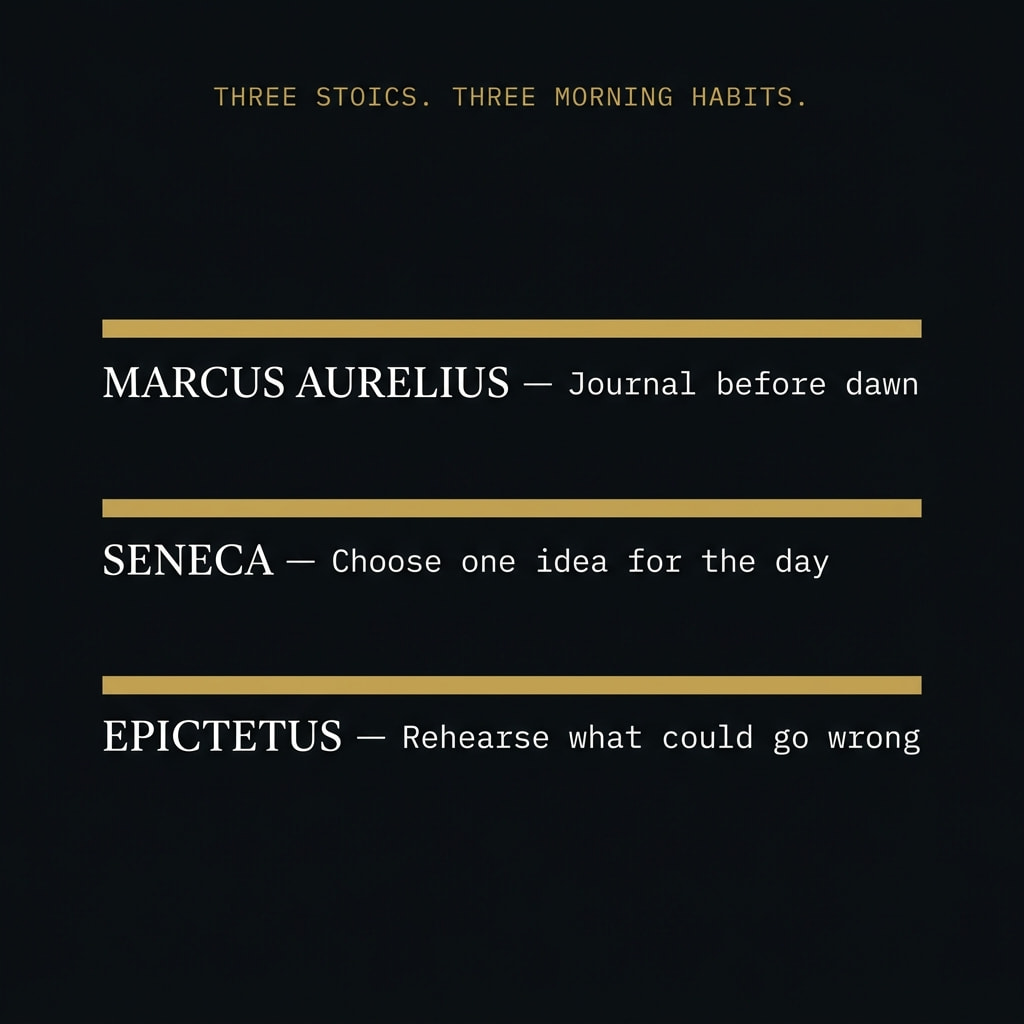
Three writers give us most of what we know about the practice, and each contributes a different piece.
Marcus Aurelius: a notebook addressed to himself
The book we call Meditations had no title in antiquity. The Greek label usually attached to it, Ta eis heauton, means roughly “To Himself,” and the entries read like it: private, repetitive, sometimes blunt. If you want the whole book in one sitting, start with our Meditations summary. Book 2 opens with a rehearsal:
“Begin the morning by saying to thyself, I shall meet with the busybody, the ungrateful, arrogant, deceitful, envious, unsocial.” — Marcus Aurelius, Meditations 2.1 (Long)
He does not stop at the list. He goes on to remind himself that these people act from ignorance of good and evil, so he cannot be truly harmed by them or hate them. The passage is a small, complete meditation: name what is coming, then reframe it before it arrives.
Elsewhere he describes the mind as a place to retreat to. In 4.3 he observes that people seek retreats in the country or by the sea, yet you can retire into yourself whenever you choose. And in 5.16 he explains why the repetition matters: “the soul is dyed by the thoughts.” Habitual thinking sets the color of the mind, so the habit is what you are training.
Epictetus: train your impressions
Epictetus, the teacher Marcus read closely, framed the work as training. In Enchiridion 1 he tells students to practice saying to every harsh impression, “You are an impression, and not at all what you appear to be,” and then to test it against the rule of what is and is not up to them. The exercise is small: a pause, a sentence, a check. Done a hundred times, it becomes a reflex. The logic behind the check is the dichotomy of control.
Seneca: the nightly review
Seneca supplies the evening half. In On Anger 3.36 he describes a habit he borrowed from the philosopher Sextius, who asked himself each night what ailment he had cured that day, what fault he had resisted, and in what respect he was better. Seneca says he does the same once the lamp is out and his wife has fallen silent:
“I examine my whole day and go back over what I have done and said, hiding nothing from myself, passing nothing by.” — Seneca, On Anger 3.36
Notice the tone. He is thorough but not cruel: he tells himself not to repeat a mistake and forgives it this time. That balance is the model for the Stoic evening reflection.
The Three Daily Sessions
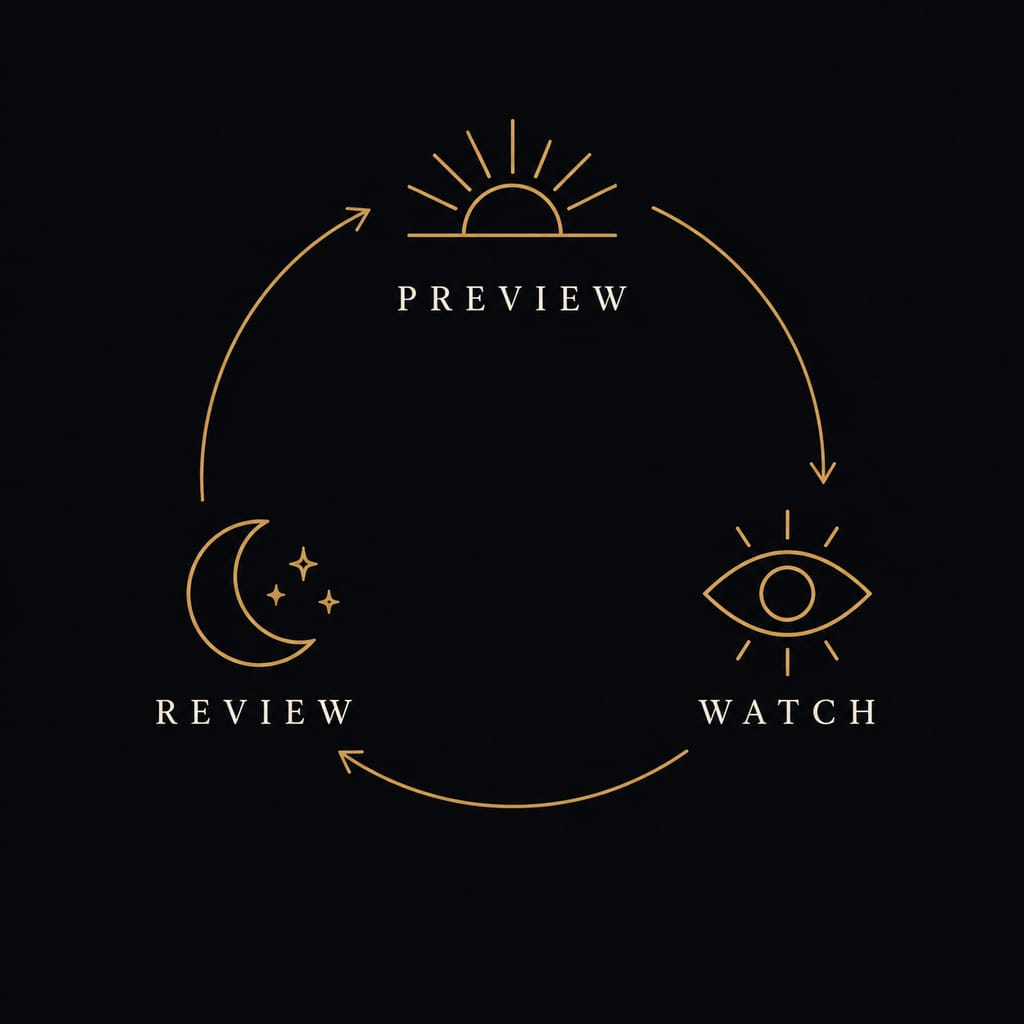
Put the three writers together and the practice has a natural shape: a preview, a running check, and a review.
Morning: preview the day
Take the Meditations 2.1 move and make it specific. Instead of “I will meet difficult people,” name the actual meeting, the actual person, the actual reaction you are likely to have. This is the core of premeditatio malorum, the premeditation of adversity. It is not pessimism. The point is that an obstacle you have already met in your head costs less when it arrives. If you want a fuller morning sequence, see the Stoic morning routine.
Daytime: catch the impression
This is prosoche, and it takes seconds. When you feel a spike of irritation, dread, or envy, run Epictetus’s check: what is the raw event, what is my judgment about it, and which part is up to me? You are not suppressing the feeling. You are separating the event from the story you have attached to it, before the story picks your next move.
Evening: review without a verdict
Go back through the day the way Seneca did. Where did you act on principle? Where did an impression carry you off? What will you do differently tomorrow? Keep it to a few minutes and keep it honest. The aim is a cleaner tomorrow, not a grade for today.
A Ten-Minute Stoic Meditation, Step by Step
The Stoics did not prescribe a timer or a posture, so treat this as a practical template built from their exercises, not as doctrine. Do it in the morning, ideally before you open your phone.
Keep a page. The Stoic texts survive because they were written down. Two or three lines per session is enough, and after a week the notebook shows you which triggers keep returning. Those are your real training material.
Five Exercises to Use Inside a Session
Once the ten-minute frame is familiar, rotate these in. Each comes straight from the texts.
- Premeditation of adversity. Imagine a specific setback and decide your response in advance. Our guide to premeditatio malorum walks through it.
- The view from above. Picture your problem from high above the city, then the country, then the planet. Marcus returns to this perspective repeatedly in the Meditations. See the view from above for a guided version.
- The impression check. Take one upsetting thought and repeat Epictetus’s formula: you are an impression, not the thing itself. Then ask whether the thing is up to you.
- The retreat inward. Marcus tells himself to look within: “Within is the fountain of good” (7.59). Spend a minute on what you value, not on what is happening to you.
- Memento mori. “You could leave life right now. Let that determine what you do and say and think” (2.11, Hays). Use it to sort what deserves your morning.
Stoic Meditation vs. Mindfulness
The two share a foundation: both ask you to notice your own mind instead of being dragged along by it. The difference is what you do with what you notice.
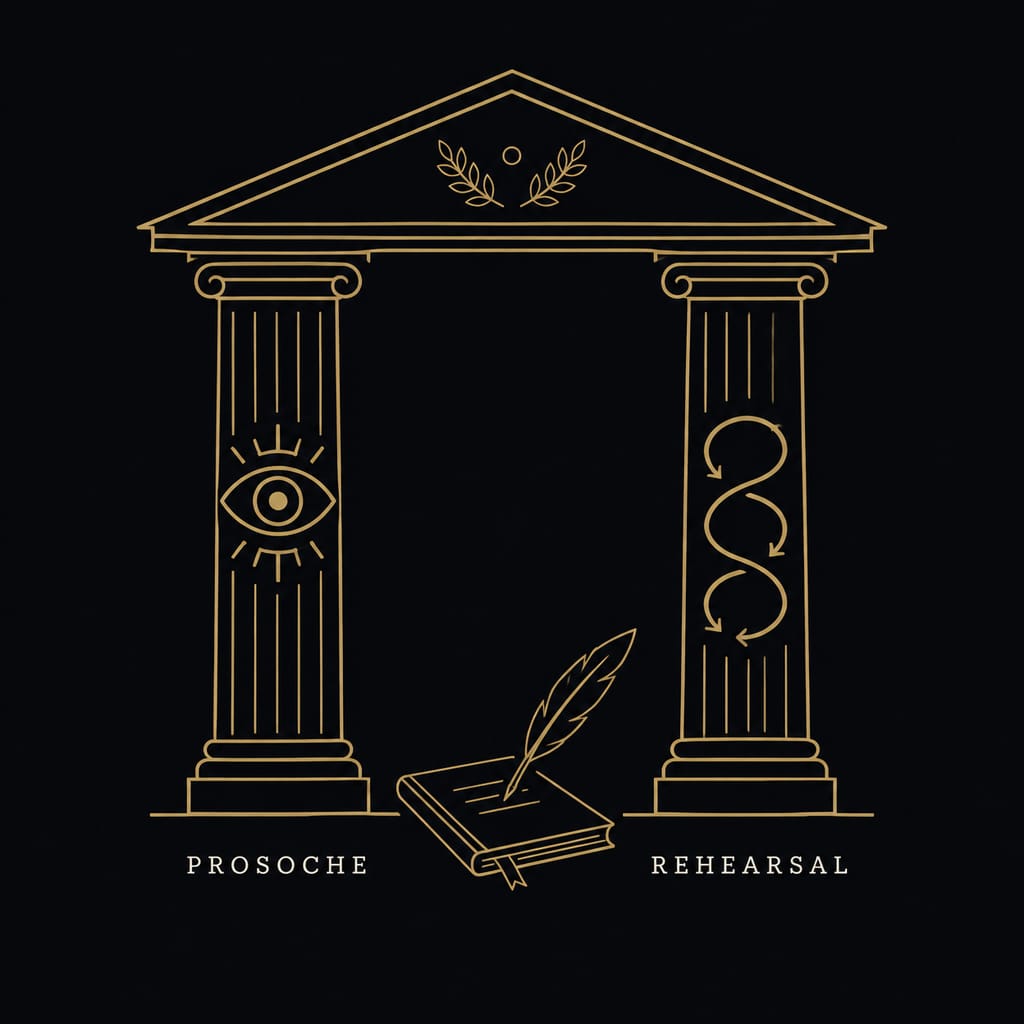
- Mindfulness, as commonly taught today, trains open, non-judging awareness of the present moment. You watch the thought come and go.
- Stoic meditation is openly evaluative. You ask whether the thought is true, whether it is yours to act on, and what virtue requires. It ends in a decision, not in stillness.
Neither is wrong, and many people use both. But they answer different questions. Mindfulness asks, “What is happening?” Stoic meditation adds, “What will I do about it?” If you are curious how the Stoic approach differs from Buddhist practice specifically, see Stoicism vs Buddhism.
Common Misconceptions
“It means emptying the mind.” Nothing in Marcus, Epictetus, or Seneca asks for a blank mind. Their exercises are full of content: names, scenes, sentences, questions.
“Marcus wrote the Meditations as a guide for readers.” The notebook was private, addressed to himself. That is exactly why it is useful as a model. It shows the practice as it was done, including the repetition and the self-scolding.
“You need a special posture or time.” No ancient source prescribes one. Seneca did his review in bed with the lamp out. Marcus wrote during a military campaign. The requirement is regularity, not setting.
“It makes you cold.” The goal is to stop being ruled by unexamined reactions, not to stop feeling. You still notice anger; you just check it before it acts.
“It replaces action.” The opposite. Each session should end with something you will do: a sentence, a decision, a boundary. If your meditation never touches your behavior, it is not yet Stoic.
Where Stoic Meditation Sits in Stoic Practice
Reading Epictetus, Hadot organized Stoic training into three disciplines: desire (what you want and avoid), action (what you do for others), and assent (which impressions you accept as true). Meditation is the exercise that trains all three. The morning preview prepares your desires and actions; the impression check trains assent; the evening review audits the lot.
It is also the connective tissue between the Stoic exercises you may already know. Journaling, negative visualization, and voluntary discomfort each work better when a short daily meditation frames them. For the full menu, see how to practice Stoicism every day.
Start small. Tomorrow morning, pick three events, write one sentence for each, and read one line from the Stoics. That is a complete session, and it is closer to what Marcus did than anything involving incense.
Practice Stoic meditation daily in StoicNow
Join the WaitlistFree Quiz
Which Stoic Are You?
A 3-minute personality quiz — Marcus, Seneca, Epictetus, or Cato.
FAQ
What is Stoic meditation?
Stoic meditation is the deliberate, repeated rehearsal of Stoic ideas until they shape how you react. The Greek word was meletē, meaning practice or careful attention. It includes a morning preview of the day, attention to your judgments as the day unfolds, and an evening review. It is closer to training your thinking than to emptying your mind.
How do you meditate like a Stoic?
Sit for about ten minutes and do three things. First, preview the day and name the obstacles you are likely to meet, as Marcus Aurelius does in Meditations 2.1. Second, sort what is up to you from what is not. Third, choose one specific response for the hardest moment ahead. Repeat a short review in the evening.
Is Stoic meditation the same as mindfulness?
No, though they overlap. Mindfulness typically trains open, non-judging awareness of the present moment. Stoic meditation trains attention too, which the Stoics called prosoche, but it is openly evaluative: you examine your judgments, rehearse difficulties in advance, and decide how to act. Mindfulness observes the thought; Stoic meditation questions it and then commits to a response.
Did Marcus Aurelius meditate?
Marcus Aurelius wrote private notes to himself, now titled Meditations, that scholars such as Pierre Hadot read as written spiritual exercises: repeated self-address meant to reshape his judgments. We have no ancient description of him doing silent, breath-focused meditation. His practice was reflective and written. The usual Greek title is rendered ‘To Himself.’
How long should a Stoic meditation session last?
A useful session takes five to fifteen minutes. The Stoics did not prescribe a timer, so this is a practical suggestion, not doctrine. Ten minutes in the morning covers a preview and one decision; three to five minutes in the evening covers a review. Consistency matters more than length, because Marcus Aurelius says the soul is dyed by its habitual thoughts (Meditations 5.16).
Can Stoic meditation reduce anxiety?
It can help with the ordinary worry that comes from misjudging what is in your control, and that mechanism is the one modern cognitive therapy targets: Albert Ellis credited Epictetus as an influence. It is not a treatment for clinical anxiety or depression. If worry is persistent or disabling, work with a licensed professional and use Stoic practice alongside that care, not instead.

Marcus Adler
Founder & Lead Writer, StoicNow
Marcus Adler is the founder of StoicNow. For over a decade he has applied Stoic philosophy to daily life — testing the practices of Marcus Aurelius, Seneca, and Epictetus against modern problems and translating them into simple, repeatable routines. More about the author →
Further reading