Quick answer
The best memento mori apps pair a daily, adjustable reminder of mortality with an actual practice — a visual life calendar, a journal prompt, or a Stoic exercise — instead of a single push notification and nothing after it.
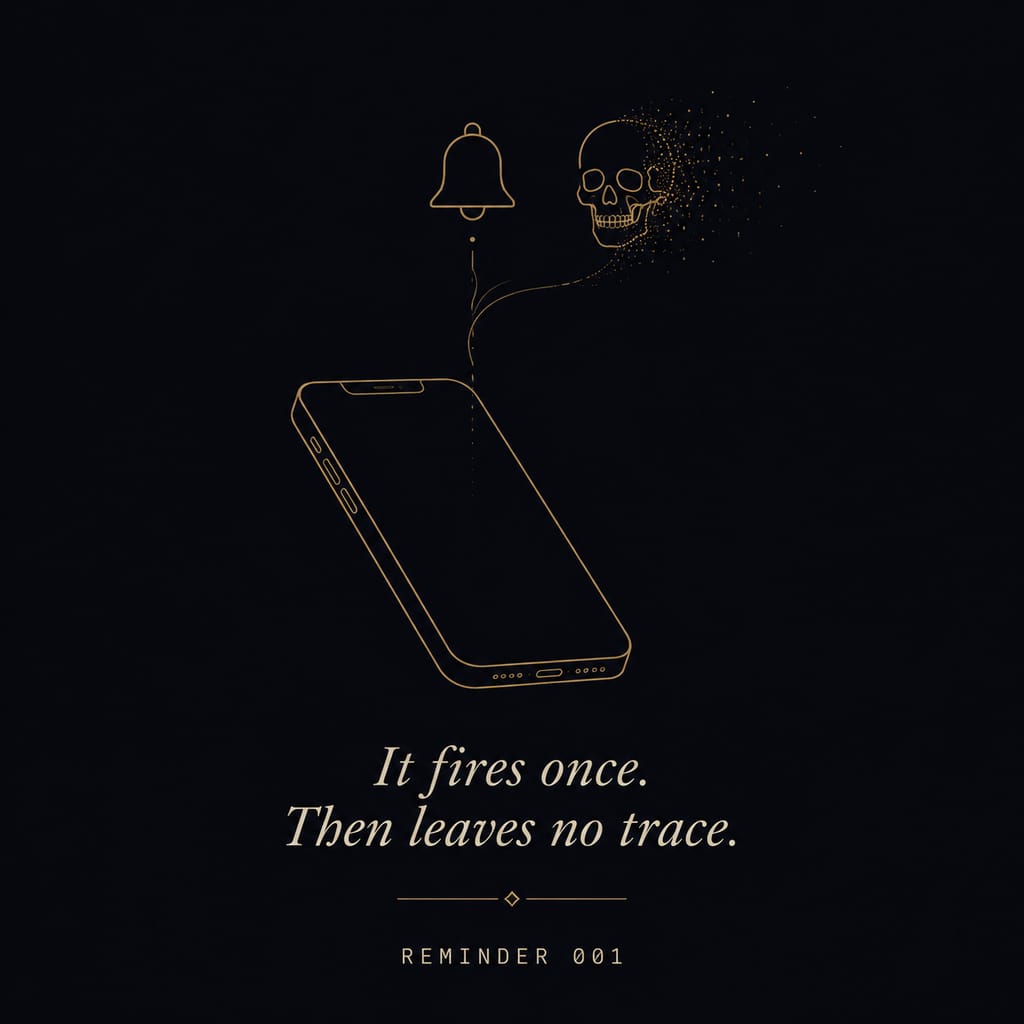
Most apps that call themselves “memento mori” are a skull icon and a notification, and nothing happens after you read it. That is a startle, not a practice. Here is what separates a genuinely useful memento mori app from a gimmick, the three real categories they fall into, and where an app fits — and does not fit — in an actual Stoic routine.
What the Best Memento Mori Apps Actually Do
A memento mori app has one job: remind you, on some schedule, that your time is finite. That part is easy to build and easy to copy. What separates a genuinely useful app from a novelty is what happens in the ten seconds after the reminder fires.
A weak app sends the notification and ends there — you read it, dismiss it, and by lunch you have forgotten it happened. A strong one turns the reminder into a small decision point: a one-line journal prompt, a glance at a life calendar showing exactly how many weeks you have left on average, or a linked exercise like an evening reflection. The notification is the trigger. The practice is what makes it worth keeping installed past week two.
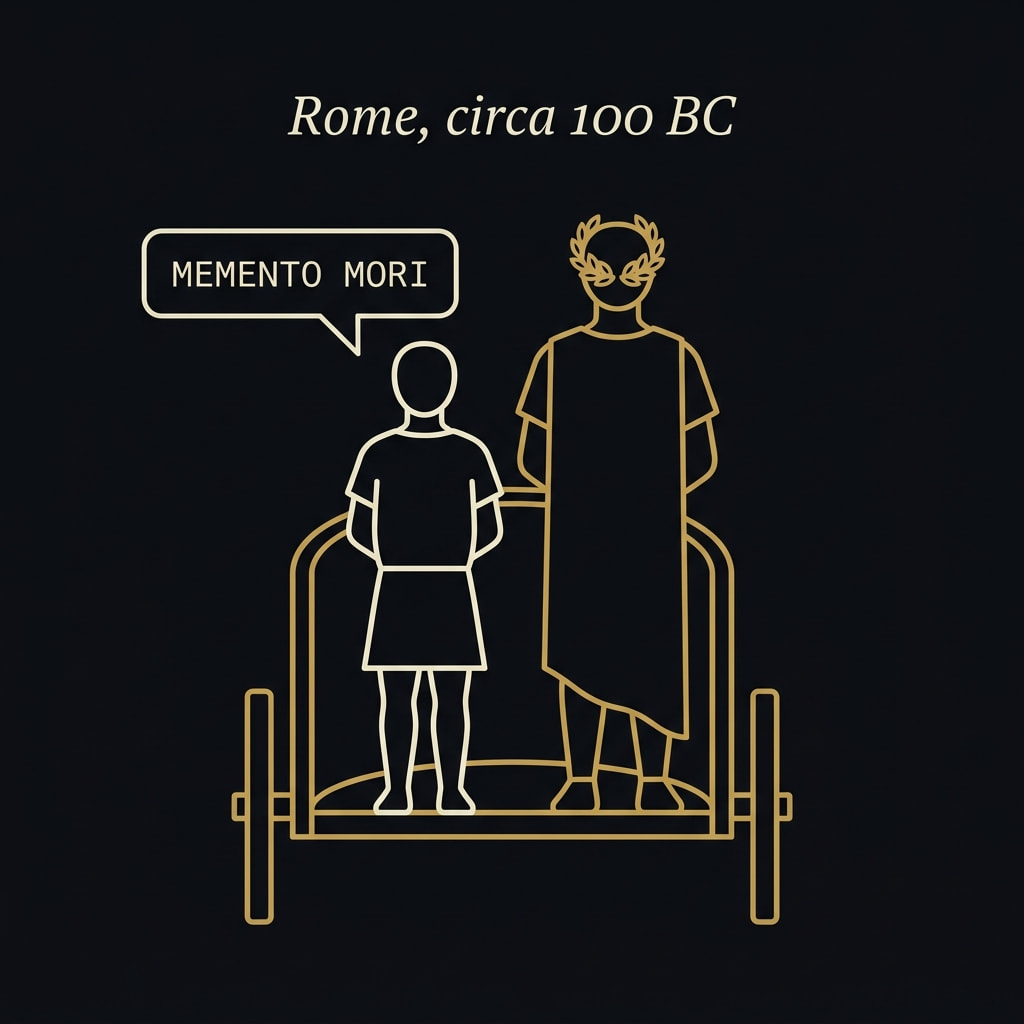
If you have not already, it is worth reading what memento mori actually means before judging any app's execution of it — the idea is 2,000 years older than the App Store, and most of what makes an app good or bad comes down to how faithfully it translates the original practice.
The Three Types of Memento Mori Apps
Nearly every app in this category falls into one of three buckets. Knowing which one you are looking at before you download saves you from installing three apps that all do the same thing.
1. Notification-only apps
These apps do one thing: fire a short reminder at set times, often several times a day. Apps like WeCroak, built around a Bhutanese folk practice of pausing to contemplate death a few times daily, popularized this model. It is the simplest version of the idea and the easiest to try, but it depends entirely on the message landing differently each time — and after a few weeks, most people stop reading the notification at all.
2. Life-calendar apps
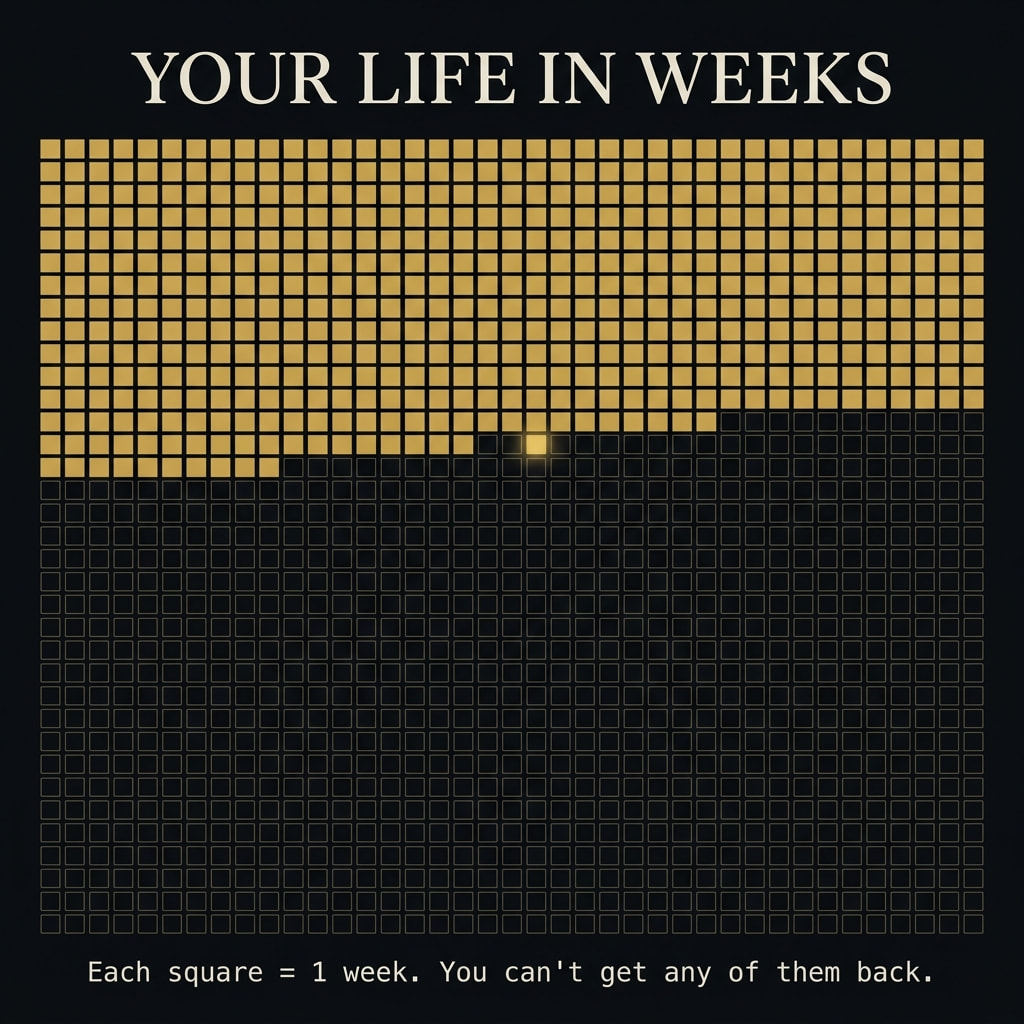
Instead of a recurring interruption, these show your entire estimated lifespan as a single grid — usually weeks, sometimes years — with the ones already lived shaded in. It is a static visual rather than a repeating ping, closer to the same idea behind our own memento mori calendar: one glance does more than a hundred notifications, because it makes finitude spatial instead of abstract.
3. Integrated Stoic-practice apps
The third type treats mortality awareness as one exercise inside a broader practice — alongside journaling, quotes, and daily reflection — rather than the entire product. This is the category StoicNow sits in: a life calendar plus a daily reminder plus a journal prompt, so the awareness has somewhere to go instead of just sitting there. For a wider comparison that is not limited to mortality-specific apps, see our full comparison of Stoic apps.
What to Check Before You Download
A short checklist, in order of how often people get burned by skipping it:
- Can you control the frequency? A fixed schedule you cannot adjust is the single most common reason people delete these apps within a month.
- How does it handle your birthdate? Life-calendar apps need a birthdate and a life-expectancy assumption to build the grid. Check whether that data stays on the device or leaves it, and whether the app is transparent about the actuarial assumption it is using.
- Does the reminder connect to anything? A message with no follow-up action fades fast. Look for a linked journal entry, a quote, or a one-tap reflection.
- Is the tone matched to you? Some apps lean blunt and unsentimental, others lean gentle. Neither is more “correct” Stoically — both Seneca and Marcus Aurelius wrote about mortality in a fairly plain, unadorned register, so a good app should sound the same way rather than dramatizing it.
- Does it work if you mute it for a week? Life happens. An app that resets your streak or nags you into guilt for missing a day is optimizing for engagement, not for the practice.
Where the Idea Comes From
Memento mori — Latin for “remember that you will die” — is older than any app category, and the Stoics wrote about it directly, not as a metaphor. Epictetus put it as a standing instruction:
“Let death and exile, and all other things which appear terrible, be daily before your eyes; but chiefly death: and you will never entertain any abject thought, nor too eagerly covet anything.” — Epictetus, Enchiridion 21
Marcus Aurelius used the same idea as a daily discipline rather than a passive thought, in the second book of the Meditations:
“You could leave life right now. Let that determine what you do and say and think.” — Marcus Aurelius, Meditations 2.11
Seneca applied it specifically to time, arguing that the problem was never how much life we get, but how carelessly most of it gets spent:
“It is not that we have a short time to live, but that we waste a lot of it.” — Seneca, On the Shortness of Life, 1
None of the three treated this as bleak. They treated it as clarifying — a filter for deciding what deserves attention today. That is the standard a good app should be measured against: does it make the day sharper, or does it just make your phone buzz.
Common Misconceptions About These Apps
“It's morbid.” The intent is perspective, not fear. A reminder that time is limited tends to shrink low-stakes anxieties — a slow email reply, a bad meeting — rather than add new ones. Most long-term users describe it as calming, not distressing.
“More reminders means it's working harder.” Frequency and impact are not the same thing. A single well-placed reminder you actually read beats ten you have trained yourself to swipe away without looking.
“It's only for older people or after a health scare.” The Stoics wrote for anyone with a finite life, which is everyone. Younger users often get more out of it precisely because there is more time left to redirect.
How to Actually Use One
The app is the trigger, not the practice. Three ways to make it stick past the first week:
- Set it for a fixed moment, not a random one. Morning coffee or the first notification of the day works better than a random hourly ping, because it becomes a cue rather than an interruption.
- Attach one line of writing to it. “If this were my last week, what would I actually do differently today?” takes fifteen seconds and turns the reminder into a decision instead of a fact you already knew.
- Pair it with an existing habit. Stacking the reminder onto Seneca's evening reflection — reviewing the day before bed — gives the awareness a fixed place to land instead of floating loose through your afternoon.
Used this way, the app is not doing anything the Stoics could not do with a wax tablet. It is only removing the one obstacle that actually stops most people: remembering to do it at all.
Get a daily memento mori reminder built into a real practice
Join the Waitlist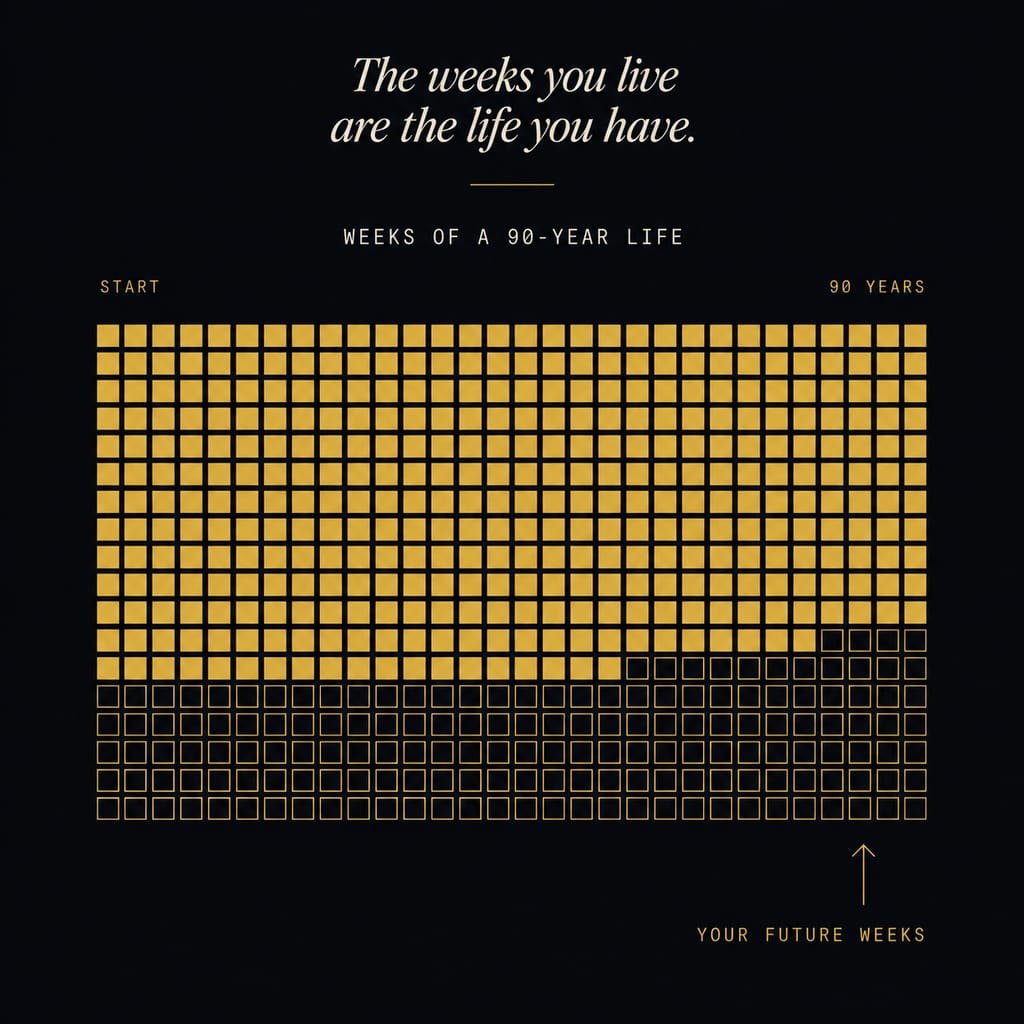
Free Quiz
Which Stoic Are You?
A 3-minute personality quiz — Marcus, Seneca, Epictetus, or Cato.
FAQ
What is the best memento mori app?
There isn't one best app for everyone, because there are three different jobs these apps do: send a bare notification, show a visual life calendar, or build death-awareness into a fuller Stoic practice with journaling and reflection. The right pick depends on which of those three you actually need.
Are memento mori apps morbid?
No. The intent, going back to Epictetus and Marcus Aurelius, is not fear but perspective — a daily reminder that time is finite tends to sharpen priorities and reduce trivial anxiety, not increase it. Most users report the opposite of dread: a kind of daily recalibration.
How often should a memento mori app remind me?
Once or twice a day is enough for most people. More frequent reminders, five or more times daily, work for some but become background noise for others. A good app lets you set and change the frequency yourself rather than fixing it.
What's the difference between a memento mori app and a life calendar app?
A notification app sends a short prompt at set times. A life calendar app instead shows your entire lifespan as a grid of weeks or years, with the ones already lived shaded in — a single visual rather than a recurring interruption. Some apps, including StoicNow, combine both.
Can I practice memento mori without an app?
Yes. Seneca and Epictetus wrote about mortality without any app at all — a daily journal line, an evening reflection, or simply a note on your desk does the same job. An app just automates the reminder so the habit doesn't depend on your memory.
Do memento mori apps help with anxiety?
For most people, yes, indirectly — by narrowing focus to what actually matters today, the reminder tends to shrink low-stakes worries rather than add to them. It is not a substitute for treatment of clinical anxiety, but as a daily perspective practice it is well aligned with how Stoic exercises are used.

Marcus Adler
Founder & Lead Writer, StoicNow
Marcus Adler is the founder of StoicNow. For over a decade he has applied Stoic philosophy to daily life — testing the practices of Marcus Aurelius, Seneca, and Epictetus against modern problems and translating them into simple, repeatable routines. More about the author →
Further reading