
Quick answer
Apatheia stoicism refers to freedom from destructive passions — fear, grief, uncontrolled desire, and irrational pleasure — not the absence of feeling. Apatheia (ἀπάθεια) is the Stoic term itself, and the sage who has it still loves, still cares, still acts; he just isn’t yanked around by impulses that override reason.
Apatheia is the most misunderstood word in Stoic philosophy, mistranslated by its own English cognate. “Apathy” means almost the opposite of what the Stoics intended, and getting the definition wrong has scared off more readers than any other single misconception about the school. Here is what the word actually meant, where it comes from, and how to work toward it without going numb.
What Apatheia Actually Means
Apatheia comes from the Greek prefix a- (without) attached to pathos. In ordinary Greek, pathos meant something closer to “what happens to a person” — an experience undergone rather than chosen. The Stoics narrowed the word into a technical term: a pathos was no longer just any feeling, but a specific kind of malfunction in judgment.
The clearest statement of that definition survives secondhand, through the biographer Diogenes Laertius, who summarizes Zeno’s lost treatise On the Passions: a pathos is “an irrational and unnatural movement of the soul, or an impulse in excess” (Diogenes Laertius, Lives of Eminent Philosophers 7.110). Apatheia, then, is freedom from movements of that kind — not freedom from movement, or feeling, or experience itself. If you’re new to the framework this sits inside, what Stoicism actually teaches is a good place to start before this term will click.
The Four Passions Apatheia Frees You From
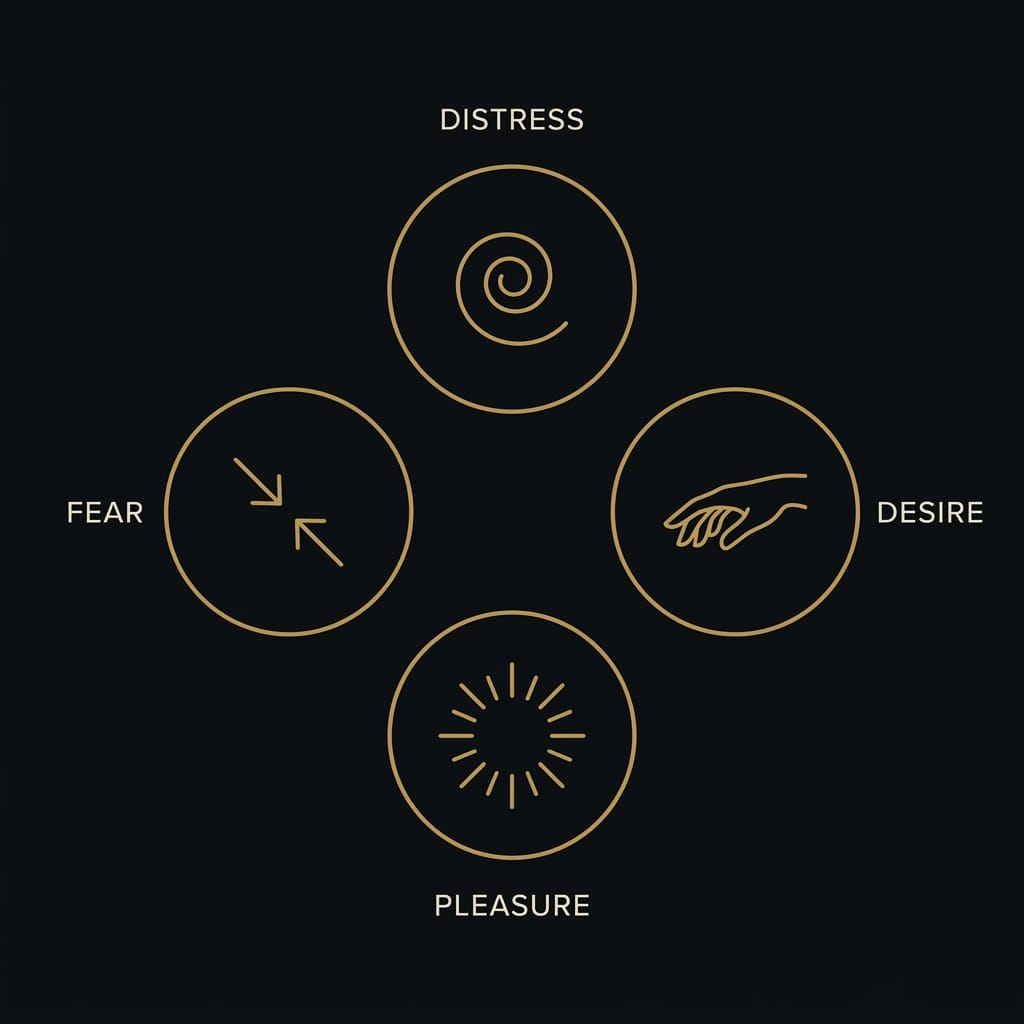
Cicero, writing a few generations later as a critical outsider rather than a Stoic himself, preserves the clearest surviving breakdown of what the school actually classified as pathē. In the Tusculan Disputations he lists four categories, sorted along two axes: whether the object is judged good or bad, and whether it is present or anticipated (Cicero, Tusculan Disputations 4.6–7).
- Distress (lypē / aegritudo) — an irrational contraction at a present evil: grief that overwhelms, anxiety that won’t lift after a setback.
- Fear (phobos / metus) — an irrational shrinking from an anticipated evil: dread of failure, of judgment, of death itself.
- Desire (epithymia / libido) — an irrational reaching for an anticipated good: craving, grasping ambition, compulsive wanting.
- Pleasure (hēdonē / laetitia) — an irrational elation at a present good: the high that leaves you worse off once it passes.
These four categories map onto ordinary experience more closely than the Greek terminology suggests. A promotion you’re anxiously chasing sits under desire; the dread of losing a job before any real signal it’s at risk sits under fear; a breakup that leaves you unable to function weeks later sits under distress; a windfall that leaves you reckless and worse off once it fades sits under pleasure. None of these four are wrong because the object involved is bad — losing a job is genuinely unwelcome. They are wrong because the intensity, and the loss of rational control, is disproportionate to what actually happened, and because they rest on the judgment that a single external event has the power to make or ruin a life.
Notice these aren’t feelings in general — they’re feelings in a specific excessive, judgment-overriding mode. That distinction is what apatheia removes.
Apatheia Is Not Apathy
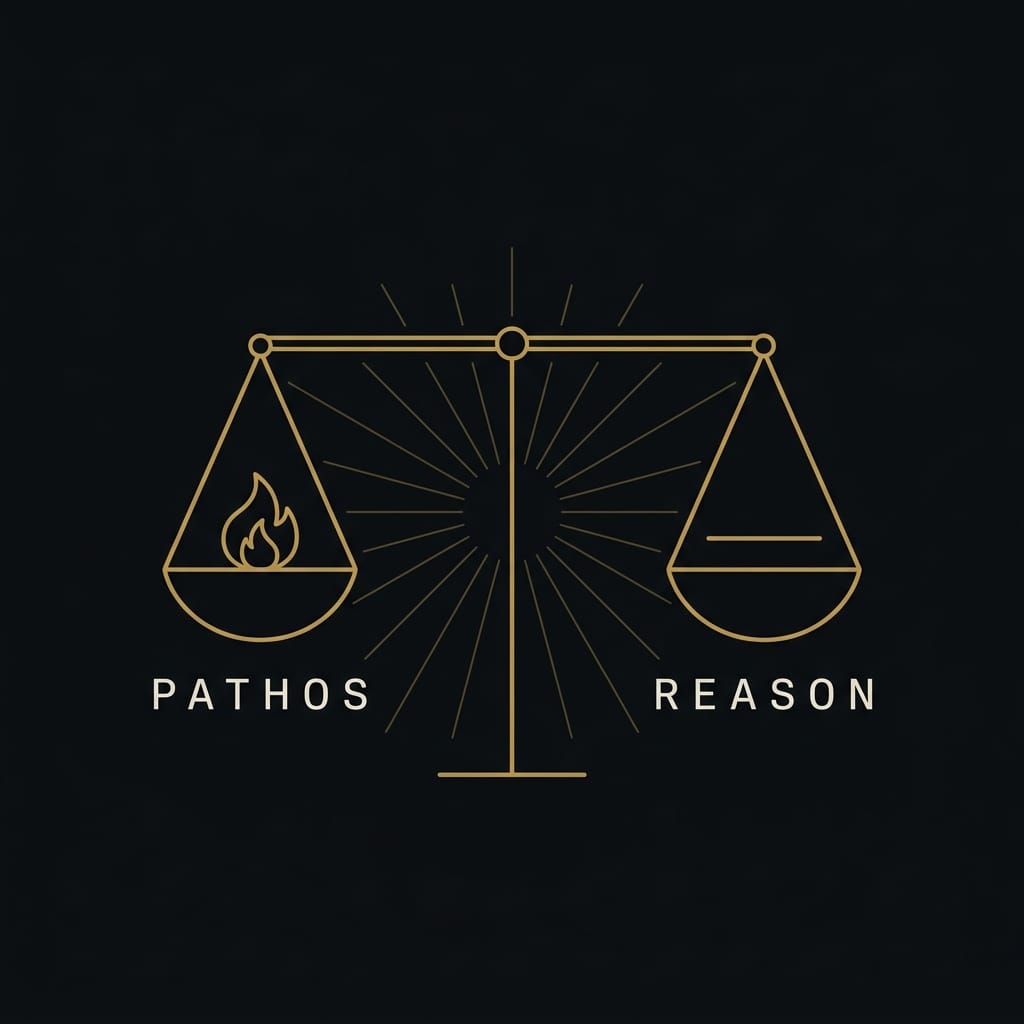
Modern English “apathy” means indifference — flat affect, not caring about outcomes. That is a different word with a different history, and reading it back into apatheia gets the Stoics backwards.
Zeno and Chrysippus were not arguing for numbness. They were distinguishing a clear-eyed sage’s engaged action from a fool’s hijacked reaction. Seneca did not run the Roman treasury for years, write consolation letters to grieving friends, or plead for recall from exile like a man who felt nothing. This is the exact confusion addressed at length in are Stoics emotionless?
Epictetus makes the same point from the other direction. Born a slave, later lamed by a master who is said to have broken his leg, he built an entire philosophy around the claim that circumstance does not determine character — what happens to a person and how they judge what happens are two separate things, and only the second is within their control. That is not the voice of someone who has stopped feeling; it is the voice of someone who refuses to let feeling override judgment. His students at Nicopolis studied under a teacher who had, by any ordinary measure, more reason for despair than most of them, and he used exactly that fact to demonstrate what apatheia looked like in practice rather than in theory.
The target was never the feeling itself. It was the false judgment underneath it — the belief that some external event is either a catastrophe or a prize large enough to override reason. Fix the judgment and the excess movement has nothing left to run on.
The Stoics’ Alternative: Eupatheiai
The Stoics didn’t leave the sage feeling-less. Diogenes Laertius records that they posited a parallel set of rational “good feelings” — eupatheiai — available only to someone whose judgment is sound, arising from correct assessment instead of error (Diogenes Laertius, Lives of Eminent Philosophers 7.116). He lists three: chara (joy) as the rational counterpart to pleasure, eulabeia (caution) as the rational counterpart to fear, and boulēsis (wish) as the rational counterpart to desire.
There is no rational counterpart to distress. The Stoics held that a person correctly tracking what is and isn’t up to them has nothing external to collapse into grief-like despair over — loss still registers, but nothing forces the collapse that usually follows it.
The distinction sounds abstract until you watch it in ordinary decisions. Rational wish (boulēsis) is still wanting a project to succeed, but wanting it because the outcome is genuinely good and worth pursuing, not because failure would feel unbearable. Caution (eulabeia) is still noticing a real risk and adjusting for it, but doing so calmly, the way a careful driver checks a mirror rather than the way a frightened one grips the wheel. Joy (chara) is still delight at good news, but delight that doesn’t curdle into anxiety about losing it the moment it arrives. In each case the feeling survives; what apatheia removes is the excess, the part that hijacks judgment rather than following it.
How to Practice Apatheia Today
Apatheia isn’t achieved by deciding to feel less. It’s trained the same way any judgment habit is trained — in a specific order, repeated until it’s automatic.
1. Catch the impression before the reaction
Between an event and your response sits a judgment: “this is bad,” “this is a threat,” “I need this.” The dichotomy of control is the tool for interrogating that judgment before it becomes a passion — ask what part of the situation is actually yours to affect.
2. Rehearse the loss in advance
Negative visualization — deliberately picturing a job lost, a relationship ended, a plan failed — drains the shock value out of events before they happen, so the judgment “this is unbearable” has already been tested and rejected in advance.
3. Widen the lens
The view from above shrinks a crisis by placing it against the scale of a life, a city, a century. Most excessive desire and fear run on an inflated sense of how much a single event matters.
4. Write down what happened, not what you assumed
Stoic journal prompts built around separating fact from interpretation catch distorted judgments on paper, where they’re easier to correct than in the middle of a reaction.

Where Apatheia Fits in Stoic Practice
Apatheia is not a standalone goal — it’s a byproduct of getting the rest of the system right. Wisdom, one of the four Stoic virtues, is precisely the skill of telling an irrational passion from a rational assessment in the first place. Without it, apatheia is just suppression wearing a Greek name.
It also isn’t isolation. A sage free of destructive passion is still bound to other people through sympatheia, the Stoic sense of cosmic and social connectedness — apatheia governs how you respond to events, not whether you’re engaged with them. Both ideas trace back to the same underlying claim: reality operates on logos, a rational order, and a mind aligned with that order stops fighting what it can’t change and acts clearly on what it can. That alignment, sustained daily, is what the Stoics called apatheia. For the full daily practice this term sits inside, see how to practice Stoicism every day.
Modern cognitive behavioral therapy borrows a version of this same structure, though its founders arrived at it independently. Albert Ellis, who developed Rational Emotive Behavior Therapy, cited Epictetus directly as an influence on the idea that events don’t disturb people — judgments about events do. The overlap isn’t a coincidence dressed up as ancient wisdom; it’s a description of how human judgment actually produces emotional reactions, one the Stoics reached through observation centuries before clinical psychology had the tools to test it. Apatheia, in that light, isn’t a mystical state reserved for sages in togas; it’s the endpoint of a training process that contemporary therapy independently rediscovered and formalized.
Train apatheia one reflection at a time in StoicNow
Join the WaitlistFree Quiz
Which Stoic Are You?
A 3-minute personality quiz — Marcus, Seneca, Epictetus, or Cato.
FAQ
What does apatheia mean in Stoicism?
Apatheia (ἀπάθεια) is freedom from pathē — the irrational, excessive movements of the soul the Stoics classified as distress, fear, desire, and pleasure. It does not mean feeling nothing. It means judgment is no longer hijacked by impulses that override reason, so a person can still care, still act, and still respond to loss without being controlled by it.
Is apatheia the same as apathy?
No. English “apathy” means indifference and flat affect — not caring. Apatheia is a technical Stoic term for freedom from irrational passion, not from feeling in general. The Stoics themselves lived engaged, active lives; Seneca ran the Roman treasury and wrote grief-stricken consolation letters. Apatheia describes clear judgment under pressure, not withdrawal from life.
What’s the difference between apatheia and ataraxia?
Apatheia targets a specific cause — freedom from irrational passion (pathos) through correct judgment. Ataraxia, more associated with Epicureans and Pyrrhonist skeptics, describes the resulting untroubled state itself, freedom from disturbance generally. Stoic writers use both ideas, but apatheia names the mechanism (right judgment about impressions); ataraxia names the calm that follows from it.
Did the Stoics believe in suppressing emotions?
No — suppression assumes a feeling is correctly formed and then pushed down. The Stoics argued the passions themselves were formed on a mistaken judgment about what is good or bad, so the fix was correcting the judgment, not hiding the reaction. They also held that rational good feelings, the eupatheiai, remained fully available to a wise person.
What are eupatheiai?
Eupatheiai are the Stoics’ rational “good feelings,” the sane counterparts to the passions: joy (chara) instead of unstable pleasure, caution (eulabeia) instead of fear, and rational wish (boulēsis) instead of grasping desire. Diogenes Laertius records that the Stoics posited no rational counterpart to distress — a fully rational person has nothing to collapse into grief-like despair about.
How do you practice apatheia today?
Start by separating the raw impression from your reaction to it — the core move behind the Stoic dichotomy of control. Rehearse losses before they happen, widen your perspective when a problem feels enormous, and write down what actually occurred versus what you assumed. None of it happens instantly; it is trained daily, the same way a habit is trained.

Marcus Adler
Founder & Lead Writer, StoicNow
Marcus Adler is the founder of StoicNow. For over a decade he has applied Stoic philosophy to daily life — testing the practices of Marcus Aurelius, Seneca, and Epictetus against modern problems and translating them into simple, repeatable routines. More about the author →
Further reading